For decades, the Bermuda Triangle has stood at the crossroads of science, fear, and imagination
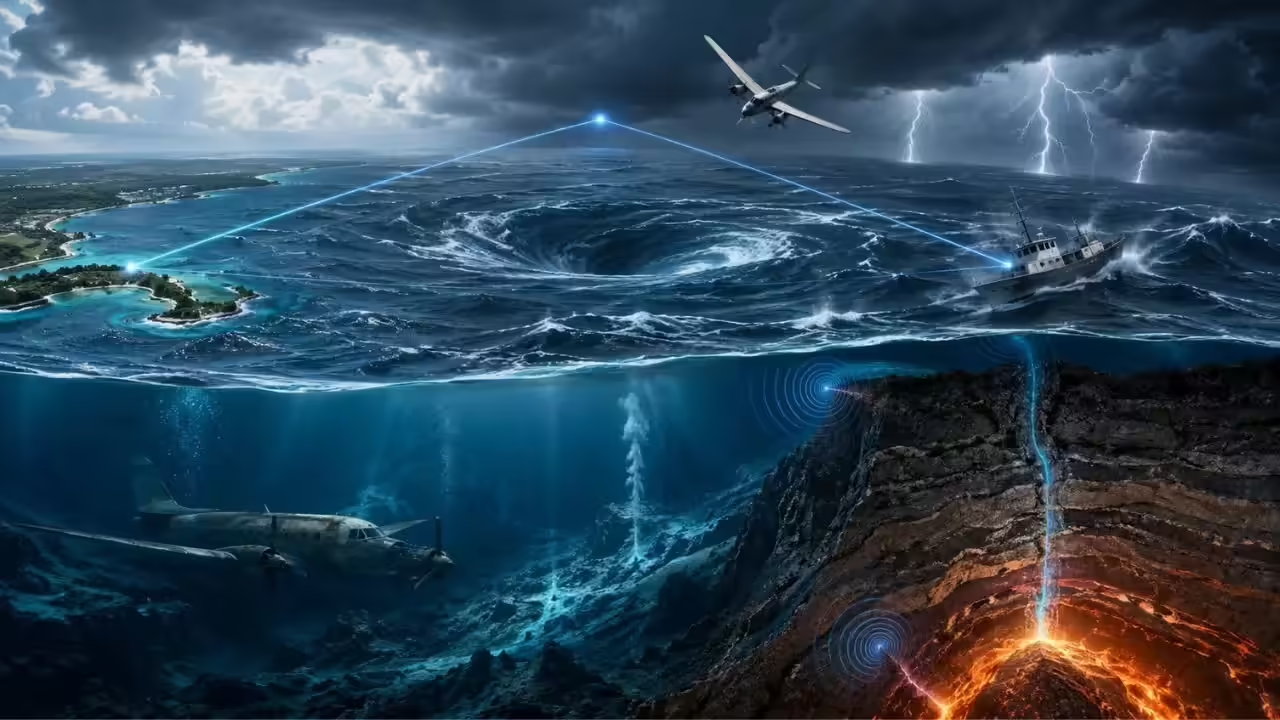
The Bermuda Triangle Mystery: Where Science Meets Fear and Imagination
For decades, the Bermuda Triangle has stood at the crossroads of science, fear, and imagination.
Stretching across the Atlantic Ocean between Miami, Bermuda, and Puerto Rico, this infamous region became world-famous for terrifying stories of ships disappearing without distress signals, aircraft vanishing mid-flight, and entire crews seemingly erased without explanation.
Over time, the Bermuda Triangle transformed from a simple maritime curiosity into one of the modern world’s most enduring and chilling mysteries.
The Origin of the Legend
The term “Bermuda Triangle” was first used by writer Vincent Gaddis in 1964 in Argosy magazine. However, it was Charles Berlitz’s 1974 bestselling book The Bermuda Triangle that turned the area into a global phenomenon.
The region has been blamed for the mysterious disappearance of more than 50 ships and 20 aircraft over the past century. Some of the most famous cases include:
Flight 19 (1945): Five U.S. Navy Avenger bombers took off from Fort Lauderdale, Florida. After reporting compass failure and becoming disoriented, all five planes and the rescue aircraft sent to find them vanished without a trace.
USS Cyclops (1918): A massive coal-carrying ship with 306 people on board disappeared completely without sending any distress signal.
SS Marine Sulphur Queen (1963): A tanker carrying sulfur vanished along with its 39 crew members.
Scientific Explanations
While many people believe in supernatural theories such as UFOs, time portals, or the lost city of Atlantis, scientists offer more rational explanations:
Dangerous Weather and Sea Conditions The area is prone to sudden tropical storms, massive rogue waves up to 30 meters high, and the powerful Gulf Stream current. These conditions can sink ships or cause aircraft to lose control rapidly.
Human Error Most incidents occurred before modern GPS technology existed. Compasses in this region can sometimes be affected by magnetic variations, leading to serious navigation mistakes.
Methane Gas Releases Large pockets of methane gas beneath the seafloor may erupt, reducing water density and causing ships to sink suddenly, while also disrupting aircraft engines.
High Traffic Volume The Bermuda Triangle lies along one of the busiest shipping and aviation routes in the world. The probability of accidents is naturally higher simply due to the large number of vessels and planes passing through.
Fact Versus Myth
In 2013, the U.S. National Oceanic and Atmospheric Administration (NOAA) and the Department of Transportation stated there is no evidence that the disappearance rate in the Bermuda Triangle is higher than in any other heavily traveled ocean area. Many so-called “mysterious” cases have logical explanations based on weather records, mechanical failures, or human mistakes.
Nevertheless, the unsolved nature of certain incidents continues to fuel the legend. The Bermuda Triangle has become a cultural icon, appearing in countless movies, books, documentaries, and video games.
Conclusion: The Allure of the Unknown
Although science has explained most of the phenomena, the Bermuda Triangle still captivates human curiosity. It serves as a reminder that the ocean remains full of secrets, and humanity, despite all its progress, is still small in the face of nature’s power.
Perhaps it is the perfect blend of primal fear and the desire for discovery that makes the Bermuda Triangle an immortal legend — a place where science, folklore, and imagination continue to intersect.