13-Meter-Long “King Dragon” Discovered in the US
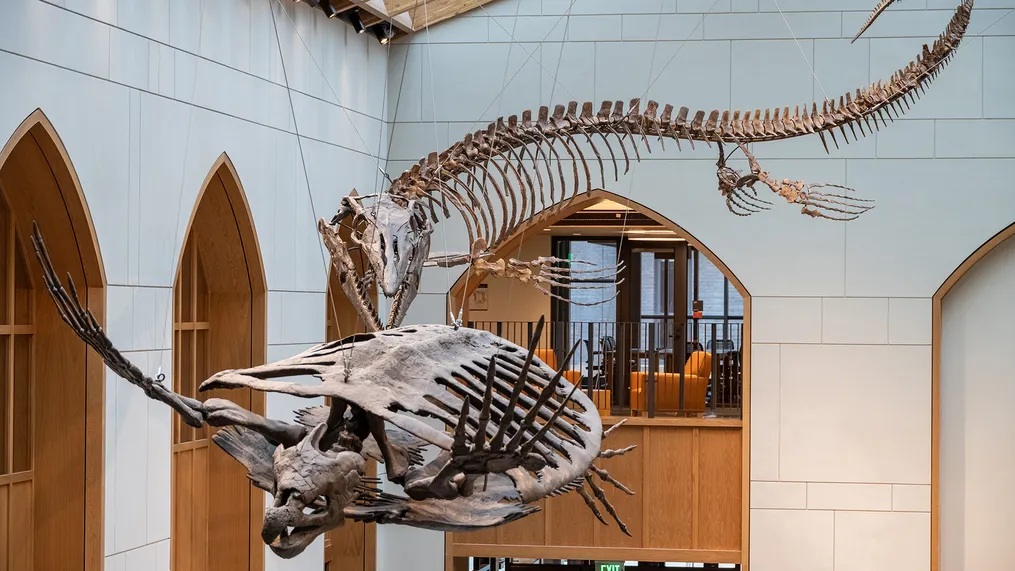
May 23, 2026 – Scientists have identified a new species of marine reptile that lived during the Cretaceous Period, nicknamed “T-rex of the Sea” due to its massive size and fearsome nature.
A new species of “sea dragon” has officially been named Tylosaurus rex (T-rex), a giant mosasaur that ruled the ancient oceans around 80 million years ago.
According to Live Science, paleontologists have added this new marine monster to the history of the Cretaceous Period. Tylosaurus rex was a member of the Mosasauridae family — large predatory marine reptiles often called “sea dragons.”
The discovery was led by paleontologist Amelia Zietlow from the American Museum of Natural History. While examining a fossil specimen originally labeled as Tylosaurus proriger (a well-known species described in 1869), the team realized it belonged to an entirely new species.
The specimen was excavated in 1979 near a man-made reservoir outside Dallas, Texas. After careful comparison with other Tylosaurus fossils, researchers confirmed it was a distinct species.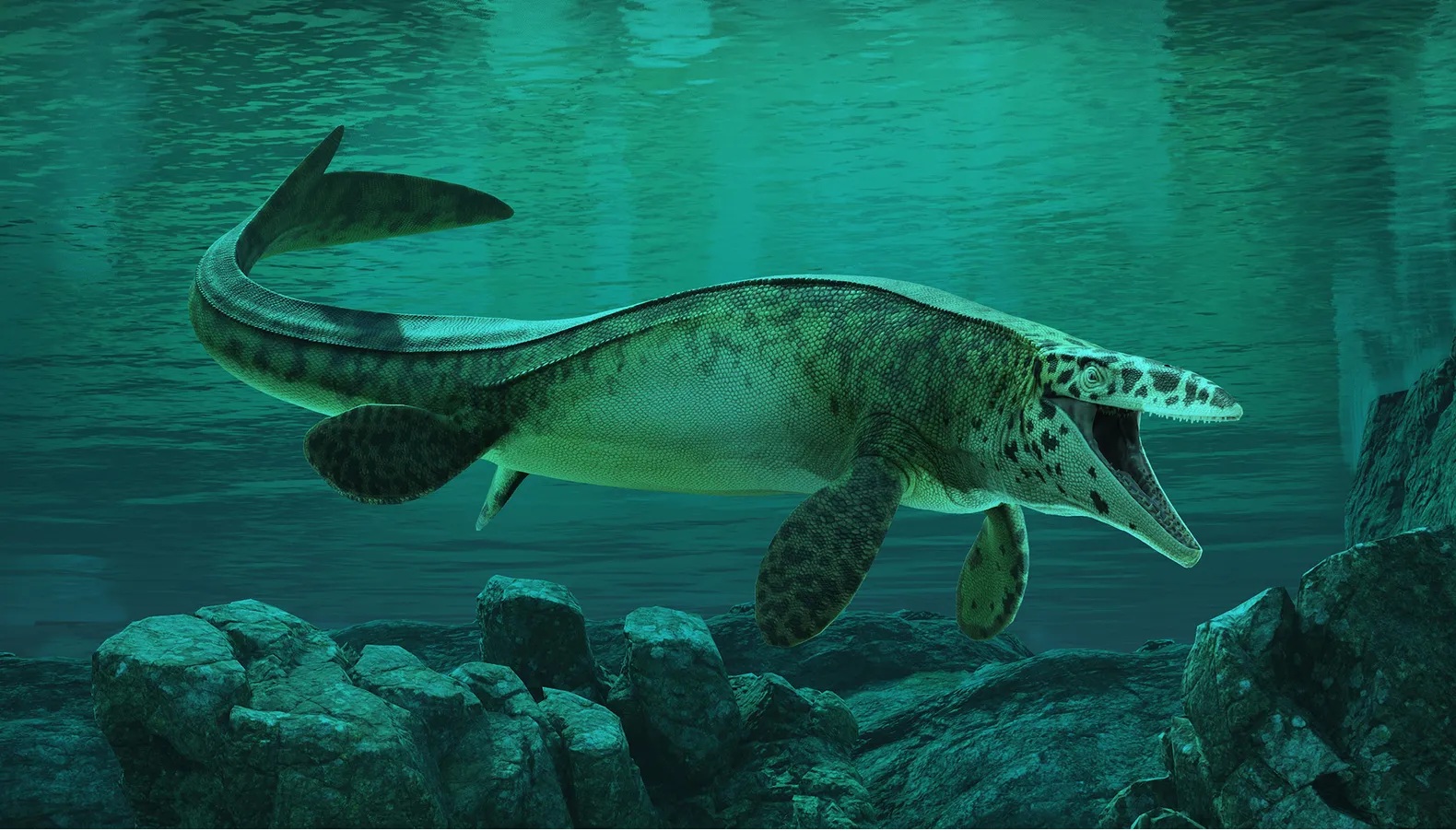
A True Ocean Predator
When alive, this creature reached an impressive length of 13 meters (about 43 feet). It possessed powerful jaws, strong neck muscles, and serrated teeth, making it an apex predator of its time — comparable to the land-based Tyrannosaurus rex.
The name “rex,” meaning “king” in Latin, reflects its position as one of the most dominant predators in its marine environment.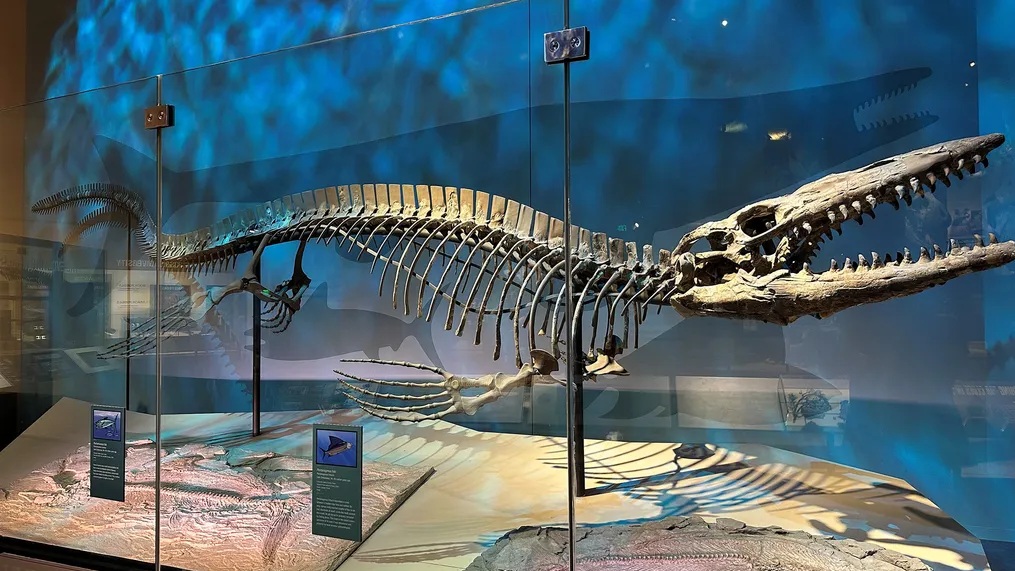
Compared to the previously known Tylosaurus proriger, this new species was over 4 meters longer, lived several million years later, and had more robust anatomical features suited for hunting large prey.
The discovery has also led to the reclassification of dozens of other fossils stored in American museums that had been misidentified for years.
Some specimens show signs of severe injuries, including one nicknamed “Black Knight” from the Perot Museum of Nature and Science in Dallas, which had a broken snout and lower jaw — likely the result of combat with another individual of the same species.
Most fossils of Tylosaurus rex have been found in Texas. During its time, a vast inland sea stretched from the Gulf of Mexico to the Arctic, teeming with marine life where these giant mosasaurs thrived.