Germany Announces Ambitious Plan to Repatriate Up to 800,000 Syrian Refugees
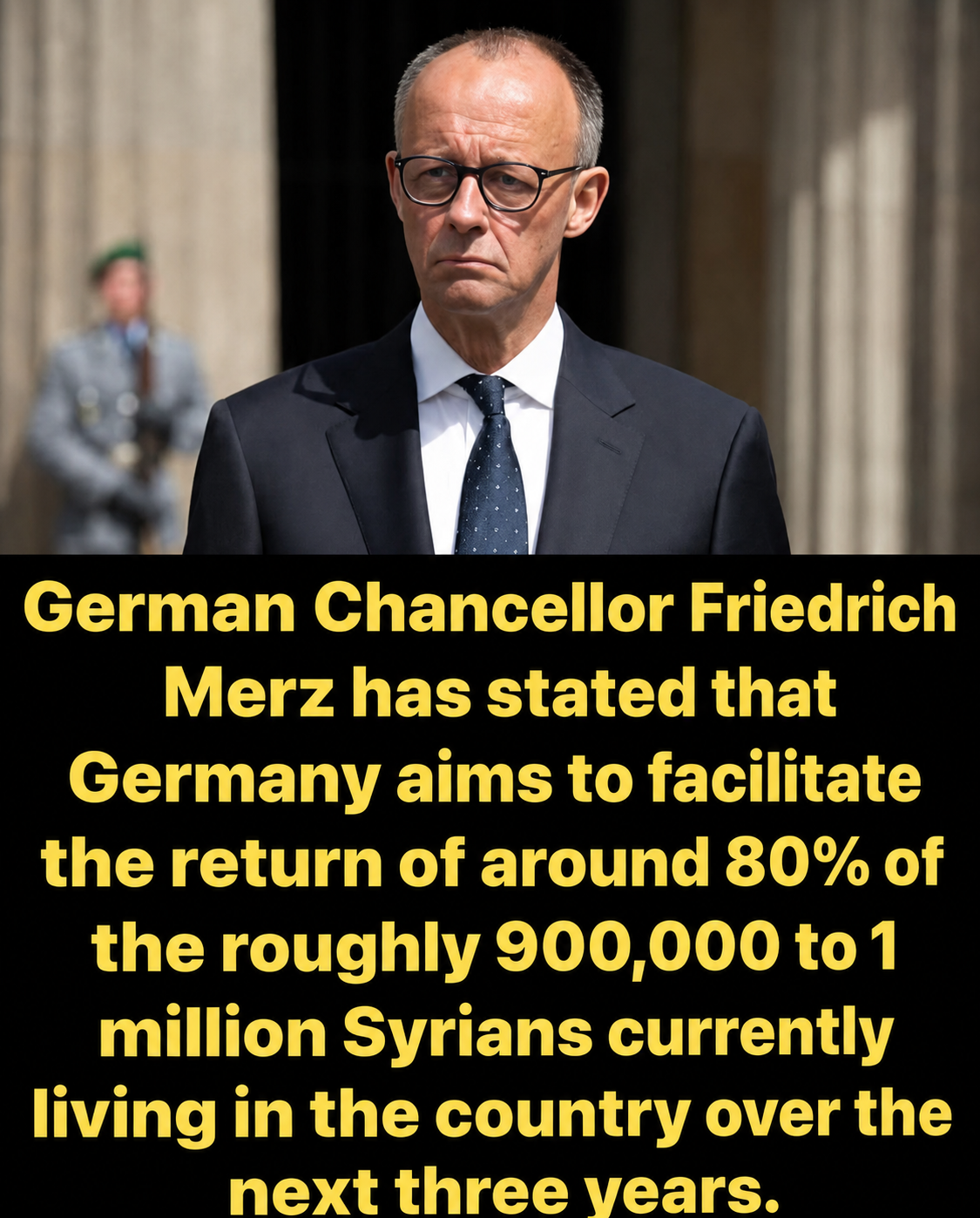
German Chancellor Friedrich Merz has announced a major policy shift, declaring that Germany intends to facilitate the return of approximately 80% of the roughly 900,000 to 1 million Syrians currently living in the country over the next three years.
The plan aims to repatriate between 700,000 and 800,000 individuals, marking one of the largest-scale return programs in Europe in recent decades. According to the Chancellor, priority will be given to those without valid residence permits and individuals with criminal records.
Merz emphasized that the returns would largely be voluntary, supported by financial incentives — with reports suggesting payments of up to €8,000 per person — along with logistical assistance for rebuilding lives in Syria following the fall of the Assad regime.
The announcement comes after recent discussions between German officials and Syria’s interim leadership. Germany has argued that improved stability in parts of Syria now makes large-scale returns feasible and necessary, citing integration challenges, housing shortages, and public pressure amid high immigration numbers in recent years.
The policy has sparked intense debate across Germany and Europe. Supporters view it as a pragmatic step toward reducing strain on social services and honoring the temporary nature of refugee protection. Critics, including migrant advocacy groups and some opposition politicians, have raised concerns about safety in Syria and potential forced returns.
This development reflects a broader shift in German and European migration policy following the 2015–2016 influx and recent electoral gains by center-right and conservative parties across the continent.
The German government is expected to provide more detailed implementation plans in the coming weeks.