Diving 8,000 Meters to the Ocean Floor, Experts Discover a Bitter Truth About What Lies Inside the Creatures There
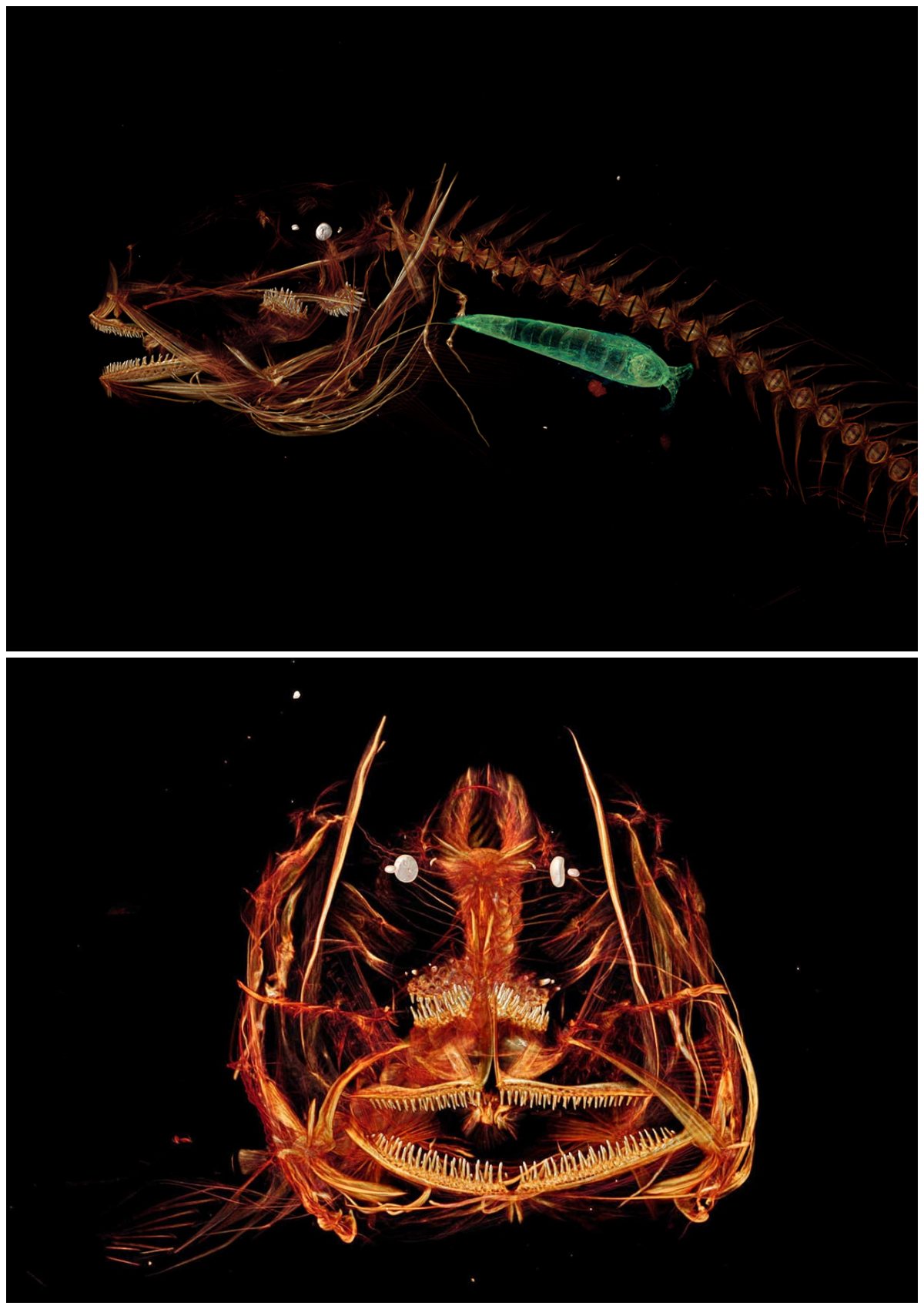
The most horrifying discovery in the oceanographers’ report wasn’t the bizarre appearance of the creatures, but what was found inside their bodies.
The Mystery of the Mariana Trench
The Mariana Trench, the deepest and darkest unexplored region on Earth, has long fueled theories about sea monsters. At nearly 11,000 meters deep, it features crushing pressure equivalent to stacking 50 jumbo jets on a person’s head, bone-chilling cold, and eternal darkness. Many believed that in such an extreme environment, life would be impossible—or if it existed, it would be home to giant prehistoric beasts like the Megalodon shark.
However, a historic expedition by oceanographers to the bottom of the Mariana Trench revealed a completely different reality. It shattered expectations of massive sea monsters but uncovered a far more terrifying truth.
The Spineless Ruler with Transparent Skin
When the specialized submersible reached the trench floor, high-resolution cameras did not capture any giant creatures. Instead, the true dominant species in this dark realm is a small, soft-bodied fish known as the Mariana snailfish (Pseudoliparis swirei). Living at depths around 8,000 meters, it is the deepest-dwelling fish species ever discovered on the planet.
This fish has no scales, and its skin is so transparent that its internal organs are clearly visible. To survive the pressure that could crush steel, the Mariana snailfish has evolved in a remarkable way. Its bones are not made of hard calcium but flexible cartilage. Additionally, its cells contain special proteins that strengthen cell membranes against deformation under extreme pressure. It moves slowly and quietly, acting as a top predator in this isolated ecosystem by feeding on small crustaceans.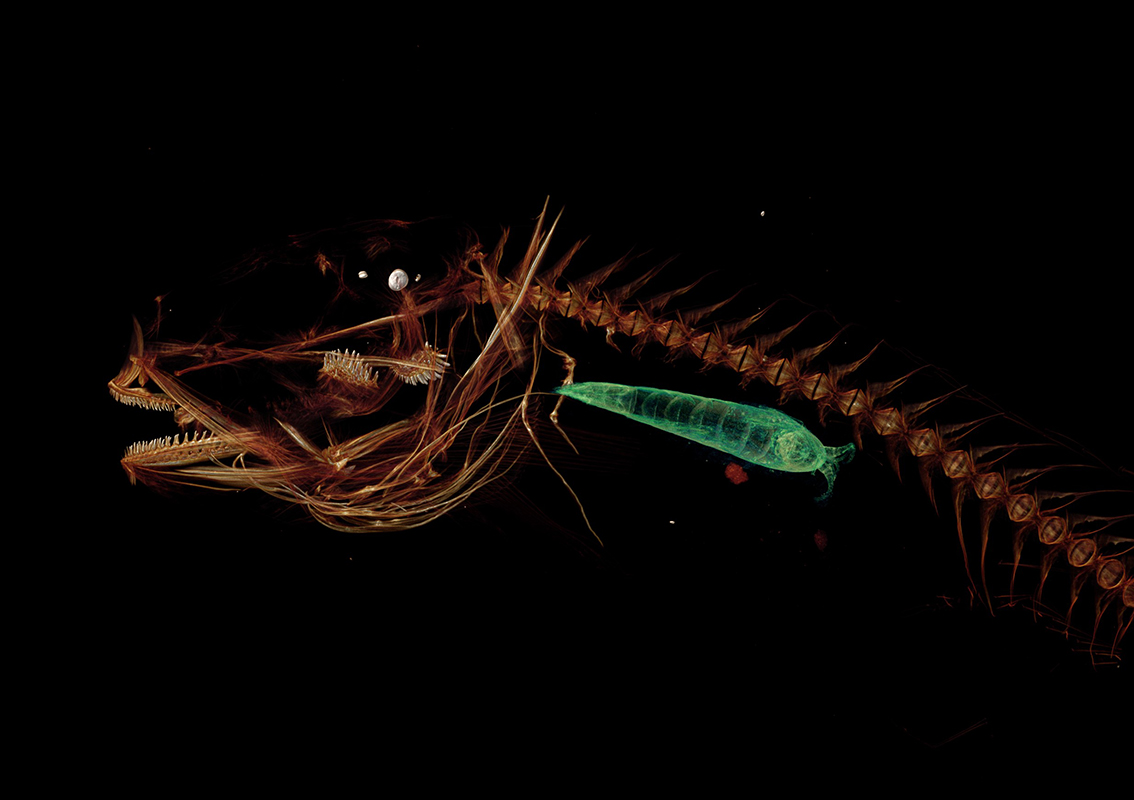
The Horrifying Truth Inside the Creatures
The most shocking revelation from the oceanographers was not the creatures’ strange appearance, but what was inside them. When scientists trapped and brought small crustaceans from the trench floor to the laboratory, they were stunned to find that 100% of the samples contained microplastics in their digestive systems.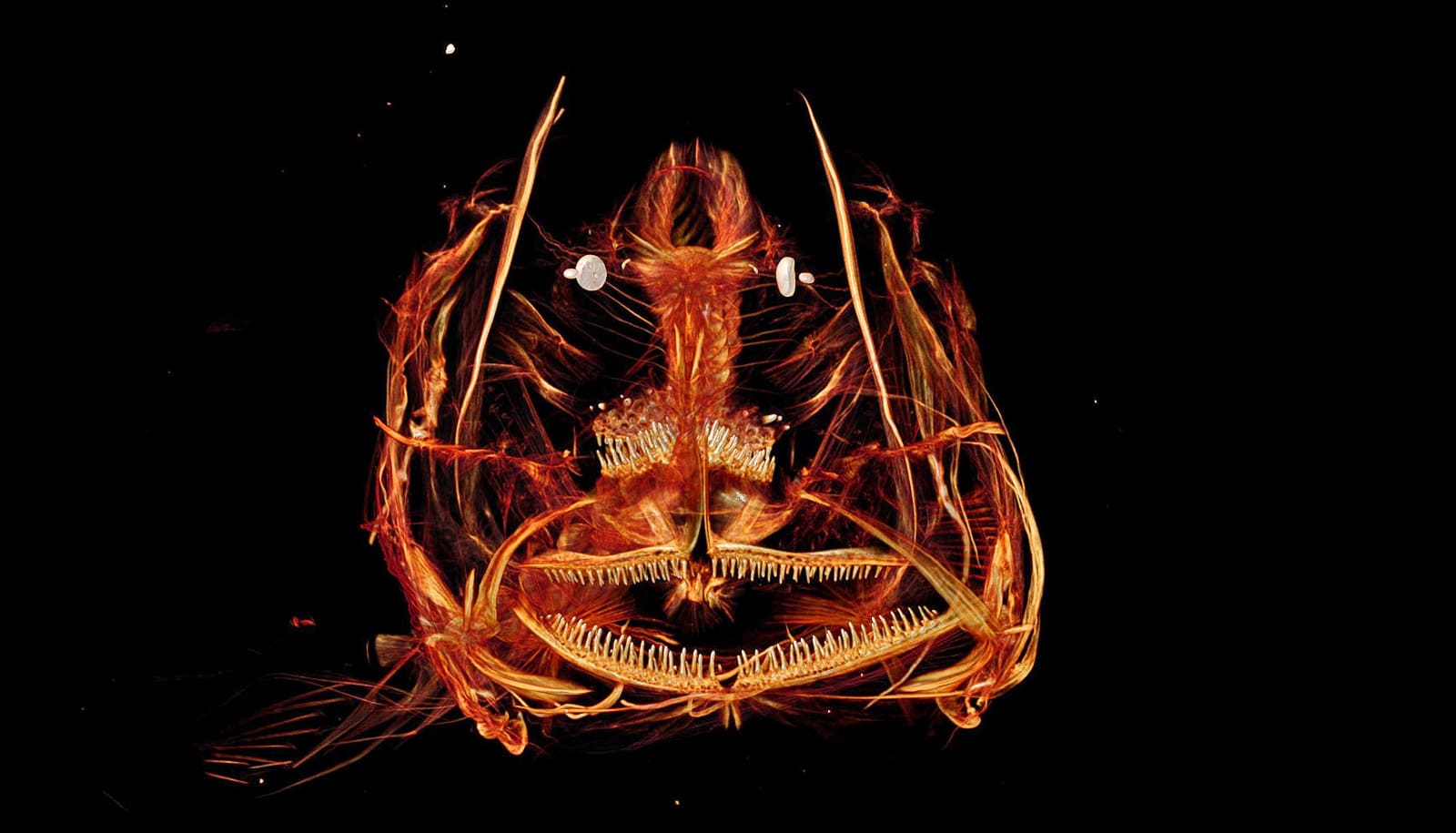
This research was conducted by a team from Newcastle University, led by Dr. Alan Jamieson.
The researchers deployed specialized deep-sea traps into the six deepest ocean trenches in the Pacific Ring of Fire, including the Mariana Trench at nearly 11,000 meters. They collected samples of small amphipod crustaceans—the primary food source for the Mariana snailfish—for laboratory analysis.
Even in a place thousands of meters away from human civilization, deeper than Mount Everest is tall, human plastic waste has managed to sink down and poison the food chain. Toxic chemicals attached to microplastics accumulate in the bodies of these crustaceans and are then passed on to the snailfish when they hunt.
The primitive life that once dominated this dark zone is now under serious threat—not from the harsh laws of nature, but from industrial remnants originating from the surface. What began as a journey to uncover the last mysteries of nature has instead become a mirror reflecting humanity’s silent but devastating impact on the blue planet.