Madeleine McCann vanished in 2007, but new searches, renewed questions, and continued international attention have brought the case back into focus. Could the truth finally be closer?
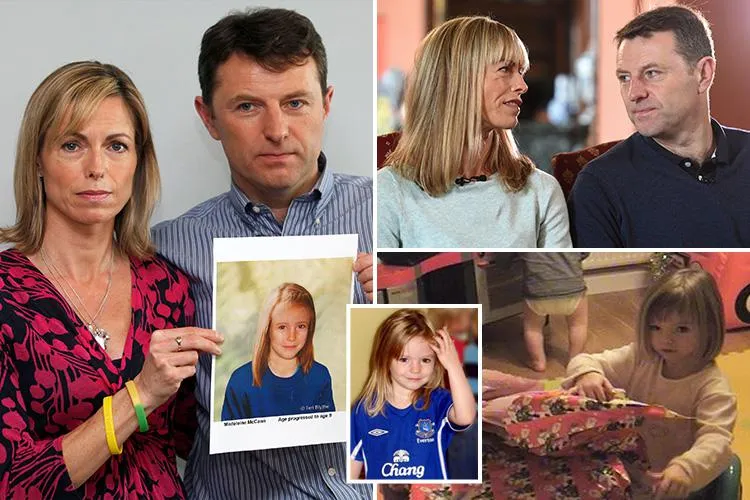

More Than 19 Years After Madeleine Vanished, the World Is Watching Again
A child disappeared from a holiday apartment, three countries launched investigations, and the world waited for an answer—but more than 19 years later, the Madeleine McCann case remains one of modern history’s most haunting unresolved mysteries.
The phrase “nearly 19 years” was accurate during the opening months of 2026. As of July 2026, however, more than 19 years have passed since Madeleine vanished on May 3, 2007.
The night Madeleine disappeared
Madeleine McCann was three years old when she disappeared from her family’s holiday apartment in Praia da Luz, a coastal resort in Portugal’s Algarve region. Her parents, Kate and Gerry McCann, were dining with friends at a nearby restaurant while Madeleine and her younger twin siblings slept inside the apartment. The parents said members of their group regularly returned to check on the children. At approximately 10 p.m., Kate discovered that Madeleine was missing. (AP News)
The disappearance immediately triggered a major search. Photographs of Madeleine—particularly the distinctive mark visible in one of her eyes—were distributed internationally. Celebrities, athletes and political figures joined appeals for information, while reported sightings came from numerous countries. None produced confirmed evidence of where she had gone. (AP News)
Portuguese investigators briefly treated Kate and Gerry McCann as formal suspects in 2007. They were never charged, and Portuguese authorities removed their suspect status when the original investigation was closed in July 2008. Claims that the parents had been proven responsible are therefore unsupported by the official record. (AP News)
Why attention has returned
The renewed international interest is largely connected to Christian Brueckner, a German national who lived in the Algarve and spent time around Praia da Luz when Madeleine disappeared.
German investigators publicly identified him as a suspect in 2020. Portuguese authorities formally designated him a suspect in 2022. German prosecutors have said they believe Madeleine is no longer alive and suspect Brueckner was responsible, but they have not publicly revealed enough evidence to charge him. Brueckner has consistently denied involvement. (Reuters)
That distinction is essential: he remains a suspect, not a person convicted—or even formally charged—in Madeleine’s case.
Brueckner was serving a seven-year sentence in Germany for an unrelated crime committed in Portugal. He was released in September 2025 after completing that sentence. German prosecutors said he would be subject to conditions including electronic monitoring, regular meetings with a supervising officer and requirements to report changes of residence. (Reuters)
Shortly before his release, Britain’s Metropolitan Police confirmed that Brueckner remained a suspect in Operation Grange, the British investigation into Madeleine’s disappearance. British officers requested an interview with him, but he refused. Police said they would continue pursuing every viable line of inquiry. (Reuters)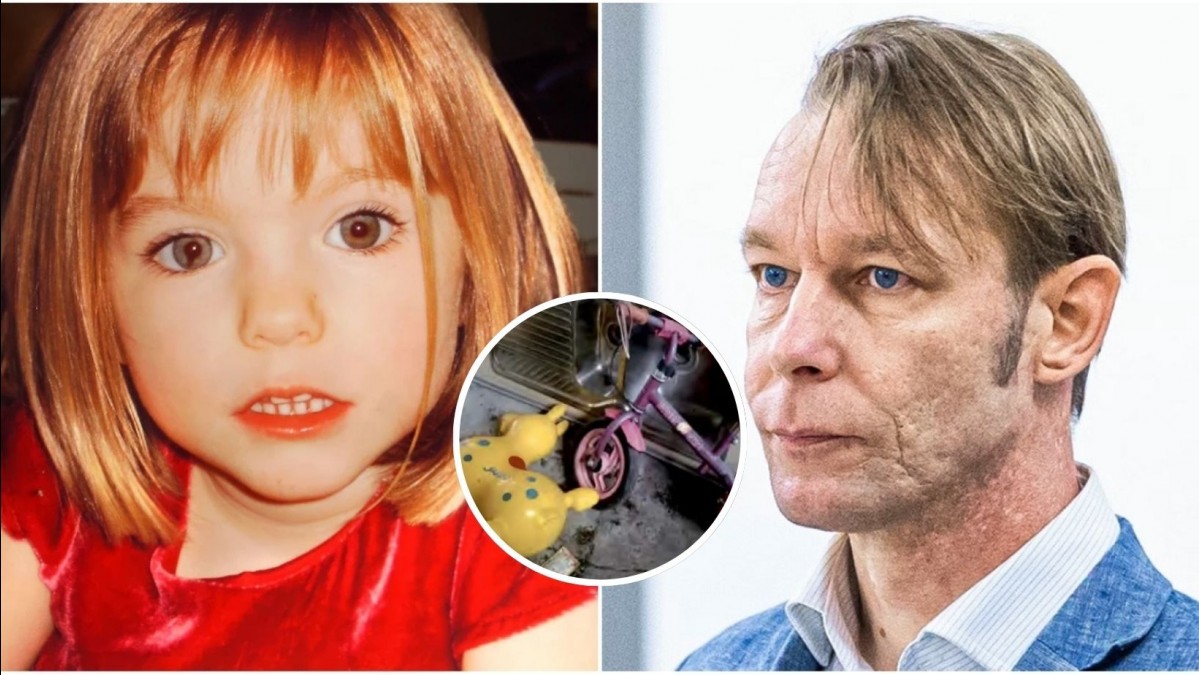
The major search in Portugal
In June 2025, German and Portuguese officers conducted another large search near Praia da Luz. The operation covered land in the Lagos municipality, including countryside between the resort and locations associated with Brueckner. Officers examined scrubland and abandoned structures, while ground-penetrating radar was reportedly used across several hectares. (Reuters)
The search was requested by prosecutors in Braunschweig, Germany, under a European Investigation Order. Portuguese authorities said any recovered material would be transferred to Germany’s Federal Criminal Police Office for examination. The operation ended without authorities announcing a significant breakthrough. (Reuters)
It followed earlier searches, including excavations around Praia da Luz in 2014 and an examination of land near the Arade reservoir in 2023. None of those operations produced publicly confirmed evidence establishing what happened to Madeleine. (AP News)
Could the suspect face proceedings in Britain?
A new discussion emerged around the nineteenth anniversary of the disappearance. In May 2026, Peter Bedford, the British Member of Parliament representing the McCann family’s area, called for Brueckner to be brought to the United Kingdom if prosecutors obtained sufficient evidence to place him on trial. ITV also reported claims that British detectives were considering whether a case could be presented to the Crown Prosecution Service. (ITVX)
However, the Metropolitan Police did not publicly confirm that charges were imminent. Its official response was more limited: the investigation remains active, detectives continue to examine the events of May 3, 2007, and British officers remain in close contact with German and Portuguese authorities. (ITVX)
Any suggestion that a trial has already been approved—or that extradition is certain—would therefore go beyond what authorities have confirmed.
Operation Grange remains active
Britain created Operation Grange in 2011, initially to review the Portuguese investigation. It became a full investigation in 2013. According to the Metropolitan Police’s current official page, the force continues working with law-enforcement agencies in Portugal and Germany, and the UK Home Office continues to fund the operation. (Cảnh sát London)
The investigation is now maintained by a much smaller team than during its early years, but it has not been officially closed. Detectives continue to receive information and evaluate potential leads.
What is known—and what remains unproven
Several facts are firmly established:
Madeleine disappeared from the Praia da Luz apartment on May 3, 2007. She has never been found. No person has been charged in connection with her disappearance. German, Portuguese and British authorities continue investigating, with Brueckner remaining their principal publicly identified suspect. He denies responsibility. (ITVX)
What remains unknown is far greater. There is no publicly established account explaining how Madeleine left the apartment, who may have taken her, where she was brought or what happened afterward. German prosecutors’ belief that she is no longer alive has not been supported publicly by the discovery of her remains or by evidence tested at a criminal trial.
That gap between official suspicion and courtroom-ready proof is the central obstacle. Investigators may possess confidential intelligence, witness information or circumstantial evidence, but suspicion alone cannot produce a lawful conviction.
Where the case stands now
As of July 2026, the Madeleine McCann investigation remains open but unresolved. The 2025 search did not produce a publicly announced breakthrough. Brueckner is no longer imprisoned on his previous sentence, has refused a British police interview and has not been charged over Madeleine. The latest public developments concern continued international cooperation and debate over possible future legal action—should sufficient admissible evidence emerge. (ITVX)
For readers following this case, the safest approach is to distinguish verified police statements from dramatic online claims. Reports of secret confessions, confirmed remains, imminent arrests or supposed sightings regularly circulate, but the official position remains unchanged: Madeleine is still missing, the investigation continues, and the evidence necessary to solve the case publicly has not yet emerged.
Would you like me to monitor this case and alert you only when a verified major development occurs?