Kaleb’s Incredible Journey: Double Amputee Refuses to Let Rare Syndrome Define His Life
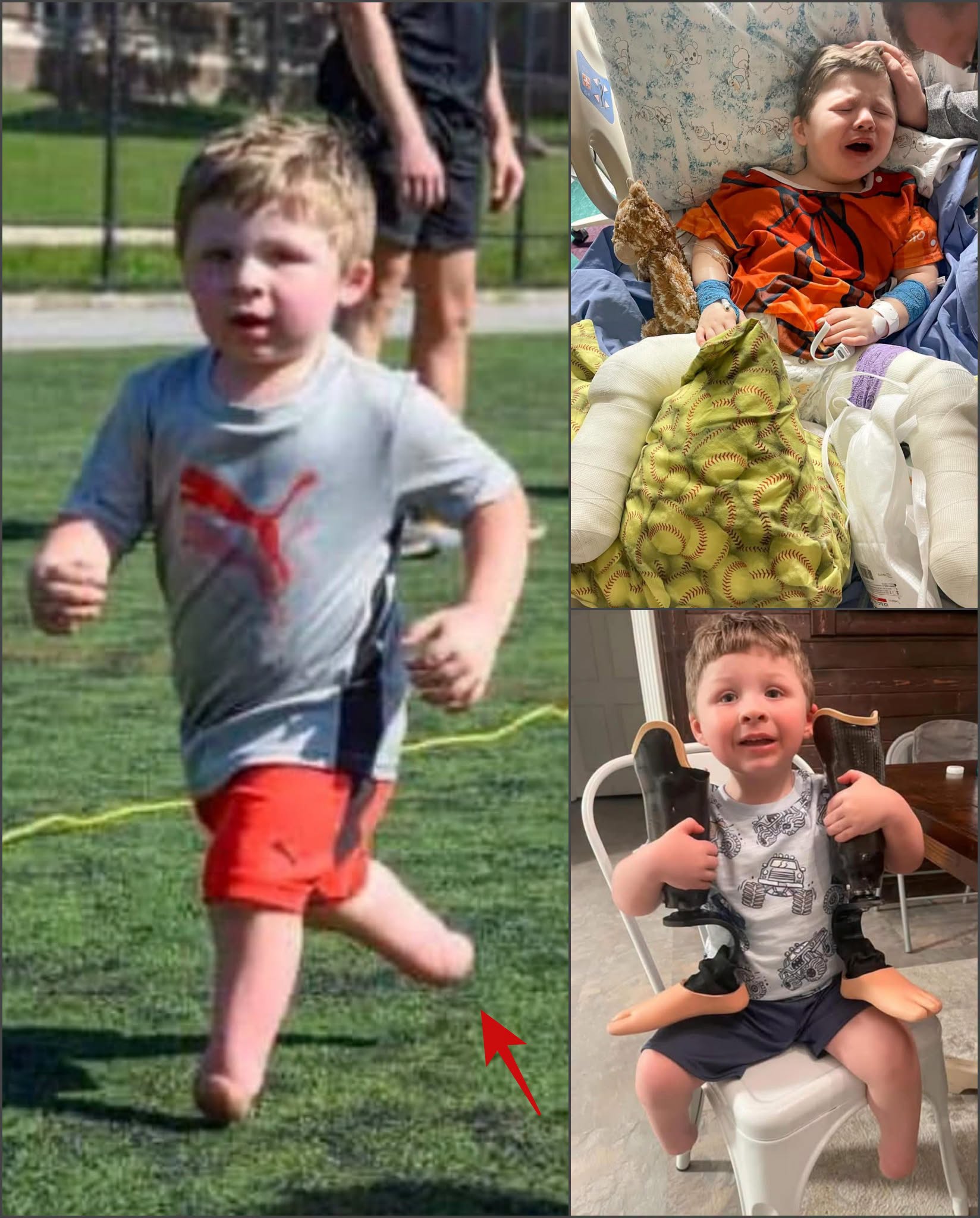
When Kaleb was born, his parents quickly realized their little boy faced extraordinary challenges. Diagnosed with Feingold syndrome, a rare genetic condition that can affect the development of the hands, feet, digestive system, and other parts of the body, Kaleb’s lower limbs did not develop typically. Doctors determined that the best chance for him to achieve long-term mobility would be a difficult decision no parent ever wants to make.
At just eight months old, Kaleb underwent a double foot amputation.
While the surgery was heartbreaking for his family, it marked the beginning of a new chapter rather than the end of one. After recovering, Kaleb was fitted with his first prosthetic legs and began intensive physical therapy. Step by step, he learned to balance, stand, walk, and eventually run.
Today, Kaleb enjoys many of the same activities as other children his age. Whether he’s playing with friends, exploring outdoors, or dreaming about baseball, he refuses to let his disability define who he is. His bright smile and determination have inspired everyone around him.
As Kaleb continues to grow, his prosthetic limbs must be regularly adjusted or replaced to match his changing body. These transitions can be uncomfortable and sometimes painful, requiring additional therapy and adaptation. This year, he may have to sit out part of the T-ball season while adjusting to new prosthetic legs, but he already has his sights set on returning to the field as soon as he’s ready.
Feingold syndrome is an extremely rare inherited disorder, most commonly caused by changes in the MYCN gene. Symptoms vary widely from person to person, and with early medical care, rehabilitation, and appropriate assistive devices, many children with the condition are able to lead active, fulfilling lives.
Kaleb’s journey is a testament to resilience, modern medical care, and the unwavering support of a family determined to help their son reach his full potential. Every new step he takes is more than just movement—it’s proof that courage can overcome even the greatest challenges.
Sources: National Organization for Rare Disorders (NORD);