A Mother’s Invention That Helped Children Take Their First Steps Together
When Debby Elnatan learned that her young son Rotem had cerebral palsy and might never walk, she refused to accept that his world had to be limited. Born prematurely at 32 weeks, Rotem was diagnosed with the condition, and by the time he was two years old, medical professionals told his mother that he had little awareness of his legs and would likely spend his life in a wheelchair. Rather than focusing on limitations, Debby, an Israeli music therapist, chose to focus on possibilities. Out of what she later described as “pain and desperation,” she began walking with her son day after day in a strenuous effort to give him the experience of movement. From that determination came a simple yet transformative idea: a support system that would allow a child with mobility challenges to stand upright and take steps alongside a parent or caregiver.
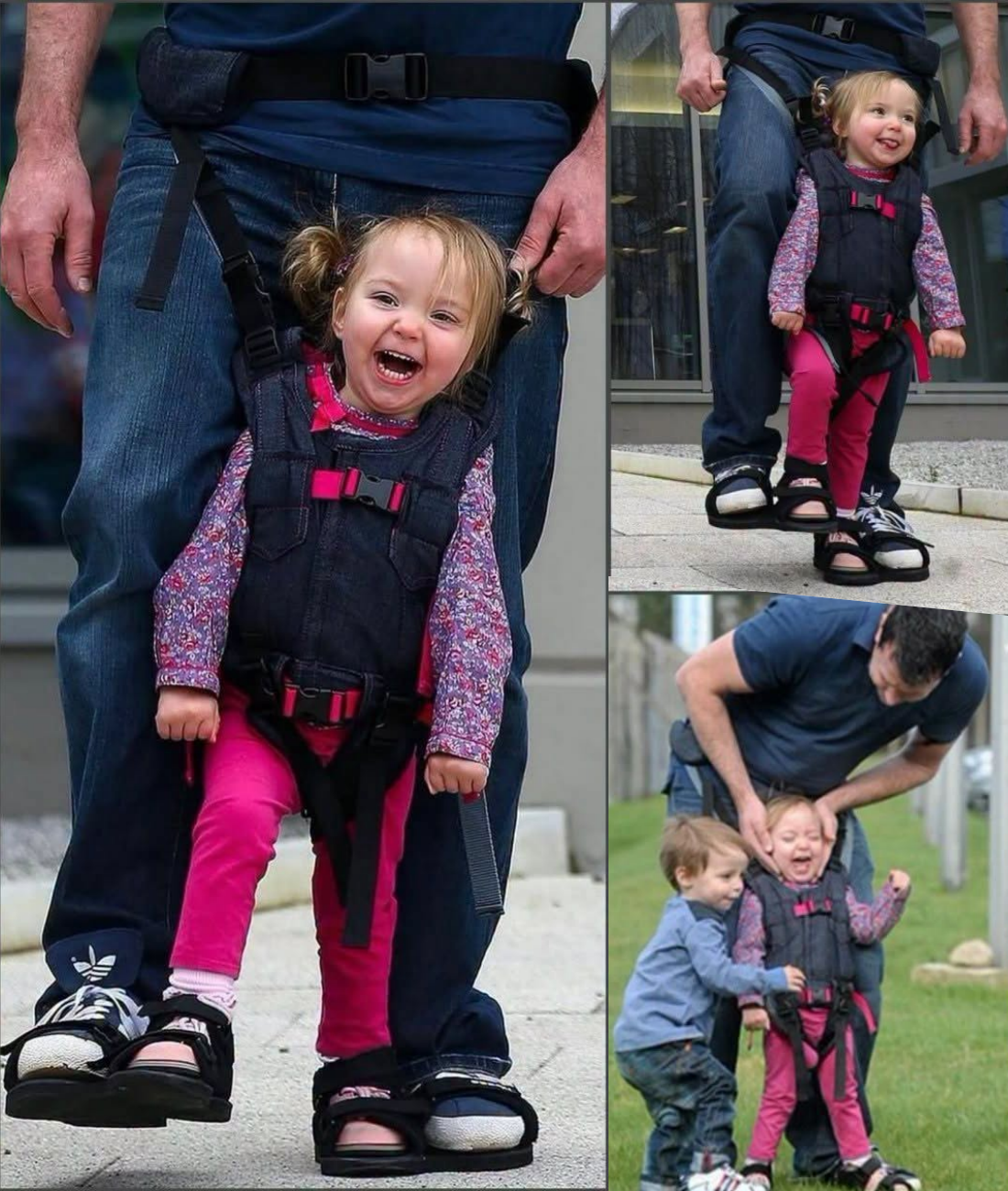
That idea evolved into the Upsee, a three-part mobility harness consisting of an adult hip belt, a child harness, and specially designed shared sandals. The child is secured in the harness, which connects to the adult’s belt, while both wear the linked sandals that enable them to step in unison. With the adult providing the necessary support and balance, the child’s hands remain free for play, exploration, and interaction. The device was refined and brought to market by the Northern Irish company Leckey under its Firefly brand after successful trials in the United Kingdom, the United States, and Canada. It launched internationally around 2014 and has since been used by thousands of families in more than 100 countries.
For Rotem, the Upsee meant the chance to stand, move, and share everyday moments—such as giving hugs to his siblings—that many families take for granted. Although he did not go on to walk independently, his mother has spoken of the love for life that grew from an ordinary, fulfilled childhood made possible by these experiences. For other children with cerebral palsy and similar motor impairments, the Upsee has opened doors to weight-bearing activity, social participation, and new confidence. Parents have described watching their children kick a ball, dance, walk down an aisle, or simply explore the world side by side for the first time. Therapists note that while the device is not a form of clinical therapy and does not guarantee independent walking, it can support physical development, emotional well-being, and family inclusion in meaningful ways.
Debby Elnatan’s invention began as a personal response to her own child’s challenges and grew into a practical tool that continues to help families around the world. By designing a system that lets children with mobility differences stand, move, and discover life alongside the people they love, she turned a mother’s determination into opportunities that many once thought impossible.
Sources People magazine: “Debby Elnatan’s Invention Allows Disabled Son to Walk” (April 2014).