Lindsay Clancy Weeps as Doctors Describe Efforts to Save Her Sons After Jury Visits Duxbury Home
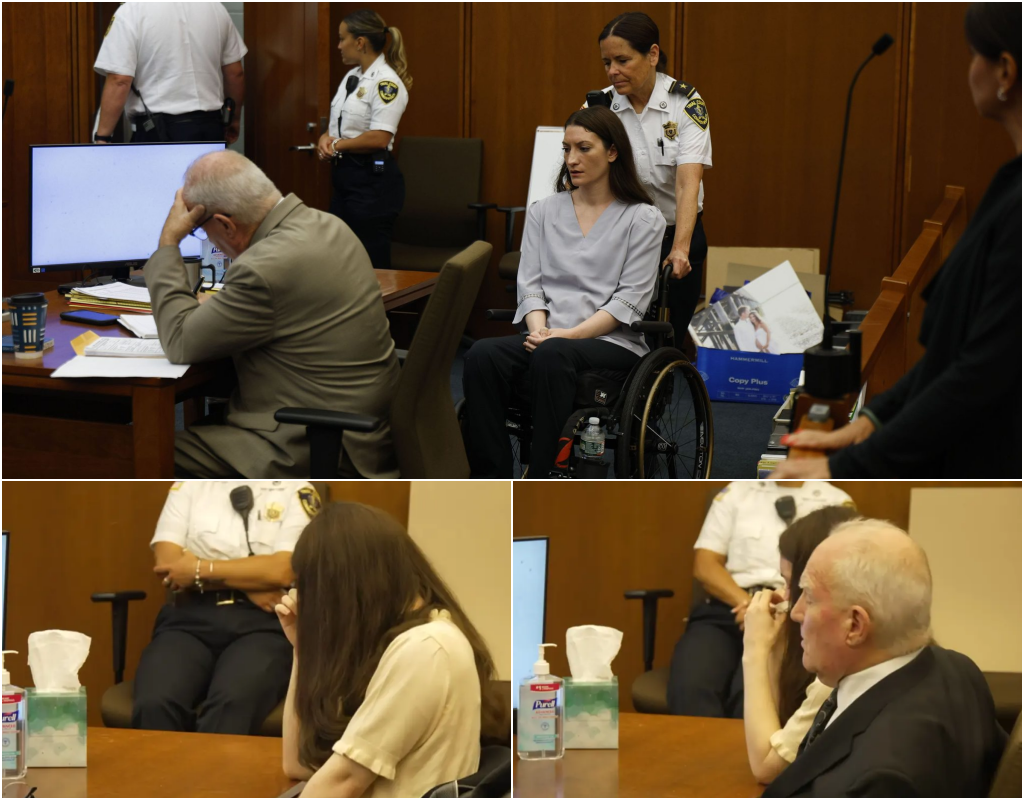
The courtroom in Plymouth, Massachusetts, grew increasingly emotional as emergency-room doctors described their attempts to save two of Lindsay Clancy’s young sons on the night of January 24, 2023.
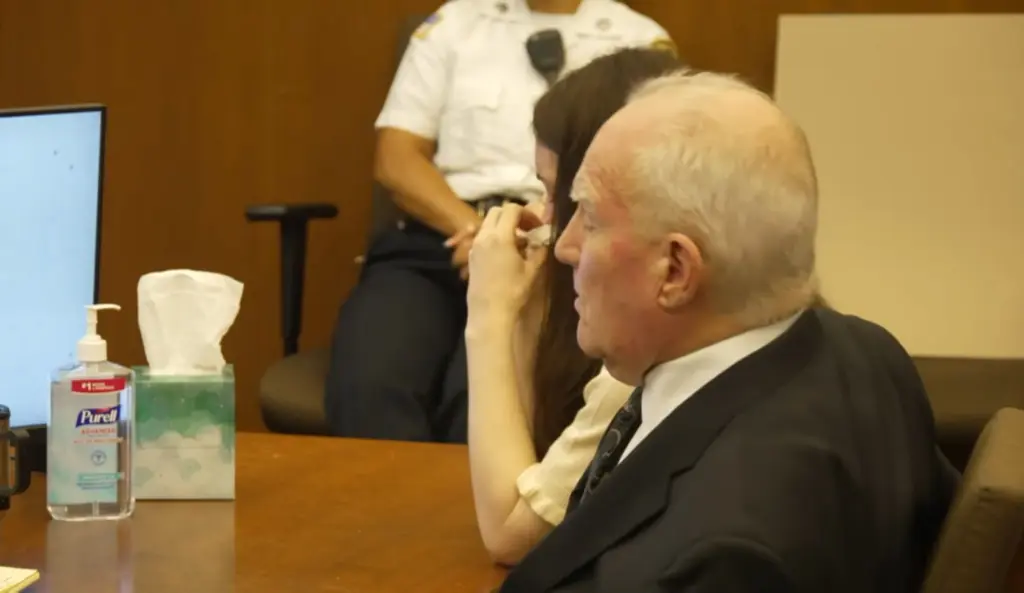
Clancy, 35, lowered her head and covered part of her face as the testimony unfolded. Her shoulders shook as she cried at the defense table while medical professionals recalled receiving children who were unresponsive and in critical condition. The testimony came during the opening week of her trial on three counts of first-degree murder.
Clancy does not dispute that she killed her three children—5-year-old Cora, 3-year-old Dawson and 8-month-old Callan—inside the family’s former home in Duxbury. The central question for jurors is whether she was criminally responsible at the time. Prosecutors argue that her actions were deliberate and planned, while her attorneys contend that severe postpartum mental illness left her unable to understand or control what she was doing.

Doctors Recall the Fight to Save Callan
Dr. Benjamin Kaufman testified about treating Callan after the infant was brought to Beth Israel Deaconess Hospital in Plymouth.
According to Kaufman, Callan was not breathing when he arrived. The medical team performed chest compressions, administered medication and used a manual resuscitation device in an effort to restore his vital functions. A heartbeat returned approximately ten minutes after he reached the hospital, but the baby did not breathe independently or display signs of brain function during Kaufman’s care.
Because Callan required specialized pediatric treatment beyond what the Plymouth hospital could provide, he was transported by helicopter to Boston Children’s Hospital. Despite the medical teams’ efforts, he did not survive.
As Kaufman described the treatment, Clancy appeared overwhelmed. She rested a hand against her face, bowed her head and cried visibly at the defense table.
Another emergency physician, Dr. Mark Tenerowicz, was involved in the treatment of Dawson. Court accounts described prolonged efforts to resuscitate the 3-year-old after he arrived without a pulse or spontaneous breathing. The medical evidence formed part of the prosecution’s reconstruction of what happened after first responders entered the Clancy home.
The testimony was among the most difficult moments of a trial already filled with deeply emotional evidence.
Jurors Taken Through the Family’s Former Home
Earlier that day, the 18 jurors and alternates left the courthouse for a supervised visit to Duxbury.
They were first driven past two businesses connected to the timeline: a pharmacy where Patrick Clancy collected medication for Cora and a restaurant where he picked up dinner. Prosecutors say Lindsay had asked him to complete those errands to ensure she would be alone with the children. Her defense disputes the prosecution’s interpretation of that request.
The restaurant was approximately 5.5 miles from the house, while the pharmacy was roughly one mile away. The distances matter because prosecutors contend that Clancy used her phone to determine how long Patrick would be gone.
Jurors then entered the Cape Cod-style home in groups of six. During the roughly 40-minute visit, they were shown the interior of the residence, including the basement where the children were found, as well as the yard where Lindsay was discovered after falling from a second-story window.
Clancy did not accompany the jury and has not returned to the property since the night of the tragedy. The house is now occupied by a different owner.
Court-supervised visits to relevant locations are unusual but can be authorized when a judge believes jurors may benefit from seeing distances, room arrangements or other physical details that photographs cannot fully convey.
Patrick Clancy Describes Returning Home
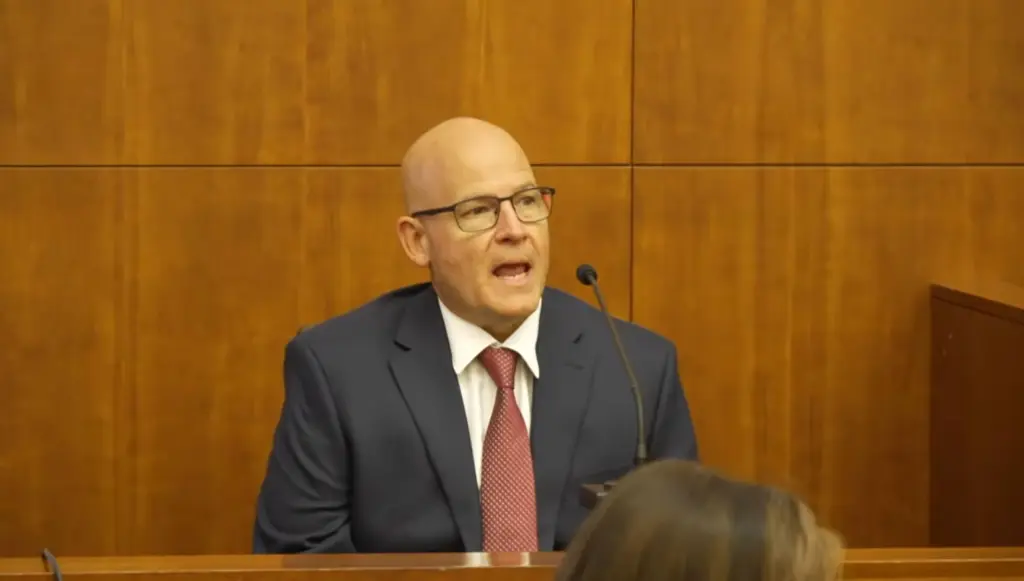
The prosecution’s first witness was Clancy’s former husband, Patrick Clancy.
Patrick told jurors that his then-wife appeared normal when he left the house to collect the medication and takeout. Before departing, he spent a final ordinary moment with the children—holding Callan and saying goodbye to Cora.
When he returned, the house seemed unusually quiet. He eventually found Lindsay severely injured in the backyard after she had attempted to end her life.
After emergency responders arrived, Patrick went into the basement and found the children unresponsive. His anguished 911 call was later played in court. Judges restricted the media from rebroadcasting that recording and from distributing certain images to protect the dignity and privacy of the children and their surviving family members.
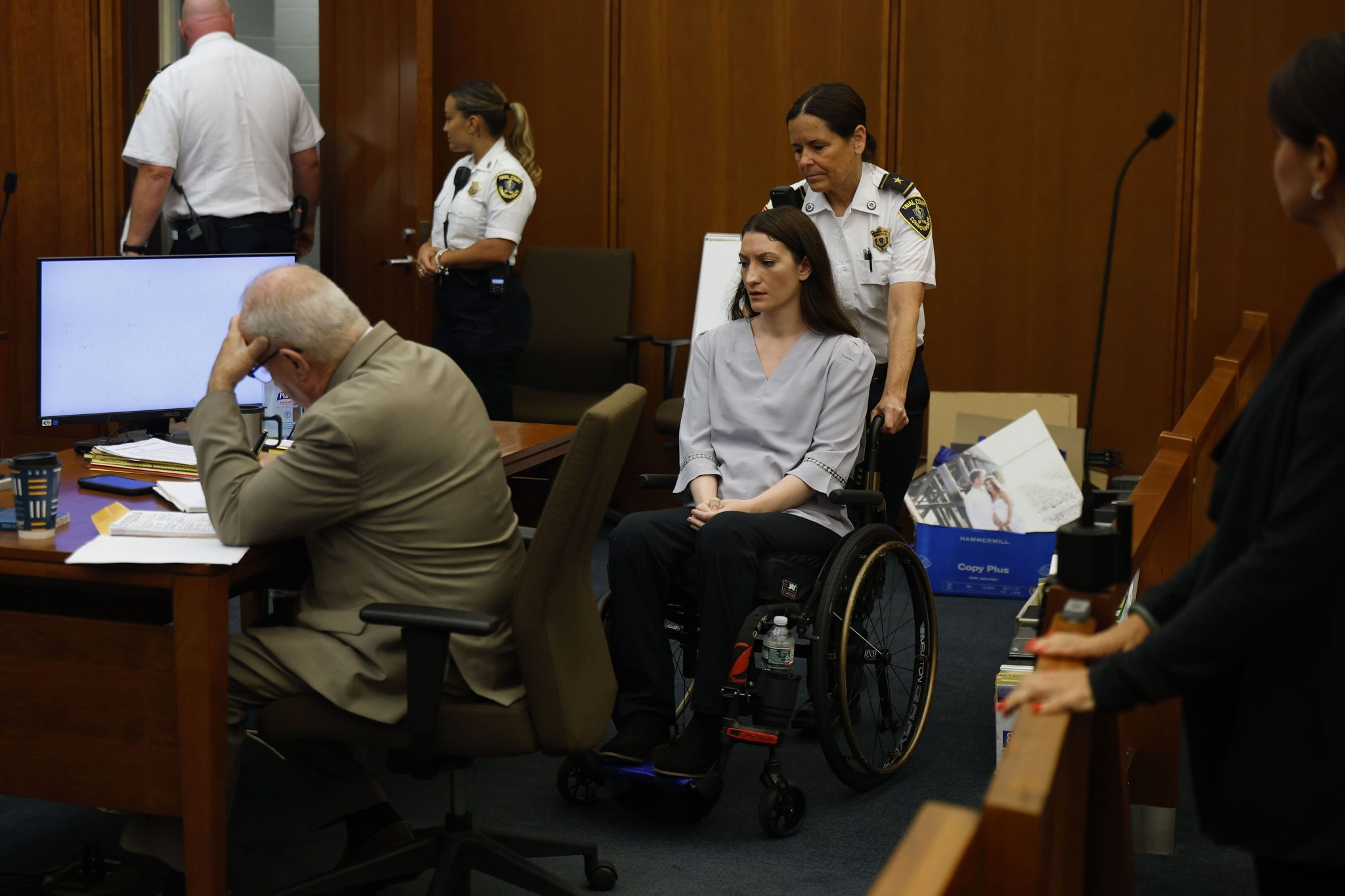
Lindsay’s injuries left her paralyzed from the waist down. She now attends court in a wheelchair.
Patrick and Lindsay have since divorced. He has previously said publicly that he forgave her, although he has also described the profound and continuing grief caused by the loss of Cora, Dawson and Callan.
Two Very Different Interpretations of the Same Evidence
Both sides agree on who caused the children’s deaths. Their dispute concerns Clancy’s state of mind and whether Massachusetts law permits her to be held criminally responsible.
Assistant District Attorney Shanan Buckingham told jurors that Clancy acted intentionally. Prosecutors say she checked the travel time to the restaurant, arranged for Patrick to leave and carried out the killings in a limited window before he returned. They argue that her ability to organize the errands and act quickly demonstrates planning and awareness.
The defense presents a sharply different account.
Attorney Kevin Reddington says Clancy had been experiencing worsening postpartum psychiatric symptoms for months after Callan’s birth. Her reported symptoms included severe insomnia, anxiety, despair, confusion and suicidal thoughts. She repeatedly sought professional help, was admitted to psychiatric facilities and received numerous medications from different medical providers.
Her attorneys say she was suffering from postpartum psychosis and bipolar disorder, conditions they argue were aggravated by an unstable combination of psychiatric prescriptions. According to the defense, she was experiencing a command hallucination instructing her to harm the children before ending her own life.
Prosecutors acknowledge that Clancy had mental-health difficulties but argue that being mentally ill does not automatically eliminate criminal responsibility. They must convince jurors that she understood her conduct was wrong or retained the ability to obey the law.
The defense, meanwhile, maintains that her illness had overtaken her ability to perceive reality and control her behavior.
A Case Raising Questions Beyond the Courtroom
The trial has drawn national attention partly because of its devastating facts and partly because it raises difficult questions about postpartum psychiatric care.

Clancy was a labor-and-delivery nurse who knew how to seek medical assistance. In the months before the tragedy, she contacted providers, used crisis services and entered psychiatric treatment. Her lawyers argue that the medical system failed to identify the severity of her condition or coordinate her prescriptions effectively.
Lindsay and Patrick have filed separate legal claims against health-care providers, alleging failures in her assessment and treatment. Providers who have responded deny wrongdoing and dispute claims that she clearly communicated a plan to harm her children. Those civil allegations remain separate from the criminal case.
The murder trial began on July 27, 2026, and is expected to continue for several more weeks. Medical and mental-health experts are expected to play a central role as jurors consider whether Clancy was legally responsible for her actions. As of August 3, no verdict has been reached.
If convicted of first-degree murder, Clancy faces a mandatory sentence of life imprisonment without parole. If jurors find her not guilty because she lacked criminal responsibility, she would be committed to a state psychiatric facility rather than released.
For now, the case remains unresolved. The jurors have walked through the former family home, heard a father describe the moment his life changed, and listened as doctors recounted their unsuccessful attempts to save two young boys.
What remains before them is one of the most difficult questions a criminal jury can face: whether the person who committed an acknowledged act of unimaginable harm should be held legally responsible—or whether severe mental illness had taken away her ability to understand and control it.