British Authorities Receive Crucial New Dossier on Madeleine McCann Suspect

Nearly two decades after three-year-old Madeleine McCann vanished from a holiday apartment in the Algarve, the investigation into one of the world’s most high-profile missing-person cases has taken a fresh turn. In recent weeks, Scotland Yard has received what British and Portuguese media describe as a “crucial” dossier compiled by German authorities. The file focuses on the case’s main suspect, Christian Brueckner (also spelled Brückner), and is said to contain material that investigators believe could strengthen the long-running inquiry.

According to reports first circulated in the British press and later picked up by outlets in Portugal, the dossier includes photographs, witness accounts and other information relating to Brueckner. Unnamed police sources quoted in the coverage have characterised the contents as “sensational evidence” or “explosive evidence.” German investigators have previously stated that they possess physical evidence supporting their belief that Brueckner was involved in Madeleine’s disappearance and possible death, although they have acknowledged that this evidence is not of a forensic nature.
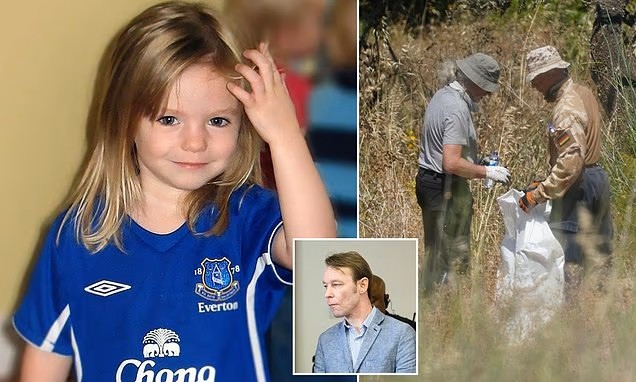
The Metropolitan Police, which has led the British side of the inquiry under the name Operation Grange since 2011, has confirmed only that the investigation remains active. In statements released to the media, the force said it continues to hold discussions with counterparts in Germany and Portugal and that it will pursue any viable lines of inquiry. Officials have not publicly detailed the precise contents of the newly received files.
Background of the Disappearance
Madeleine Beth McCann disappeared on the evening of 3 May 2007 from the family’s rented apartment at the Ocean Club resort in Praia da Luz, in the municipality of Lagos on Portugal’s Algarve coast. She was just days short of her fourth birthday. Her parents, Kate and Gerry McCann, both doctors from the United Kingdom, had been dining with friends at a nearby tapas restaurant while the children slept. When Kate McCann checked on the children later that evening, Madeleine was gone.
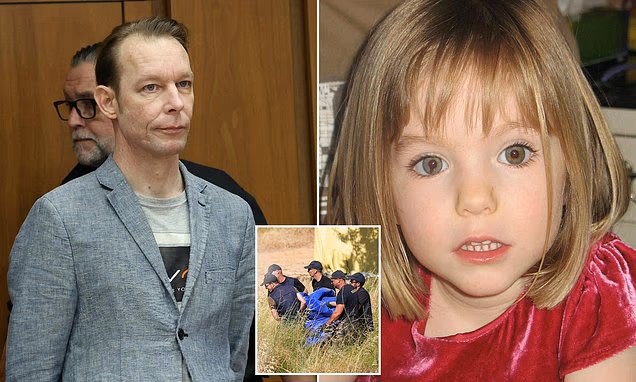
The case quickly became a global media phenomenon. Portuguese police initially focused significant attention on the parents themselves, declaring them formal suspects (arguidos) after traces of blood and the scent of a cadaver were reported in the apartment and a hired car. Those suspicions were later dropped, the parents’ status was lifted, and the Portuguese investigation was archived in 2008. In the years that followed, private investigators hired by the McCanns and later the British Metropolitan Police pursued numerous leads. A Netflix documentary released in 2019 revisited the early stages of the inquiry, though the McCanns declined to participate.

The Emergence of Christian Brueckner as Prime Suspect
German authorities publicly named Christian Brueckner as their prime suspect in 2020. Brueckner, a German national with a history of convictions for sex offences, had lived in the Algarve region around the time of Madeleine’s disappearance. Prosecutors in Braunschweig said they believed Madeleine was dead and that Brueckner was responsible. Among the elements cited in support of their theory was mobile-phone data placing Brueckner’s phone in the Praia da Luz area in the hours before the child went missing. Reports have also referred to a hard drive recovered by investigators that contained image files and other material linked to Portugal during the relevant period.
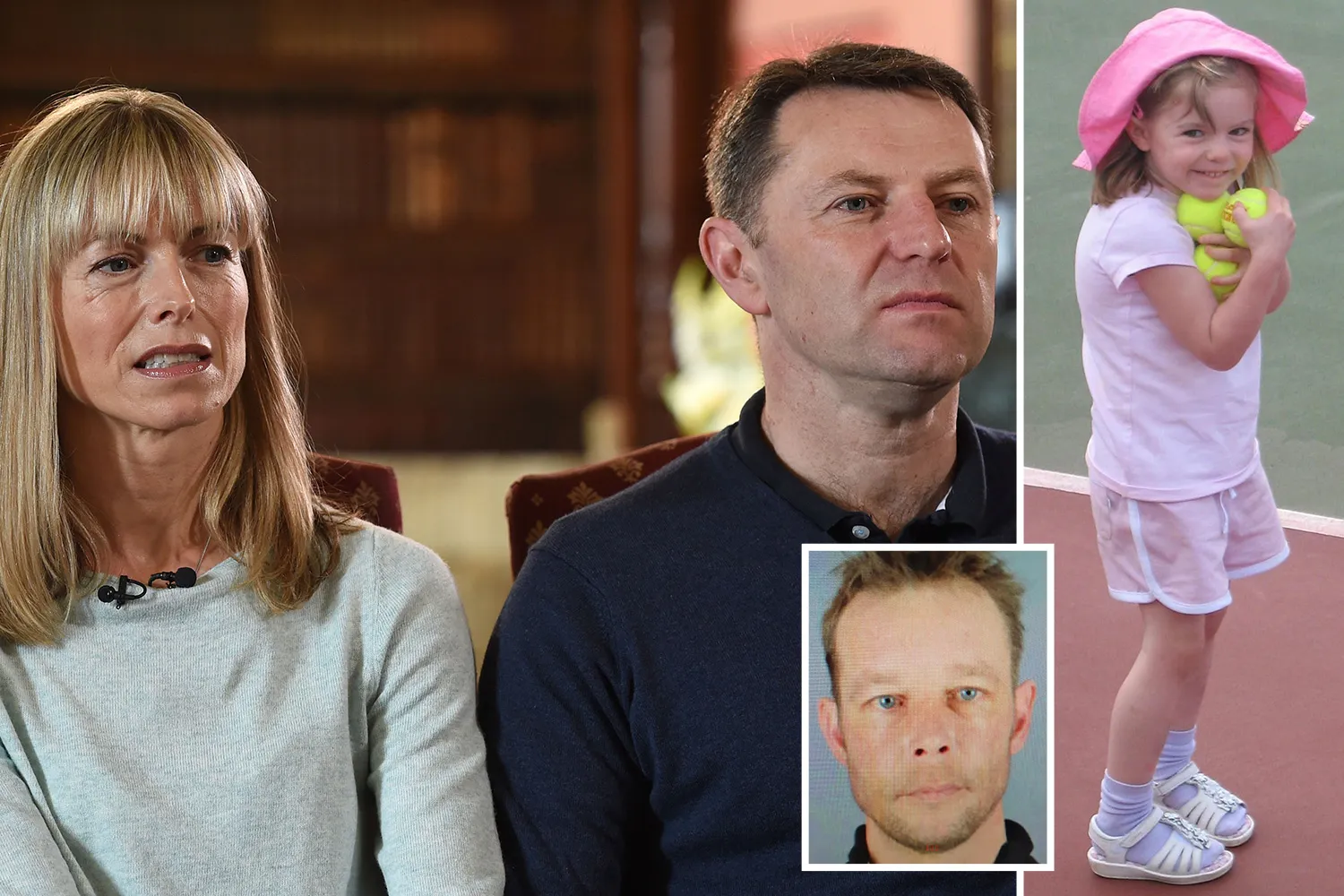
Brueckner has consistently denied any involvement. His lawyers have described some of the evidence against him as relying on unreliable witnesses. He has refused requests from British investigators for an interview. Efforts to bring him to the United Kingdom for questioning or trial have faced significant legal obstacles: German law restricts the extradition of its own nationals to countries outside the European Union, a complication heightened by Brexit.
Release from Prison and Current Status
In September 2025 Brueckner completed a roughly seven-year sentence imposed for the 2005 rape of a 72-year-old American woman in Praia da Luz—the same resort town where Madeleine disappeared 18 months later. Upon release he was initially placed under electronic monitoring and other restrictions. A German court later relaxed some of those conditions. Media reports have described him living under police surveillance in the northern German city of Kiel, at times in a tent or a modified shipping container. German police have been ordered to maintain a protective watch amid concerns about possible threats against him.
Despite his release, Brueckner remains the central focus of the parallel German, British and Portuguese investigations. German prosecutors have continued to maintain that they hold evidence pointing to his involvement, even while acknowledging the absence of forensic proof sufficient for charges. In June 2025 Portuguese and German teams conducted multi-day searches of scrubland, wells and abandoned structures near the resort, though no breakthrough was publicly announced.
Operation Grange and the Road Ahead
Operation Grange, launched by the Metropolitan Police in 2011 as a review and later upgraded to a full investigation, has cost more than £13 million over the years. Funding has been scaled back in recent periods, yet the inquiry continues with a small team of officers working part-time. Detectives have travelled to Portugal to re-interview witnesses and have maintained regular contact with German and Portuguese counterparts. The transfer of the latest German dossier is viewed by some observers as a sign that British investigators are treating the case against Brueckner with renewed seriousness.
As of mid-2026, no charges have been brought against Brueckner in connection with Madeleine McCann’s disappearance. The case remains classified by British authorities as a missing-person inquiry. Madeleine has never been found, dead or alive. Her parents and siblings continue to campaign for information and justice, marking each anniversary with statements of continued hope.
The receipt of the German dossier does not, by itself, guarantee progress toward a resolution. Legal barriers to extradition, the passage of nearly twenty years, and the absence of definitive forensic evidence remain substantial challenges. Nevertheless, the exchange of material between the three countries underlines that the investigation, however protracted and costly, has not been abandoned.
Main Sources: The Portugal News, Portugal Resident, The Sun