Toddler with Rare ‘Trunk-Like’ Nose Branded a ‘Curse’ Awaits Life-Changing Surgery
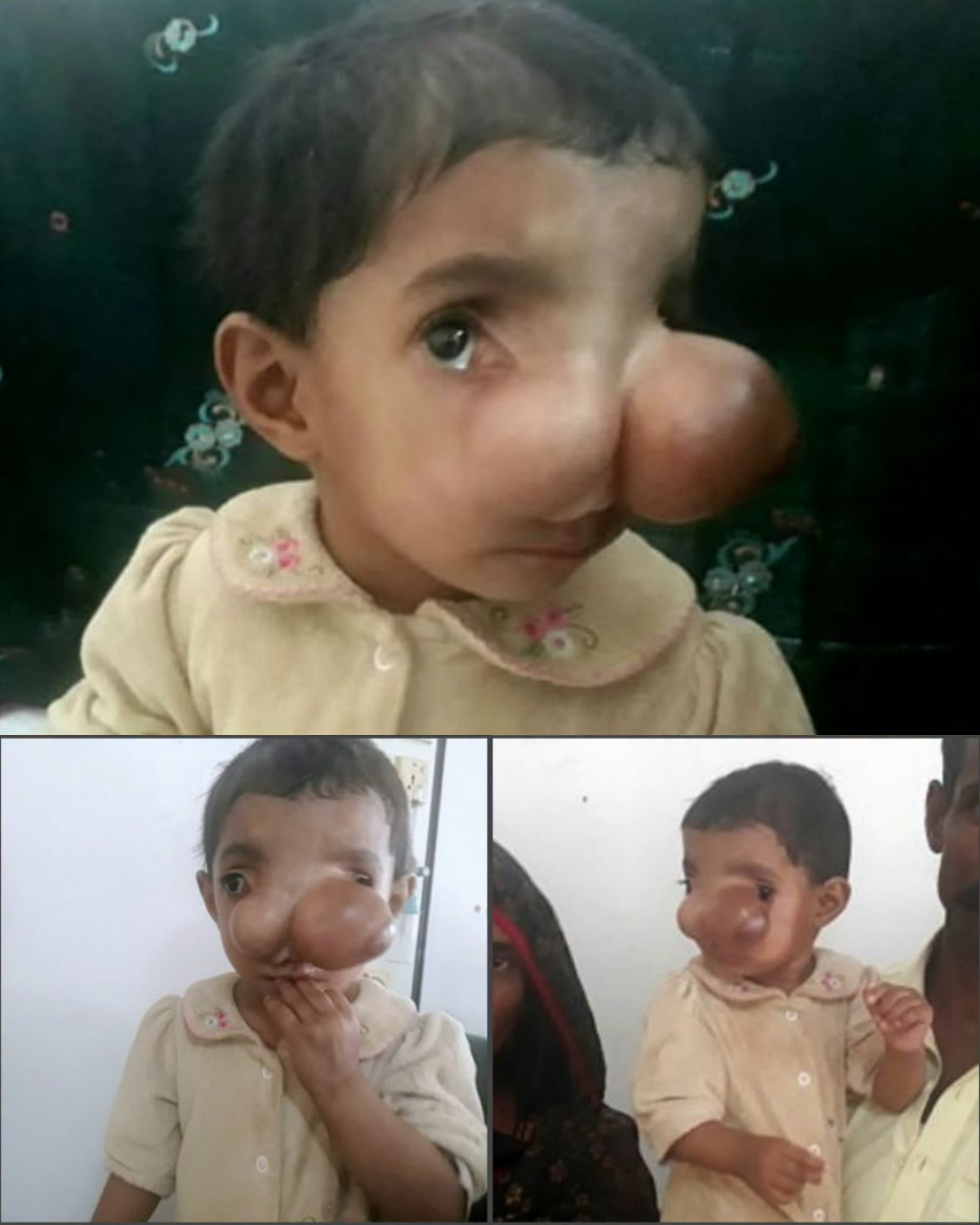
Fifteen-month-old Asiya Manghrio was born with a rare and severe congenital condition that has left her with a large, trunk-like protrusion on her face — a mass bigger than two tennis balls. The weight and size of the growth make it difficult for her to eat or sleep properly, and she often cries in discomfort.
Asiya, from Sanghar in Pakistan’s Sindh province, suffers from frontonasal encephalocele. In this neural tube defect, a portion of the skull fails to close properly during development, allowing brain tissue and fluid to herniate through an opening near the forehead and nose. The resulting sac can form a prominent, skin-covered bulge that significantly alters facial appearance and can interfere with breathing, feeding, and vision.
Doctors confirmed the diagnosis after her parents sought medical help. The condition is uncommon, though cases of anterior (frontoethmoidal) encephaloceles are reported more frequently in parts of South and Southeast Asia than in Western countries. Without surgical intervention, the mass can continue to cause physical distress and increase the risk of complications such as infection or further neurological issues.
Beyond the medical challenges, Asiya and her mother have faced social stigma. Relatives on the father’s side reportedly branded the child a “defected baby” and called the mother a “curse.” The emotional toll has been heavy for the family.
Desperate to find treatment, Asiya’s mother sold her only gold bangle to cover the cost of travel to a specialist hospital. The family has been seeking surgical correction that would remove the protruding tissue, repair the skull defect, and reconstruct the nasal area — a complex procedure typically performed by a multidisciplinary team of neurosurgeons and plastic surgeons.
Frontonasal encephalocele is treatable with timely surgery. Successful operations can relieve pressure, restore more normal facial contours, and improve a child’s ability to eat, sleep, and interact. Asiya’s case underscores both the medical urgency of rare congenital craniofacial conditions and the additional barriers of poverty and stigma that many families in remote or underserved areas must overcome to access care.
Her parents continue to hope that specialized treatment will give their daughter relief from the physical burden of the mass and a chance at a more comfortable childhood.
Sources
- The Mirror and Daily Mail reports on Asiya Manghrio (December 2017)
- IBTimes India coverage of the case
- Clinical references on frontonasal encephalocele from Cleveland Clinic and pediatric neurosurgery literature