Mother Faces Online Criticism After Starting Laser Treatment for Son’s Port-Wine Stain Linked to Rare Syndrome
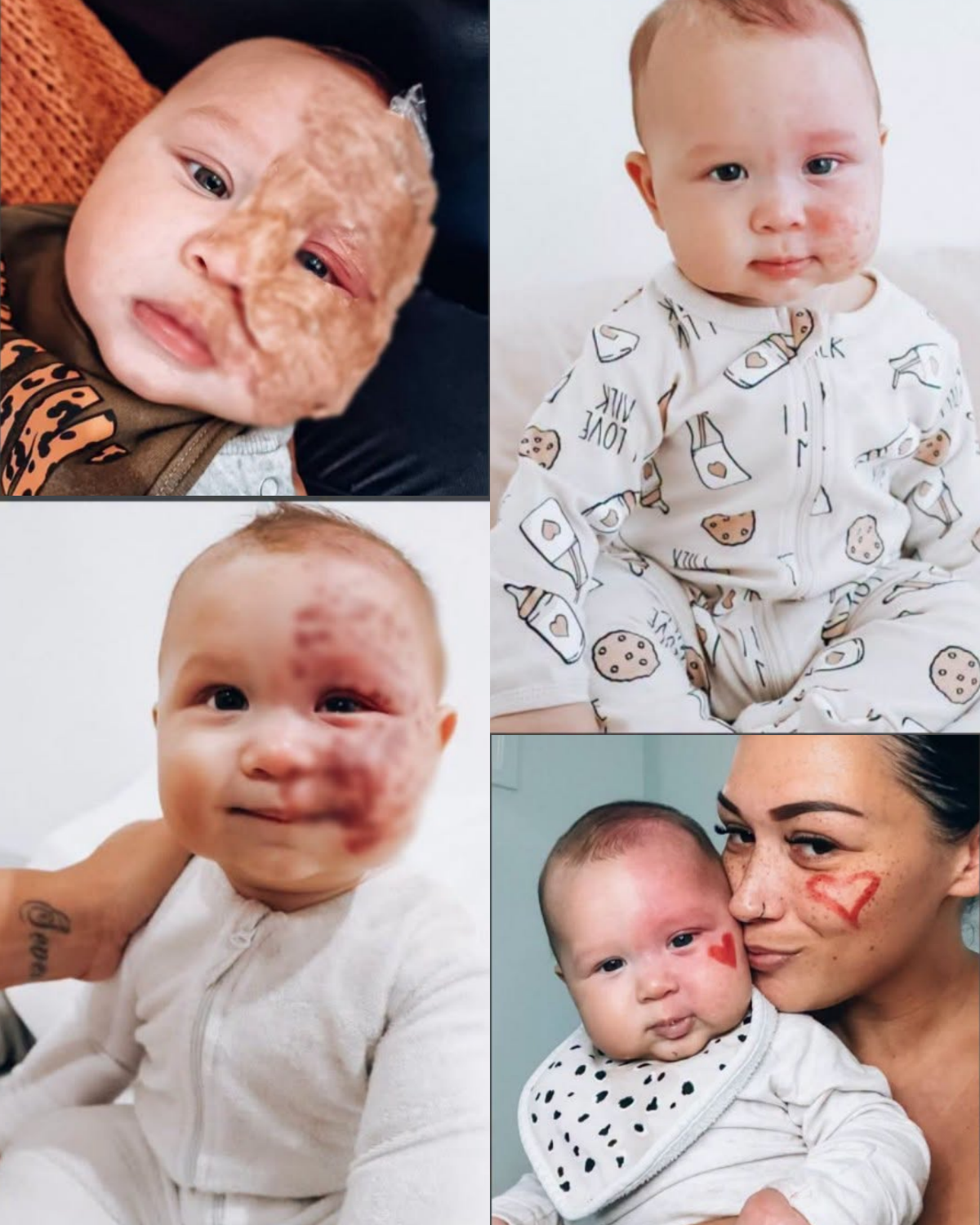
When Kingsley was born, his mother Brooke noticed a large reddish birthmark covering much of the left side of his face. At first she thought it was simply a unique mark. Doctors soon explained that the port-wine stain was associated with Sturge-Weber syndrome (SWS), a rare neurocutaneous condition caused by abnormal blood vessels that can also affect the brain and eyes.
Sturge-Weber syndrome occurs in roughly 1 in 20,000 to 1 in 50,000 births. The facial port-wine birthmark is often the first visible sign. Depending on its location, especially when it involves the forehead or eyelid, it carries increased risks of glaucoma, seizures, and other neurological complications. Early evaluation with brain imaging and eye examinations is standard.
To help manage the birthmark and support long-term skin health, doctors recommended pulsed-dye laser treatment as early as possible. Research and clinical guidelines indicate that starting laser therapy in infancy can lighten the mark, reduce the risk of thickening or nodularity later in life, and potentially lessen psychosocial impact. Brooke began the treatments when Kingsley was only a few months old.
Instead of receiving understanding, she encountered harsh online criticism. Strangers accused her of vanity, called her a “monster,” and claimed the procedures were purely cosmetic. Some suggested she should wait until her son could decide for himself. Brooke has repeatedly explained that the decision was medical: the laser helps keep the skin healthier and forms part of broader care for a condition that also involves glaucoma and the risk of seizures.
Kingsley has undergone multiple laser sessions. His birthmark has lightened significantly. He continues to receive monitoring and treatment for the related aspects of Sturge-Weber syndrome. Brooke has used social media both to document his progress and to educate others about the medical reasons behind early intervention.
Her experience highlights a common tension for families of children with visible vascular birthmarks: balancing evidence-based medical care with public misunderstanding. For Brooke, protecting her son’s health and future remained the clear priority.
Sources
- 7NEWS, Sky News Australia, Daily Mail, and The Mirror reports on Brooke Atkins and Kingsley (2022–2025)
- Sturge-Weber Foundation patient story and clinical consensus statements on port-wine birthmarks and laser treatment
- Medical literature on Sturge-Weber syndrome diagnosis and management