Medical Challenge and Hope: The Striking Case of Young Shah Gul in Pakistan
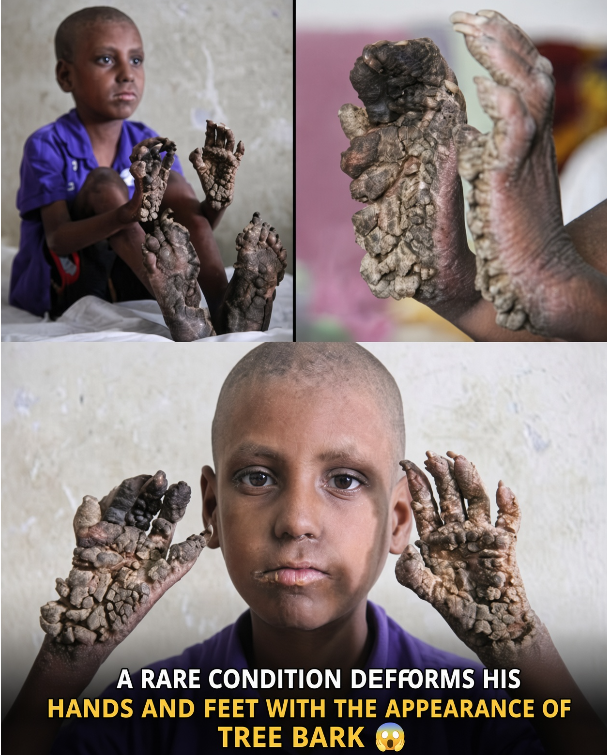
In a rural area of Pakistan, a young boy named Shah Gul has been living with a rare and severe genetic condition known as epidermodysplasia verruciformis (EV), sometimes colloquially referred to as “tree man syndrome.” This disorder disrupts the body’s immune response to certain strains of human papillomavirus (HPV), particularly beta-HPV types. As a result, the skin produces uncontrolled growths of keratin that can thicken dramatically and take on a rough, woody texture resembling tree bark.
According to accounts of his case, the dense, bark-like lesions progressively covered Shah Gul’s hands and feet. Over time they severely limited his ability to walk, eat, dress, or perform everyday tasks independently. The growths caused significant physical impairment and social challenges for the child and his family.
The case drew attention at a specialized medical center in Karachi. Surgeons there undertook the demanding task of multiple microsurgical procedures. These operations involved carefully removing the extensive keratinous tissue and performing grafts in an effort to free restricted joints, restore some mobility, and improve the boy’s quality of life and dignity.
Epidermodysplasia verruciformis is an extremely rare inherited disorder, with only a few hundred cases documented worldwide. It is typically autosomal recessive and most often linked to mutations in genes such as TMC6 (EVER1) or TMC8 (EVER2), which normally help regulate the skin’s defense against specific HPV types. Lesions usually appear in childhood and can worsen over the years, especially on sun-exposed areas. In addition to functional disability, patients face an elevated lifetime risk of developing skin cancers, particularly squamous cell carcinoma.
There is no definitive cure. Management focuses on controlling symptoms and complications through surgical excision of bulky growths, topical or systemic retinoids, careful sun protection, monitoring for malignancy, and supportive care. In severe presentations like the one described for Shah Gul, repeated surgeries may be required to maintain function, though regrowth remains a possibility.
The story of Shah Gul highlights both the profound difficulties faced by children with ultra-rare genetic skin disorders in resource-limited settings and the determination of medical teams who take on complex reconstructive challenges. While long-term outcomes depend on continued care and monitoring, interventions aimed at restoring mobility represent an important step toward greater independence and improved daily life.
Sources
- Clinical descriptions and general information on epidermodysplasia verruciformis drawn from medical literature reviews and dermatology references (including reports on genetic basis involving TMC6/TMC8, clinical features, and management approaches).
- Accounts of the individual case of Shah Gul as presented in circulating reports describing his rural Pakistani background, the appearance and functional impact of the lesions, and surgical efforts at a Karachi medical center.
- Supporting background on the condition’s rarity, HPV association, cancer risk, and treatment limitations from sources such as UpToDate, StatPearls/NCBI, Indian Express health reporting on EV, and peer-reviewed dermatology journals.