China’s “Mask Boy”: Huikang’s Journey from Rare Facial Cleft to Surgical Transformation
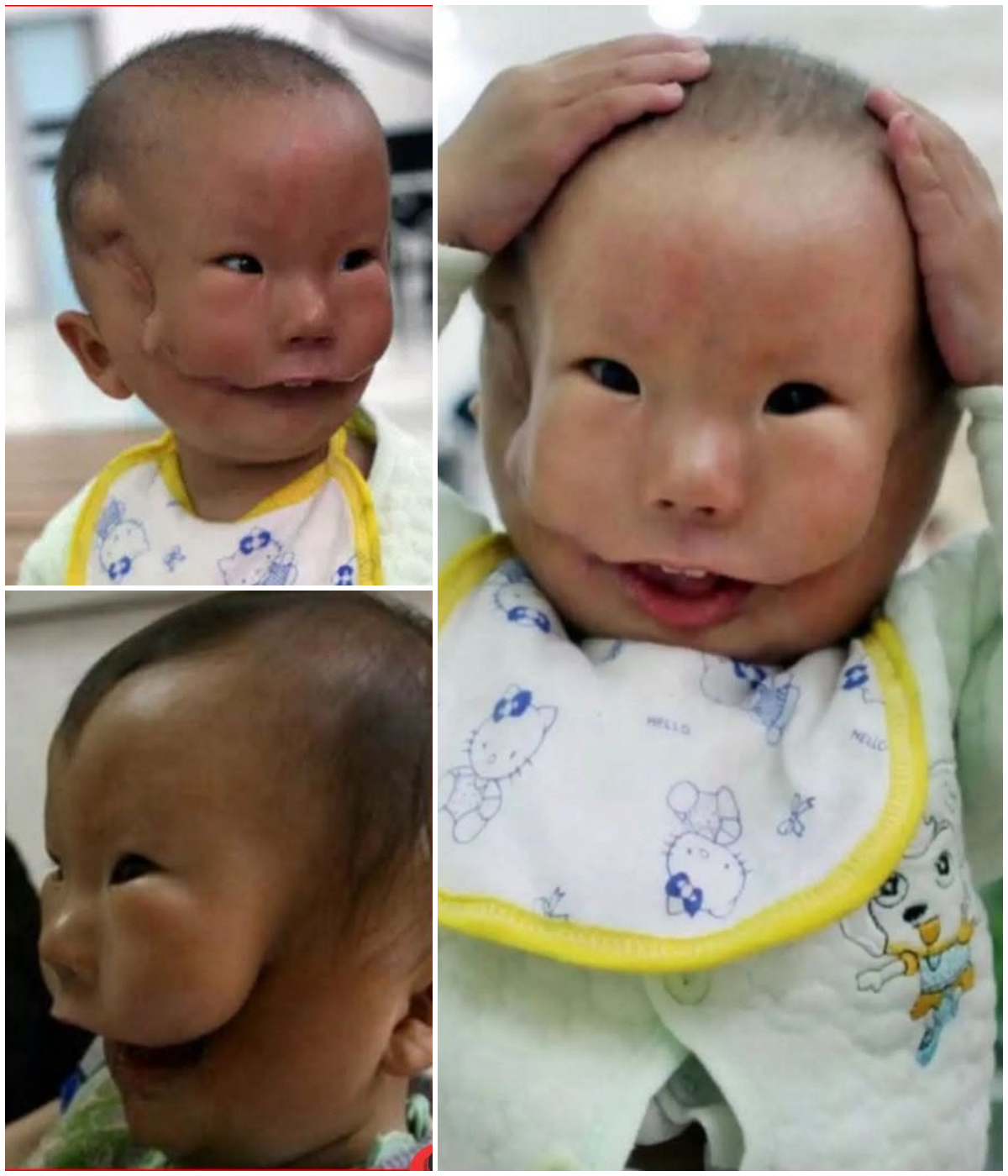
Zhao Huikang, known as Kang Kang or Huikang, was born on March 4, 2009, in a rural area of Hunan Province, China, to a 23-year-old mother named Yi Lianxi (also reported as Yi Zilian). He entered the world with a severe and extremely rare congenital condition called transverse facial cleft (a form of macrostomia or Tessier cleft). Large fissures extended from both corners of his mouth toward his ears, splitting the soft tissues and underlying facial bones—including the temporal bone, cheekbones, sphenoid bone, and upper jaw. The result was a striking appearance that made it look as if he were wearing a mask or had two faces.
Prenatal ultrasounds (three standard scans and a Doppler or 4D exam) had shown no abnormalities. When Huikang was born, hospital staff were initially reluctant to show him to his mother. Yi later recalled feeling devastated and numb upon first seeing her son. Some family members, including his grandmother, suggested abandoning the baby, but Yi firmly refused, saying she could not do such a thing and that the only path forward was to give him more love and care so he could live as normally as possible.
The family, who were farmers of modest means, faced not only the medical challenges—Huikang struggled to chew and suffered from malnutrition—but also social stigma. Neighbors and others mocked them and the child, cruelly labeling him the “mask boy.” Despite this, when the story became public around 2010, it drew widespread sympathy across China. Public donations totaling approximately 400,000 yuan (around £47,000 or $48,000–55,000 at the time) enabled treatment.
In 2010, Huikang underwent two major reconstructive surgeries at the No. 163 Military Hospital in Changsha. Led by Dr. Wang Duquan, the procedures repaired the soft tissues, muscles, and damaged facial bones, successfully closing the large fissures. After the operations, the dramatic “mask” appearance was largely eliminated, and Huikang’s face looked far more typical. Doctors noted, however, that because facial bones continue to grow, the boy would need ongoing monitoring and possibly additional surgeries during adolescence to ensure proper development. Full assessment of long-term bone growth was expected to take about a decade.
Following the successful interventions, the family chose to withdraw from media attention to protect Huikang’s privacy. No official updates or recent photographs have been widely released in subsequent years. His case remains a notable example of a rare craniofacial anomaly (incidence estimated between 1 in 60,000 and 1 in 300,000 live births) that can be dramatically improved through specialized reconstructive surgery when resources and expertise are available.
Sources
- Daily Mail / Medical Daily reporting on Zhao Huikang’s transverse facial cleft and surgeries (2010–2017)
- Changsha Evening News and Hunan Public Channel interviews with mother Yi Lianxi and Dr. Wang Duquan
- Contemporary coverage from The Sun, 9News, and Chinese media outlets documenting the public response and hospital treatment at No. 163 Military Hospital