Mohammad Kaleem: From “Devil’s Child” to a New Chance at Life
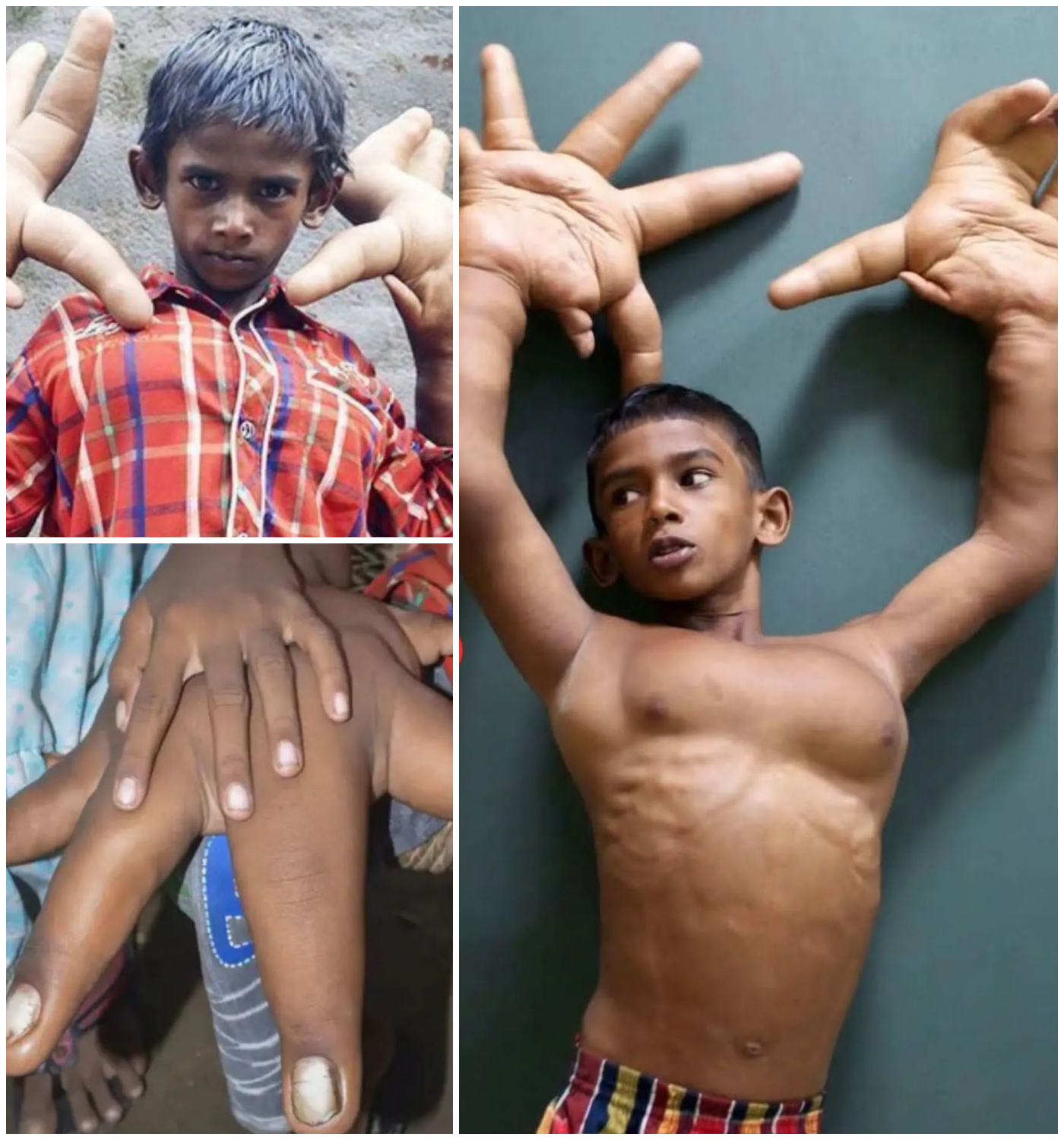
Mohammad Kaleem was born around 2006–2007 in a small village near Bokaro Steel City in Jharkhand, India. From birth he had unusually large hands caused by macrodactyly (also known as localised gigantism), a rare condition in which bones, skin, and soft tissues of a limb grow abnormally and out of proportion. The condition is extremely uncommon, with fewer than 300 reported cases worldwide.
As Kaleem grew, so did his hands and forearms. By the age of eight, each palm measured approximately 13 inches (33 cm) from wrist to fingertip, and the weight of both arms together approached two stone (about 12–13 kg). The sheer size made basic daily activities extremely difficult: he could not easily feed himself, dress, or perform other simple tasks without help. The continuous growth also caused significant physical discomfort.
In his rural community, superstition compounded the medical challenges. Villagers called him a “devil’s child” or “cursed child.” He was bullied by other children and denied admission to school because teachers and parents feared his appearance would frighten classmates. Isolated and dependent on his parents—his father worked as a daily-wage labourer—the family had almost no access to specialised medical care.
Kaleem’s story eventually reached national and international media. In 2014–2015, specialists at Ganga Hospital in Coimbatore, Tamil Nadu, led by renowned reconstructive and microsurgeon Dr. S. Raja Sabapathy, offered to treat him free of charge. The surgical team performed staged operations to debulk the oversized tissues, reduce the size of the fingers and forearm, and remove growth plates to limit further enlargement while preserving as much function and sensation as possible. The first major procedure focused on the right hand and forearm; subsequent operations addressed the fingers.
The surgeries produced a marked improvement. The weight and bulk of the treated limbs were substantially reduced, allowing better mobility and greater independence in everyday activities. Combined with physiotherapy, the interventions significantly enhanced Kaleem’s quality of life and reduced the physical and social burdens he had carried since childhood.
Mohammad Kaleem’s case illustrates both the isolating effects of rare congenital limb overgrowth and the transformative potential of specialised reconstructive surgery when it becomes available. Once labelled a “cursed child” and excluded from school, he received medical care that gave him a more functional future.
Sources
- Wikipedia entry on Mohammad Kaleem
- Times of India and other Indian media reports on the Ganga Hospital surgeries (2015)
- Contemporary coverage from Metro, The Mirror, and Daily Mail documenting his condition, social stigma, and reconstructive treatment under Dr. S. Raja Sabapathy