10-Year-Old Boy’s Words to His Dad Reveal Just How Close a Viral California Beach Rescue Came to Tragedy
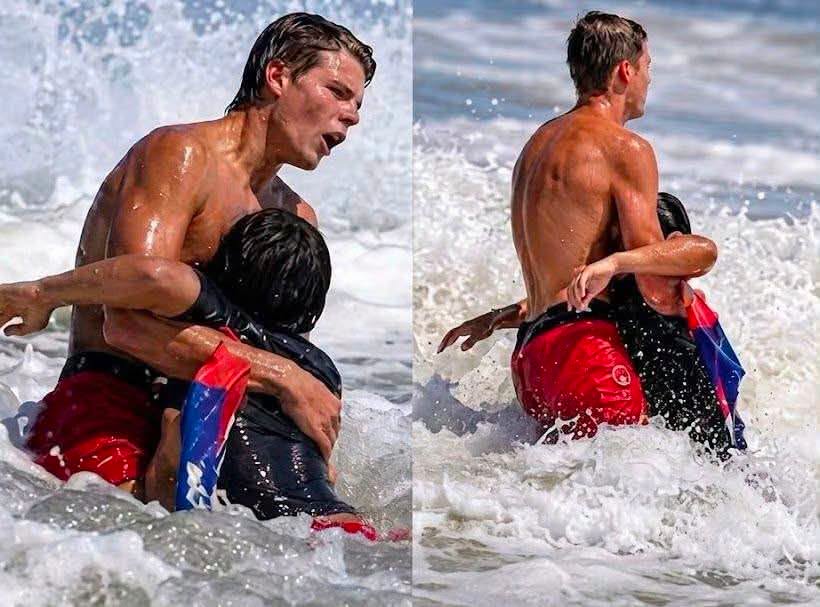
A dramatic video of a teenage lifeguard battling enormous waves to save a 10-year-old boy on a California beach has been viewed across the country.
But what happened after the cameras stopped may reveal even more about how serious the situation really was.
Nathaniel Rai was standing in shallow water at Seabright State Beach in Santa Cruz on July 25 when conditions changed in seconds.
A powerful swell knocked the 10-year-old off his feet and dragged him into deeper water.
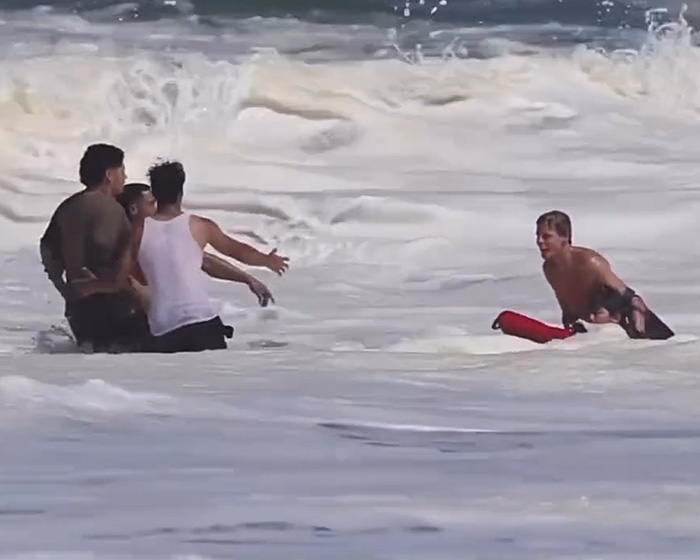
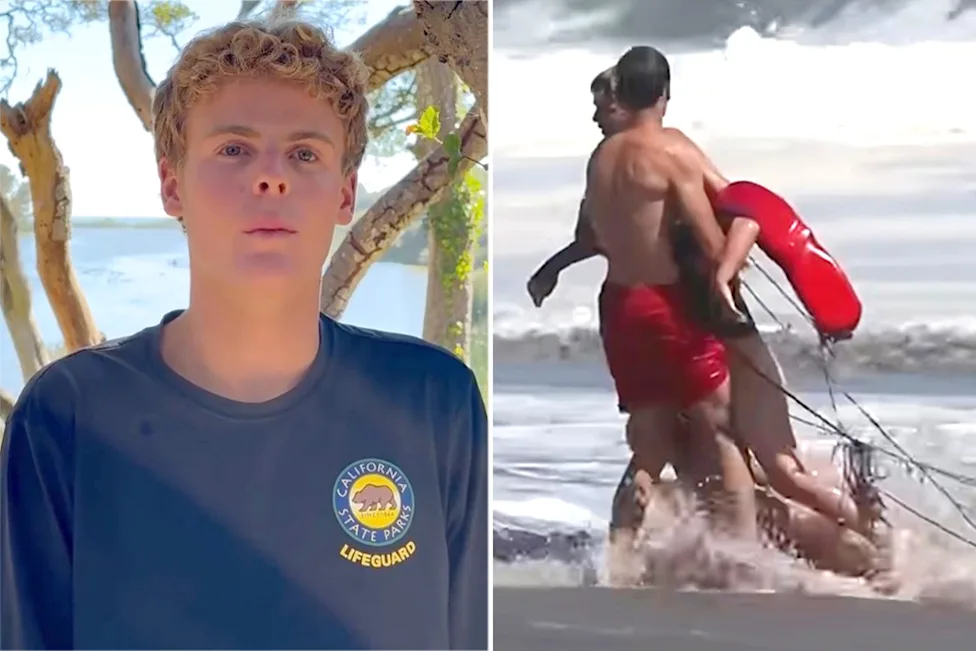
Nearby, 16-year-old California State Parks lifeguard Ryder Williams immediately recognized the danger.
Williams radioed for assistance, grabbed his rescue equipment and ran into the surf.
What followed became the viral scene seen by millions.
A Rescue Against Waves Reaching Around 10 Feet
The ocean was experiencing a significant swell event that day, with waves generally reaching 4 to 6 feet and some estimated at approximately 10 feet.
Williams later explained that conditions were so violent he could not properly secure his rescue tube around Nathaniel.
Instead, he grabbed the boy himself.
Then another wave hit.
Williams attempted to pull Nathaniel toward shore, but something had changed.
The child had gone limp.
Williams held onto him as another two or three waves crashed over them.
Rather than attempting to fight every wave at full force, the teenage lifeguard used his training to protect Nathaniel and move with the water while waiting for assistance.
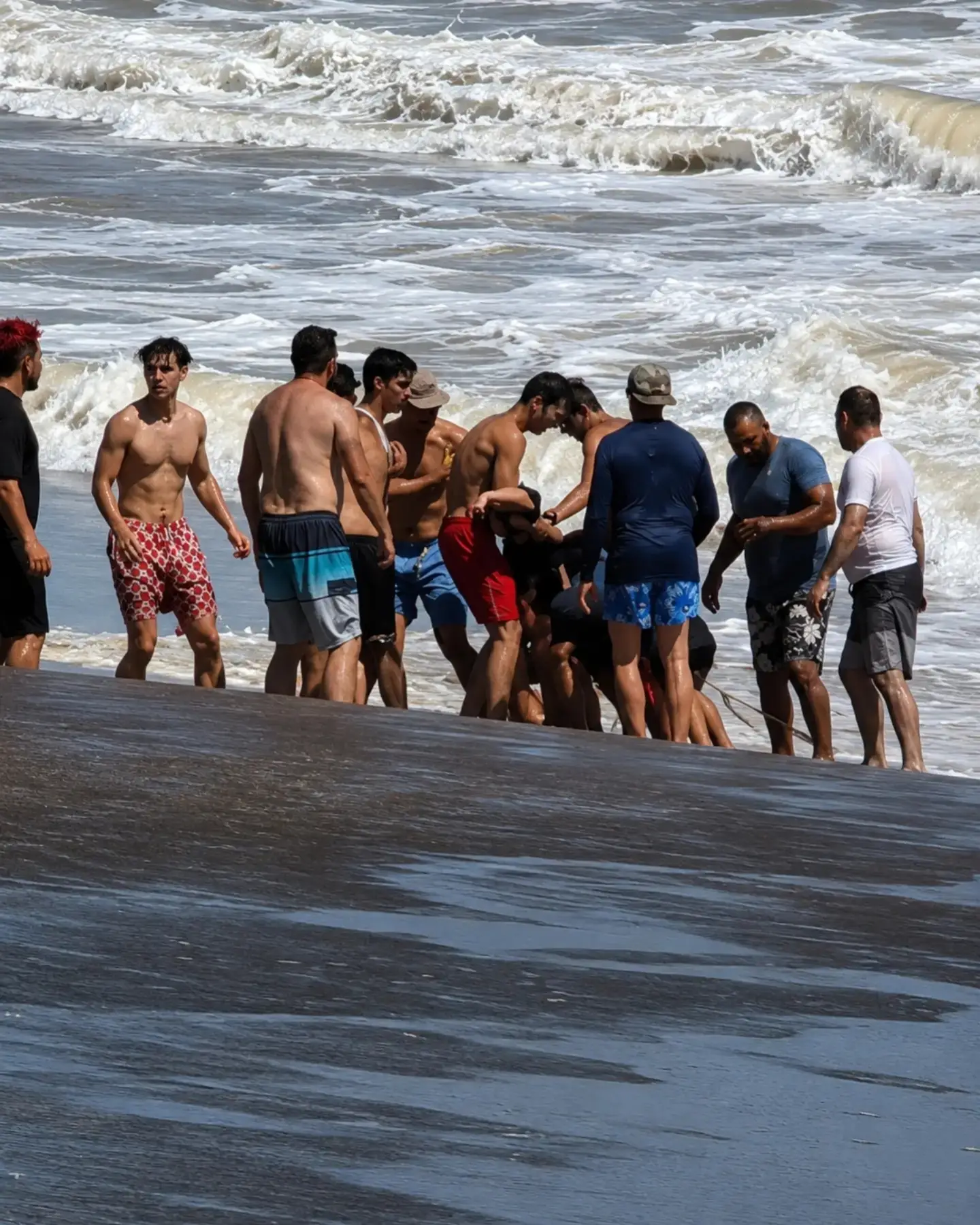
Fellow lifeguard Aaron Bohnen eventually entered the surf and helped Williams bring the boy back toward shore.
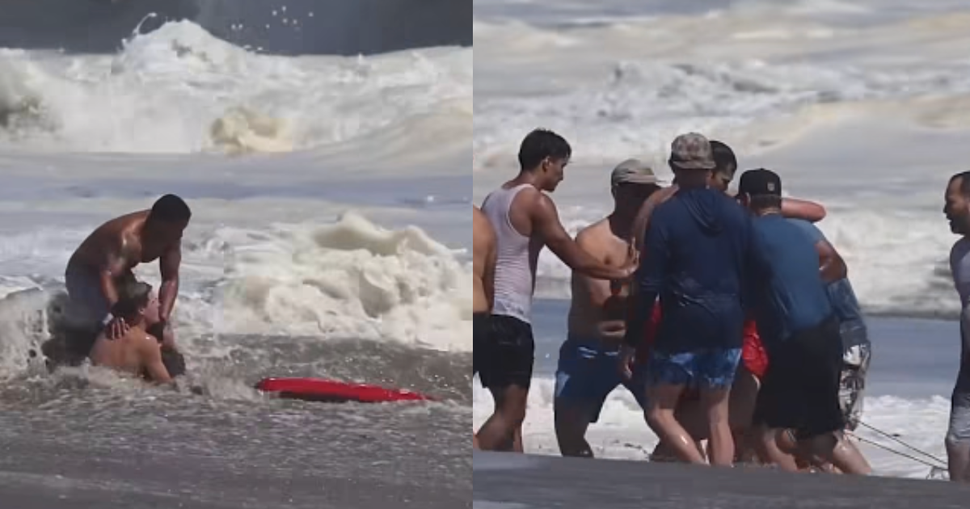
Several beachgoers had also attempted to enter the water to help, but Williams warned them to return to shore because the conditions were dangerous enough to put additional people at risk.
Eventually, Nathaniel was brought out of the water.
He had survived.
Then Nathaniel Told His Father Something Alarming
Nathaniel’s father, Sumit Rai, was in Dallas when the rescue occurred.
Afterward, his son told him something that made clear just how serious those moments in the ocean had become.
Nathaniel said he had lost consciousness.
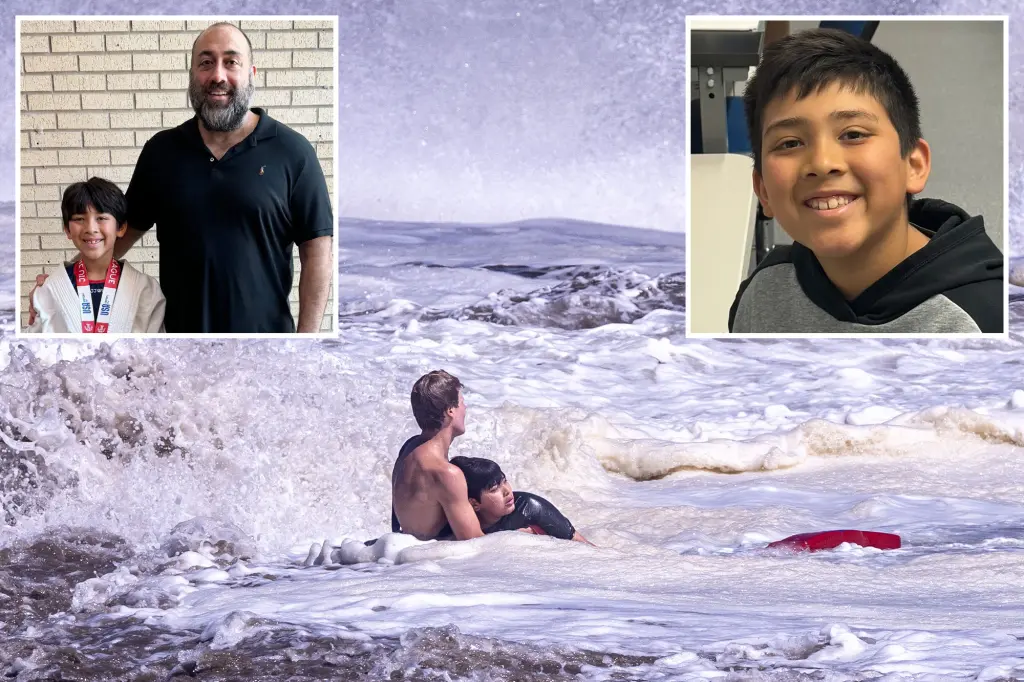
His father later explained that Nathaniel told him he had been underwater and did not remember portions of what happened during the rescue.
There was another troubling detail.
Nathaniel told his father that he was coughing up sand afterward.
Despite the frightening symptoms, authorities said Nathaniel did not suffer serious injuries and was ultimately able to return to his family.
Later interviews provided an even clearer picture of what the boy experienced.
Nathaniel recalled seeing the large waves and losing his footing before being pulled away.
After that, much of his memory disappears.
He later said he believed he was going to die.
A 16-Year-Old Lifeguard Faced His First Major Rescue
Perhaps one of the most remarkable aspects of the story is Ryder Williams’ age.
He is only 16.
Williams was in his first season working as a California State Parks lifeguard, although he had spent years preparing through junior lifeguard programs and water training.
When Nathaniel disappeared into the turbulent surf, that training suddenly became real.
Williams later described seeing the boy lose his footing in what had appeared to be only ankle-deep water.
That detail demonstrates one of the most dangerous characteristics of coastal conditions during large swell events.
A beach can appear manageable between wave sets.
Then a powerful series can arrive with little warning.
Nathaniel went from standing in shallow water to fighting for his life within moments.
Williams went from making routine safety contacts with beachgoers to performing a rescue that would soon be watched nationwide.
His Father Says Ryder Risked His Own Life
For Sumit Rai, the danger Williams faced has not been forgotten.
He emphasized that the lifeguard did not enter ordinary water.
Williams ran directly into an environment containing powerful waves, rip currents and unpredictable surf — knowing he could also become overwhelmed.
Rai has expressed profound gratitude toward the teenager for making that decision.
Without Williams’ intervention, he believes the outcome for his son could have been dramatically different.
Williams himself has been far more understated about the attention.
After the rescue went viral, he released a statement through California State Parks saying he was grateful for the opportunity to return the child safely to his family.
For Williams, it was the job he had trained to perform.
And remarkably, his work that day was not finished.
After Nathaniel was assessed, Williams returned to his lifeguard tower and completed the remainder of his shift.
Reports indicate he subsequently assisted with additional rescues.
Nathaniel Was One of Dozens Rescued That Weekend
The dramatic video also highlighted a much broader danger along the Santa Cruz coastline.
California State Parks lifeguards in the Santa Cruz District performed 34 rescues during the weekend as powerful ocean conditions affected the area.
They also conducted thousands of preventative contacts with beachgoers.
Officials explained that summertime swells can be particularly deceptive because long periods may pass between large sets of waves.
During those quieter periods, the ocean can appear safe.
That can create a false sense of security.
Nathaniel’s experience demonstrates how quickly that illusion can disappear.
He was not swimming far offshore when the emergency began.
He was standing in shallow water.
Seconds later, he was being carried away.
The Viral Video Eventually Reached the White House
As footage of Williams holding onto Nathaniel spread online, the teenager’s actions attracted national attention.
President Donald Trump publicly praised Williams and announced plans to invite the teenager, his family and potentially Nathaniel to the White House for recognition.
Williams’ family, however, has largely attempted to keep the focus on lifeguards and water safety rather than celebrity.
His mother said that when people asked about donating money to Ryder, the family instead encouraged support for the Santa Cruz County Junior Guards program — the same type of program that helped prepare him for moments like this.
The rescue has also renewed discussion in California about formally recognizing lifeguards as first responders.
Weeks Later, the Two Families Have Formed a Connection
The story did not end when Nathaniel left the beach.
In the weeks following the rescue, the Rai and Williams families connected.
Nathaniel’s father spoke with Ryder’s father, Shane Williams, a retired firefighter.
The two fathers discovered common ground through their experiences with public service, rescue work and the risks taken by people who respond when others are in danger.
Nathaniel has also had an opportunity to express his gratitude.
Meanwhile, Williams’ rescue continued attracting attention, with members of the new “Baywatch” cast later recognizing the teenager as a real-life lifesaver.
But underneath all of the attention is a much simpler story.
A 10-year-old boy was standing in shallow water when the ocean suddenly changed.
A 16-year-old lifeguard saw what was happening and ran toward him.
Nathaniel remembers being pulled by the waves.
Then his memories become unclear.
He lost consciousness.
Williams did not let go.
And when Nathaniel eventually returned safely to his family, the words he told his father revealed just how close those few minutes at Seabright Beach had come to ending very differently.
Main Sources: New York Post, Associated Press, San Francisco Chronicle, NBC Bay Area, PEOPLE