THE AUTOPSY IS DONE—SO WHY DOES NOBODY KNOW HOW NOLAN WELLS DIED?

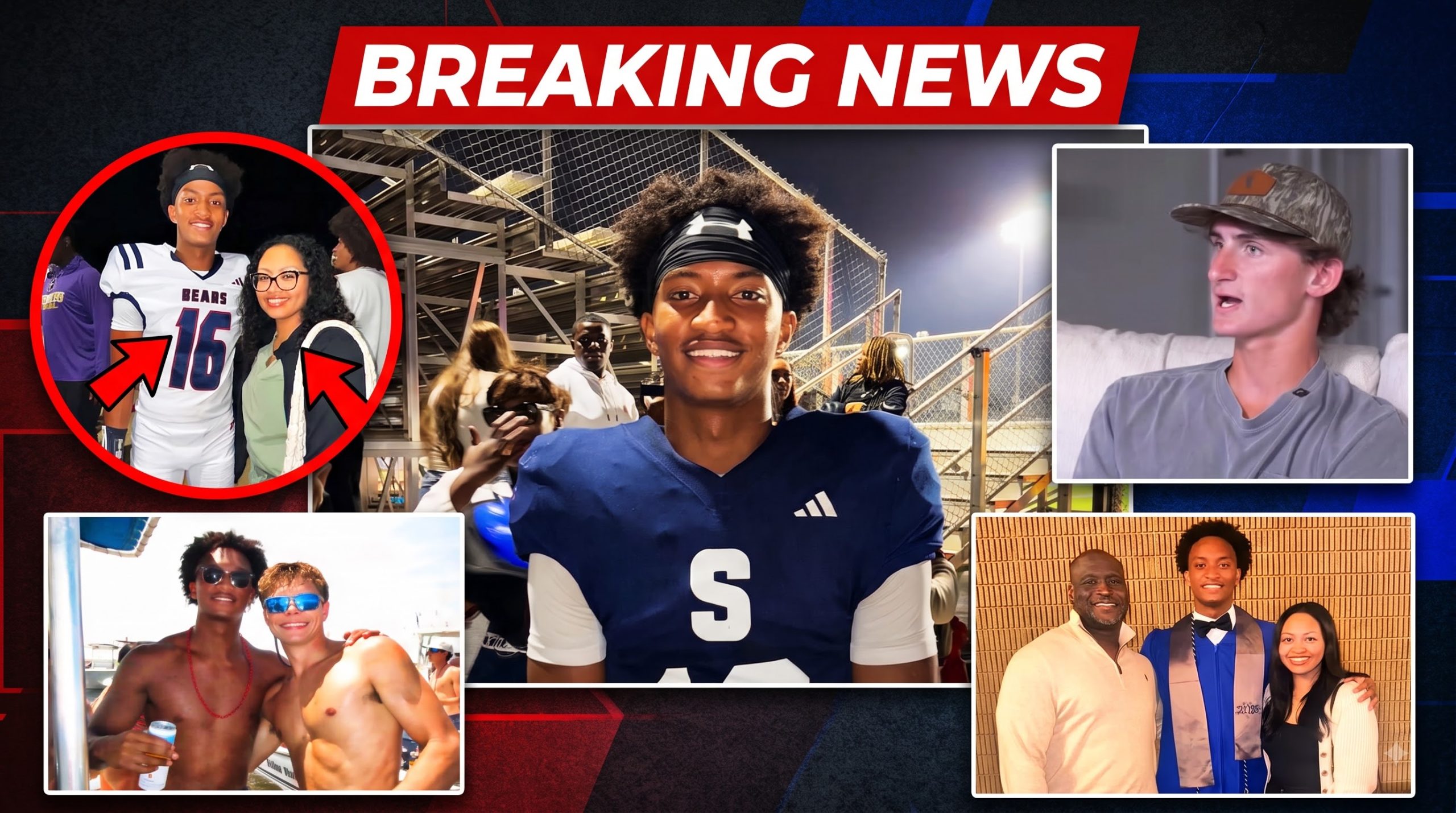
More than a month after 18-year-old Nolan Wells disappeared from a Fourth of July gathering on Mississippi’s Gulf Coast, the official autopsy has been completed.
But the public still does not know what it says.
That silence has become one of the most important developments in a case already surrounded by unanswered questions, conflicting accounts and growing demands for outside scrutiny.
Wells disappeared on July 4 after traveling with friends to Horn Island. His body was found two days later. Authorities initially suspected drowning and said there was no confirmed evidence of foul play.
But the official investigation has not produced a publicly released explanation of exactly how Wells died.
The Mississippi State Medical Examiner’s Office completed the official autopsy in late July. Instead of releasing the findings, however, prosecutors said the report would be presented to a Jackson County grand jury.
District Attorney Angel Myers McIlrath has explained that death investigations in the county are routinely presented to a grand jury before findings are released publicly when criminal issues may be involved.
That means the public is now waiting for two things at once: the contents of the medical evidence and the grand jury’s eventual response.
The situation became even more complicated after Wells’ family commissioned an independent autopsy.
That examination was conducted by forensic pathologist Dr. Roger J. Mitchell. His preliminary findings did not establish a cause or manner of death.
The independent examination reportedly found no severe traumatic injuries, but it did identify a large area of red discoloration involving soft tissue around the back of Wells’ head and neck.
The finding attracted attention because the forensic examiner could not establish precisely what caused it.
But the independent examination did not conclude that Wells had been murdered.
That distinction is crucial.
The result was essentially: undetermined.
The examiner also faced limitations because certain structures and tissues were no longer available for a complete independent examination. Those limitations meant that the second autopsy could not answer every question surrounding a possible drowning or another mechanism of death.
That leaves investigators with a complicated medical picture.
If the official autopsy concludes drowning, investigators will still have to establish the circumstances that led to Wells entering the water.
If the official findings reveal something different, the investigation could change dramatically.
And if the medical examiner also reaches an undetermined conclusion, the case may become even more dependent on digital evidence, witness accounts, timeline reconstruction and other forensic evidence.
That is why the cellphone dispute is so significant.
The device has not yet undergone the forensic examination the family says was previously discussed with prosecutors. The family’s lawyers insist they are prepared to cooperate, but want a jointly agreed protocol before the phone is handed over for examination.
Investigators could potentially examine the phone for messages, calls, photographs, location data and deleted material.
But until the forensic work is performed, speculation about what the phone might reveal remains just that—speculation.
Another major question involves Wells’ final known hours.
His friends have said that he chose to remain on Horn Island after their group prepared to leave. According to their account, Wells had met a girl and wanted to stay. They have also said that Wells told them he had another way to return, even though he did not have his phone with him.
His parents have challenged the credibility of that explanation, questioning why their son would voluntarily remain without his phone.
Again, the disagreement does not prove criminal conduct.
But it demonstrates why investigators must establish a precise timeline.
Who last saw Wells?
When was he last independently confirmed alive?
What happened during the period after that sighting?
How did his body reach the location where it was found?
And what happened between the time the boat left and the time the emergency call was made?
These questions remain central to the case.
Now there is another layer.
On August 12, the Congressional Black Caucus formally urged Attorney General Todd Blanche and FBI Director Kash Patel to launch an independent federal review. The lawmakers said significant questions remained unanswered more than 30 days after Wells’ disappearance and death and requested federal investigative assistance.
The request does not mean the DOJ has officially opened a federal criminal investigation.
It does, however, demonstrate how far the controversy surrounding the case has expanded.
For Wells’ parents, the issue is no longer simply determining what happened to their son.
They want an investigation that they believe can withstand scrutiny from every direction.
For prosecutors, the next major step is the grand jury.
For investigators, the official autopsy may provide information that has not yet been made public.
And for the public, the biggest mystery remains brutally simple:
How did Nolan Wells die?
Until the medical findings and additional evidence are revealed, that question remains unanswered