Lindsay Clancy Trial: Judge Protects Sensitive Evidence as the Court Confronts the Tragic Story of Three Children

Lindsay Clancy Trial: Judge Restricts Public Access to Sensitive Evidence as Emotional Case Moves Forward
A Courtroom Decision Puts the Privacy of Three Children at the Center of a Closely Watched Trial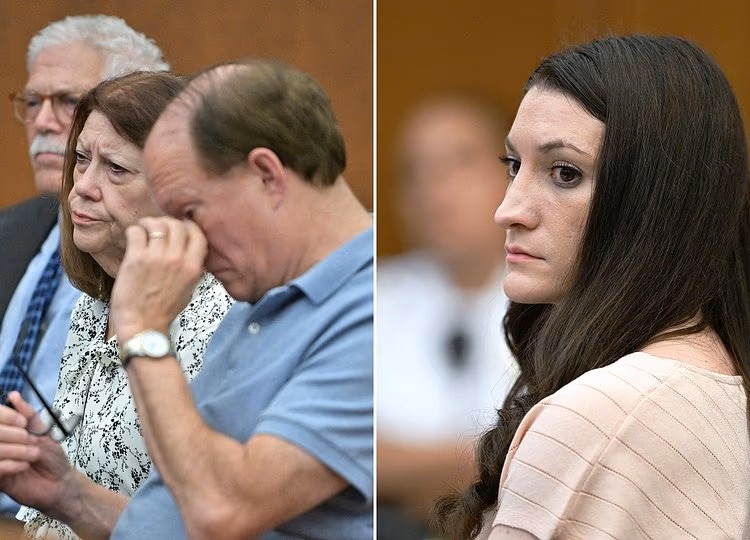
The highly publicized trial of Lindsay Clancy, the Massachusetts mother accused of killing her three young children, has entered one of its most emotionally difficult phases, as the court continues to address evidence surrounding the deaths of Cora, Dawson and Callan Clancy.
Before opening statements began, Plymouth Superior Court Judge William Sullivan issued an order restricting the public and news organizations from recording, broadcasting, reproducing or distributing particularly sensitive evidence connected to the children.
The ruling specifically involved an emergency 911 call made by Lindsay Clancy’s then-husband, Patrick Clancy, and photographs from the children’s autopsies. The decision came after Patrick Clancy asked the court to prevent the materials from being circulated publicly, arguing that their continued distribution could cause additional and lasting emotional harm to the family.
Importantly, the judge did not close the courtroom or prevent the prosecution and defense from using the evidence. Jurors can still see and consider evidence presented during the proceedings, while attorneys can introduce the materials as part of their respective cases. Reporters may also describe evidence presented in court, but the court order prevents the actual recording or public distribution of the restricted materials. (NBC Boston)
The Children at the Heart of the Trial
Lindsay Clancy is charged with first-degree murder in connection with the January 24, 2023 deaths of her three children: Cora, 5, Dawson, 3, and Callan, 8 months old.
The basic circumstances are not disputed by the defense. Instead, the central question for jurors is whether Clancy should be held criminally responsible for what happened.
Her defense has argued that she was experiencing severe postpartum psychiatric illness, including postpartum psychosis and bipolar disorder. Her attorneys contend that her mental condition dramatically affected her ability to understand or control her actions.
Prosecutors, however, have presented a very different interpretation. They argue that Clancy acted intentionally and should be held legally responsible.
That conflict over her mental state is expected to remain one of the defining issues throughout the trial. (FOX 9 Minneapolis-St. Paul)
Why the Judge Restricted the Evidence
The court’s decision reflects an unusual balance between public access to a criminal trial and the privacy of a grieving family.
Patrick Clancy’s attorney made clear that the request was not intended to keep the public out of the courtroom or prevent jurors from seeing evidence. Instead, the concern was what could happen if highly personal photographs and recordings were copied, broadcast and permanently circulated online.
The judge agreed to restrict media dissemination.
According to NBC Boston, Judge Sullivan ruled that releasing the photographs and recording through the media could create a “substantial likelihood of harm” or another harmful consequence for Patrick Clancy and the family of the children. (NBC Boston)
The ruling therefore created an important distinction: the evidence could remain part of the trial without becoming publicly distributable material.
That distinction is especially significant in an era when courtroom evidence can spread across social media within minutes and remain available indefinitely.
Attorneys Clash Over How the Case Should Be Presented
The dispute over the evidence also revealed the deep tension between the prosecution and defense.
Defense attorney Kevin Reddington supported Patrick Clancy’s request and argued that the prosecution should not rely on graphic or emotionally powerful evidence simply to influence jurors.
Reddington argued that the circumstances were already established and that the case should focus on the legal question of Lindsay Clancy’s mental condition rather than turning the courtroom into an emotionally charged spectacle.
Prosecutors pushed back, arguing that the evidence was relevant to proving their case and that the state should be allowed to present evidence supporting its allegations.
Judge Sullivan ultimately allowed the trial to proceed while imposing restrictions on the public distribution of the most sensitive materials. (Boston.com)
Opening Statements Set the Stage
Opening statements began on July 27, 2026, after jury selection was completed.
The prosecution presented Clancy as responsible for the deaths of her children and argued that the evidence would demonstrate deliberate actions.
The defense acknowledged that Clancy caused the children’s deaths but presented a radically different explanation for why it happened.
Defense attorneys argued that Clancy had been suffering from serious postpartum mental illness and that her condition had deteriorated despite attempts to obtain treatment.
The competing narratives mean that the trial is not simply about what happened inside the family home. Jurors must ultimately consider Clancy’s psychological state and whether Massachusetts law considers her criminally responsible for her actions. (FOX 9 Minneapolis-St. Paul)
The Trial Has Since Become a Battle Over Mental Health Evidence
As proceedings continued, the defense presented testimony from family members and mental-health professionals describing Clancy’s worsening condition before January 2023.
Her mother, Paula Musgrove, testified about disturbing statements and behavioral changes she had observed. Other testimony described anxiety, paranoia, withdrawal and concerns surrounding Clancy’s mental health.
A defense psychologist, Paul Zeizel, testified that he believed Clancy experienced postpartum psychosis and was not simply pretending to have psychiatric symptoms. Other defense evidence has focused on the treatment she received and whether her medications and medical care adequately addressed her condition. (The Guardian)
The prosecution has challenged that interpretation and has presented evidence intended to show that Clancy understood what she was doing and acted deliberately.
A Trial That Raises Difficult Questions Beyond the Courtroom
The case has attracted national attention partly because it raises complicated questions about postpartum mental illness, psychiatric treatment and the criminal justice system.
The defense’s argument depends heavily on the claim that Clancy was experiencing a severe psychiatric disorder when the children died.
The prosecution’s position focuses instead on criminal responsibility and intent.
The jury will eventually have to evaluate these competing interpretations through testimony, medical records, digital evidence, family accounts and other material presented in court.
Meanwhile, Judge Sullivan’s order regarding the 911 call and autopsy photographs illustrates another difficult question: how much of a tragedy should become publicly accessible simply because it is evidence in a criminal proceeding?
For Patrick Clancy and the children’s extended family, the evidence is not merely material for a courtroom argument. It is connected to an intensely personal loss that has already attracted enormous public attention.
The Bigger Story
The restrictions imposed by the judge do not prevent transparency in the trial. Instead, they establish boundaries around particularly sensitive evidence.
The public can follow the proceedings. Journalists can report what witnesses say and what attorneys argue. The jury can examine evidence that the court determines is relevant.
But the most private images and recordings involving the children are not to be turned into publicly circulating media.
That distinction may become increasingly important as the trial continues.
For now, the central question remains firmly in the hands of the jury: whether Lindsay Clancy should be held criminally responsible for the deaths of her three children, or whether her defense’s claims about severe postpartum mental illness will persuade jurors that she was not legally responsible for her actions.
The case continues to receive intense national attention, with testimony increasingly focused on Clancy’s mental health history, her treatment, her behavior before January 2023 and the competing explanations for what happened inside the Duxbury home.
Whatever the eventual verdict, the trial is already forcing difficult conversations about mental illness, parental distress, medical care, criminal responsibility and the limits of public access to deeply personal evidence.
The courtroom remains open—but some of the most painful evidence will stay protected from public distribution.
Verified foreign/U.S. sources
- NBC Boston — Judge impounds 911 call and autopsy photos — detailed the judge’s July 24 order and explained that the evidence could still be used in court.
- Boston.com — Judge limits access to autopsy photos and 911 call — reported that the restrictions applied to recording, livestreaming and public distribution, not courtroom access.
- Boston.com — Attorneys clash over sensitive evidence before opening statements — covered the arguments from both sides immediately before the ruling.
- Associated Press — Latest Lindsay Clancy trial coverage — provides current reporting on the defense’s mental-health argument and testimony.
- The Guardian — Lindsay Clancy trial and mental-health evidence — provides international coverage of the ongoing trial.
- WCVB — Lindsay Clancy trial updates — provides ongoing Massachusetts courtroom coverage.
Suggested main topic/title:
“Lindsay Clancy Trial: Judge Protects Sensitive Evidence as the Court Confronts the Tragic Story of Three Children”