TILLY LOCKEY: THE GIRL WHO SURVIVED MENINGITIS AND HELPED BUILD THE BIONIC HAND OF THE FUTURE
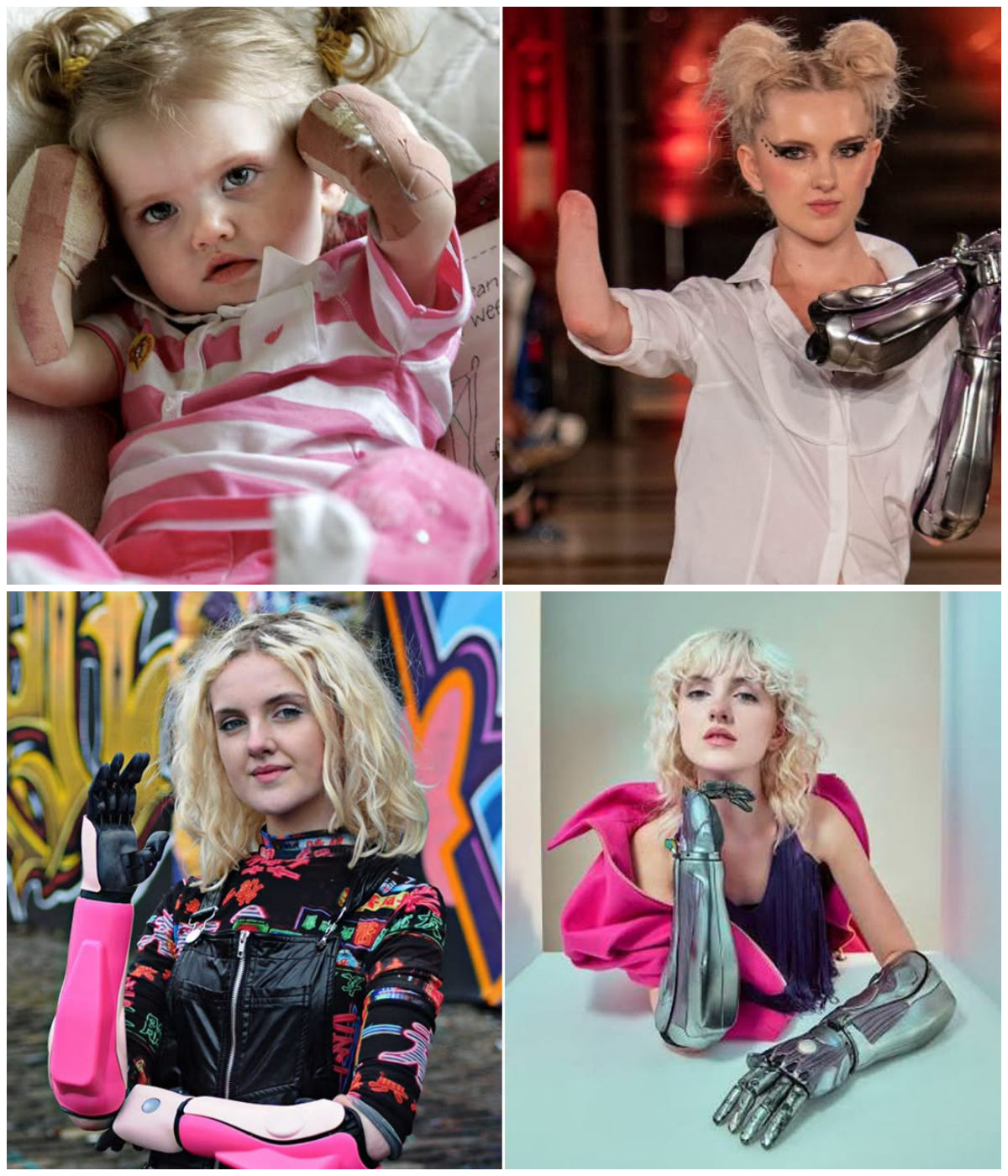
At just 15 months old, Tilly Lockey was fighting for her life. Nearly two decades later, she was helping engineers develop a bionic hand that can respond to her own muscles, rotate 360 degrees and even move wirelessly after being removed from her arm.
In January 2007, Tilly Lockey was only 15 months old when a terrifying illness suddenly changed the course of her life.
She developed meningococcal septicaemia, a life-threatening bloodstream infection caused by meningococcal bacteria. Tilly’s mother, Sarah, has recalled how the illness began during the night, when her daughter became unwell and began vomiting. Her condition deteriorated rapidly.
Tilly was rushed to hospital.
The situation became critical.
Her family was told that doctors could give them almost no hope of survival.
But Tilly survived.
The infection, however, left devastating consequences. She lost both hands and parts of her lower limbs, including fingers and toes, through amputation.
For her family, the priority was simply keeping their little girl alive.
But as Tilly grew older, another question emerged:
How could technology help her live independently?
FROM BASIC PROSTHETICS TO SOMETHING EXTRAORDINARY
Tilly’s earliest prosthetic hands were extremely limited.
As she later explained, they could essentially do two things: open and close.
There were no sophisticated grip patterns and very little of the freedom that a natural hand provides.
Then her life began to change again.
At just eight years old, Tilly was fitted with an Open Bionics Hero Arm. Over the following years, she became much more than a person using the technology.
She became one of the people helping shape it.
Tilly worked closely with engineers and repeatedly provided feedback based on what it was actually like to live with a prosthetic every day.
Her perspective was something engineers could not obtain from a computer simulation.
She knew what felt uncomfortable.
She knew which movements were difficult.
She knew what users needed when performing ordinary tasks that designers might never think about.
And she kept telling them.
YEARS OF FEEDBACK LED TO A NEW GENERATION
That collaboration eventually contributed to the development of the Hero PRO.
Open Bionics says the company spent four years developing its newest generation of bionic hands, investing approximately $2.5 million and incorporating feedback from around 1,000 existing Hero Arm users. The Hero PRO and Hero RGD were officially launched in April 2025.
Tilly, then 19, was one of the key users involved in testing the technology.
And the result looked almost like science fiction.
The Hero PRO uses wireless myoelectric sensors, known as MyoPods, positioned inside the prosthetic socket. These sensors detect electrical signals produced when the wearer contracts their muscles.
Those signals are translated into movement.
In other words, the wearer does not need a remote control.
The muscles themselves provide the commands.
A HAND THAT CAN MOVE WITHOUT BEING ATTACHED
Then came the demonstration that captured people’s attention around the world.
Tilly removed one of her bionic hands and placed it on a table.
Because the sensors communicate wirelessly with the prosthetic, she could continue controlling the hand after removing it.
The fingers moved.
The hand appeared to crawl across the table toward her.
It looked like something from a futuristic movie.
But there was no hidden operator.
It was Tilly controlling her own prosthetic through muscle signals and wireless technology.
For someone who had once relied on prostheses that could barely open and close, the moment represented an extraordinary technological leap.
FASTER, STRONGER AND MORE FLEXIBLE
The Hero PRO is designed to provide considerably more functionality than Tilly’s earliest prosthetics.
According to Open Bionics, the fingers can open and close in approximately 0.6 seconds, and the hand offers seven grip modes for different everyday activities.
The wrist can also be manually flexed and extended up to 45 degrees in each direction, while offering 360-degree manual rotation.
The system is also IPX7 water-resistant, meaning the complete system can be temporarily submerged under specified conditions. Open Bionics says the Hero PRO can withstand immersion for up to 30 minutes at a depth of approximately one metre.
That may sound like a technical specification.
For a prosthetic user, however, it can mean something much more practical.
Rain.
Washing dishes.
Cooking.
Everyday situations that once required worrying about expensive electronics becoming damaged.
The goal of the technology is not simply to create a futuristic-looking hand.
It is to make everyday life easier.
TILLY WASN’T JUST USING THE TECHNOLOGY — SHE HELPED SHAPE IT
Perhaps the most remarkable part of Tilly’s story is that she did not simply receive an advanced prosthesis when the engineers finished designing it.
She helped influence what they built.
Open Bionics describes Tilly as being instrumental in the development of the new technology, and the company says she had been providing feedback throughout her years of using its prosthetic systems.
That feedback helped turn lived experience into engineering decisions.
For years, Tilly had been telling developers what worked and what did not.
What was uncomfortable.
What was too slow.
What users needed.
What everyday problems remained unsolved.
The resulting technology therefore represents more than an engineering achievement.
It is also the product of a partnership between designers and the people who actually live with prosthetic devices.
FROM A LIFE-THREATENING ILLNESS TO A TECHNOLOGY PIONEER
There is something almost unbelievable about the timeline.
At 15 months, Tilly was fighting to stay alive after meningococcal septicaemia.
As a child, she wore prostheses that offered only basic movement.
At eight, she began using the Hero Arm.
Over the following years, she became a prominent advocate for bionic technology and a real-world tester whose experiences helped guide its development.
And at 19, she stood beside a new generation of bionic hands capable of wireless control, multiple grips, rapid movement and extraordinary wrist mobility.
Her story is therefore not simply about how far robotics has advanced.
It is about what can happen when technology listens to the people who need it most.
THE FUTURE WASN’T SOMETHING TILLY WAITED FOR
Tilly could have spent her life being defined by what happened to her as a toddler.
Instead, she became part of the conversation about what should come next.
She did not hide her limb difference.
She embraced it.
She turned her experience into advocacy.
And she worked alongside engineers who were trying to make prosthetics faster, lighter, stronger and more useful.
Today, the technology she helped test can perform movements that would have seemed impossible when she was a small child.
But perhaps the most powerful image isn’t the robotic hand crawling across a table.
It is the little girl who survived an illness doctors feared would kill her — and the young woman who eventually helped build a future for people like herself.
Tilly once needed technology to give her back something she had lost.
Years later, she was helping technology become something that had never existed before.
And that may be the most extraordinary part of her story.
SOURCES
- Open Bionics — Hero PRO: official technical specifications, including seven grip modes, 0.6-second finger-closing speed, 360-degree manual wrist rotation and IPX7 water resistance.
- Open Bionics — “Open Bionics Sets New Benchmark with Launch of Hero RGD and Hero PRO”, April 15, 2025: details on the launch, four years of development, feedback from approximately 1,000 users and Tilly Lockey’s role in testing the technology.
- Meningitis Research Foundation — Sarah Lockey’s story: Tilly’s mother’s account of her meningococcal illness at 15 months and the resulting amputations.
- BBC News: background on Tilly’s meningococcal septicaemia and her early involvement in pioneering robotic prosthetic technology.
- Open Bionics — “From Feedback to Function”, October 31, 2025: explanation of the wireless MyoPod sensors, water-resistance development and Tilly’s demonstration of the remotely controlled detached hand.
Editorial note: The core medical history and Hero PRO specifications above were cross-checked against Tilly’s own published story, her mother’s account and Open Bionics’ official documentation. The description of Tilly as helping shape the technology is supported by Open Bionics’ statements about her long-term testing and feedback.