Marianne Bachmeier: The Mother Who Took Justice Into Her Own Hands in a West German Courtroom

Marianne Bachmeier: The Mother Who Took Justice Into Her Own Hands in a West German Courtroom
On March 6, 1981, a courtroom in Lübeck, West Germany, became the scene of one of the most controversial acts of vigilante justice in modern German history. Marianne Bachmeier, a grieving mother whose seven-year-old daughter Anna had been killed less than a year earlier, entered the district court carrying a concealed pistol.
The man sitting before the court was Klaus Grabowski, a 35-year-old butcher accused of abducting and killing Anna. Before the trial could reach a verdict, Bachmeier decided that she would deliver her own form of justice. She walked into the courtroom, approached Grabowski from behind and fired eight shots. The defendant was fatally wounded and died inside the courtroom. (stories.faz.net)
The extraordinary case would eventually divide public opinion across West Germany. Some people viewed Bachmeier as a devastated mother who had acted after hearing what they considered an unbearable accusation against her daughter. Others regarded the shooting as a dangerous rejection of the rule of law. Her subsequent trial became almost as famous as the courtroom shooting itself.

The Tragedy of Anna Bachmeier
The story began on May 5, 1980, when Anna Bachmeier was seven years old. According to contemporary accounts, she came into contact with Klaus Grabowski, a 35-year-old butcher from Lübeck who had previously been convicted of sexual offenses involving children.
Grabowski had a criminal history that became an important part of the public discussion surrounding the case. German retrospective accounts say he had previously been convicted of sexual offenses against children and had undergone treatment related to his sexual behavior. (DIE WELT)
On the day Anna disappeared, she was taken to Grabowski’s home. He later confessed to killing the child. The prosecution alleged that Anna had been sexually abused and strangled before her body was concealed.
The circumstances surrounding the child’s death became central to the trial. Yet another element made the case particularly explosive: Grabowski disputed the allegations surrounding his motive and claimed that Anna had attempted to seduce and blackmail him. His explanation was widely regarded as deeply disturbing and became a source of enormous emotional pain for Anna’s mother.

The Moment Everything Changed
The murder trial began in Lübeck. On March 6, 1981, it was the third day of proceedings.
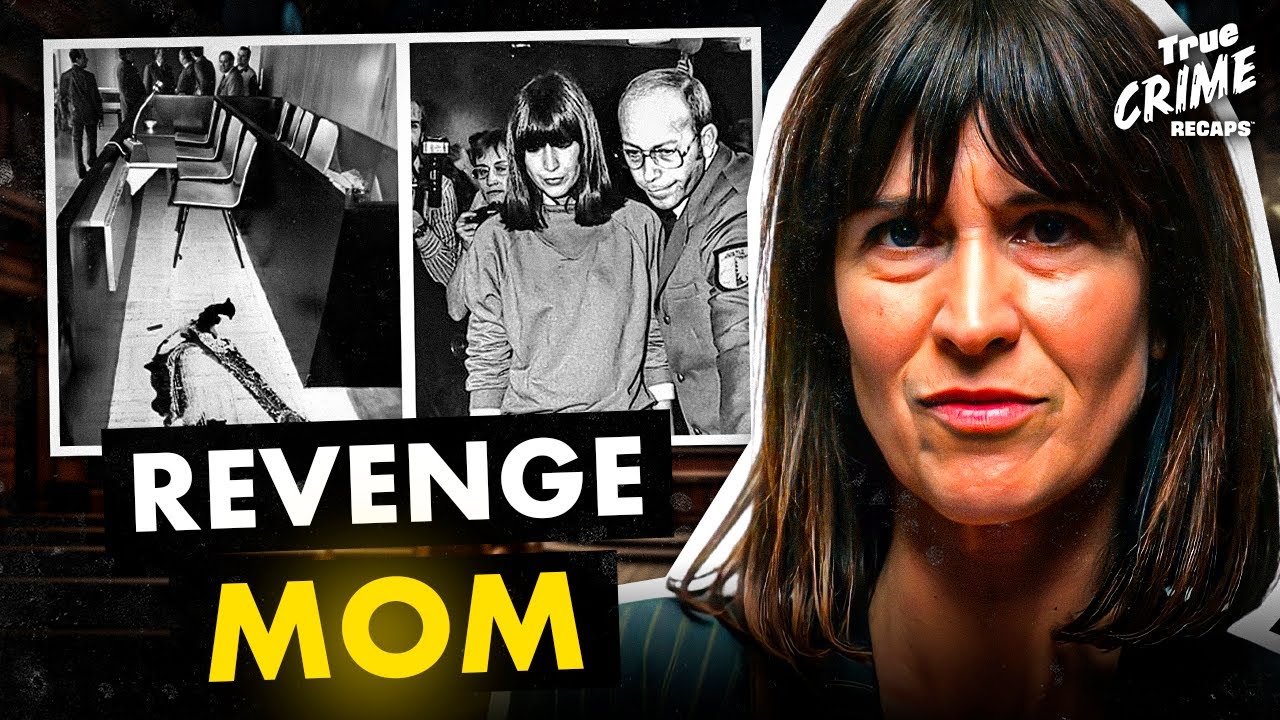
According to historical accounts, Grabowski was seated with his back toward the courtroom entrance. Bachmeier entered carrying a .22-caliber Beretta pistol. She approached from behind and fired eight times. UPI reported that seven bullets struck Grabowski, while other historical accounts have given different figures for the number of shots that hit him. What is undisputed is that Grabowski was fatally wounded and died in the courtroom. (Uplift)
Bachmeier did not attempt to escape. She was arrested at the scene.
Her words immediately afterward became part of the case’s mythology. During her later trial, a judge testified that Bachmeier had said she wanted to kill Grabowski because he had killed her daughter. She reportedly said that she had wanted to shoot him in the face but had instead fired at his back. (Uplift)
The emotional circumstances surrounding the shooting became a central question: Was Bachmeier acting deliberately, or had grief and anger overwhelmed her ability to control herself?

A Nation Debates Revenge and Justice
The shooting quickly became a national sensation.
Newspapers followed every development, while public opinion became sharply divided. Some Germans sympathized with Bachmeier and saw her as a mother pushed beyond the limits of endurance. Others warned that allowing personal revenge to replace the courts would undermine the entire principle of justice.
The case also exposed the intense media culture surrounding sensational criminal trials. UPI reported that people waited outside the courtroom and crowded into Bachmeier’s later trial, while newspapers described the proceedings as one of the most unusual and controversial criminal cases in West German history. (Uplift)
The debate was not simply about Bachmeier herself. It became a broader discussion about whether the justice system had adequately protected children, whether previous convictions and treatment of Grabowski had been properly handled, and whether a grieving parent could ever be justified in taking revenge.
The case also had practical consequences. Retrospective German reporting has noted that the incident contributed to discussions about security measures inside German courts. (DIE WELT)

Bachmeier Faces Her Own Trial
In November 1982, Bachmeier went on trial for killing Grabowski.
The prosecution initially pursued a murder charge, but the case ultimately ended with a manslaughter conviction rather than a murder conviction. On March 2, 1983, the Lübeck court sentenced Bachmeier to six years in prison for manslaughter and unlawful possession of a firearm. (ZDFheute)
Her defense argued that the circumstances surrounding Anna’s death and Grabowski’s statements had placed Bachmeier under extraordinary emotional pressure.
Bachmeier herself maintained that the shooting was connected to what she had heard during the proceedings. UPI reported that she testified she had taken the loaded pistol into court but did not decide to kill Grabowski until she heard statements she believed dishonored her daughter. She described the moment as almost dreamlike. (Uplift)
The six-year sentence was controversial in its own right. Bachmeier was released after serving approximately three years and subsequently left Germany. (ZDFheute)
Life After the Trial
After her release, Bachmeier attempted to rebuild her life away from the enormous attention surrounding the case.
According to German retrospective reporting, she moved to Nigeria after marrying and remained there until her divorce in 1990. She later moved to Sicily, where she spent part of her later life in Palermo. (DIE WELT)
But the past never completely disappeared.
On September 21, 1995, Bachmeier appeared on the German television talk show Fliege. According to biographical accounts, she acknowledged that she had deliberately shot Grabowski and spoke about her belief that she had acted to protect the memory of her daughter and prevent what she considered false claims about Anna from continuing. (Wikipedia)
By then, Bachmeier’s public image had changed considerably. The woman once portrayed by parts of the media as a grieving “revenge mother” had become a much more complicated figure: a mother who had experienced an unimaginable loss, a woman who had deliberately broken the law, and a defendant who had herself become the subject of a major criminal trial.
Her Final Years
In 1996, Bachmeier was diagnosed with pancreatic cancer and returned to Lübeck. Her final months were documented by German broadcaster NDR, reflecting the continuing public fascination with her extraordinary life story. (theater-koblenz.de)
On September 17, 1996, Marianne Bachmeier died in Lübeck at the age of 46. She was buried beside her daughter Anna at the Burgtor Cemetery in Lübeck. (Wikipedia)
More than four decades later, the Bachmeier case remains a haunting chapter in German criminal history.
It is remembered not simply because a mother killed the man accused of killing her child, but because the case forced an entire society to confront an uncomfortable question: what happens when grief becomes so overwhelming that a person no longer trusts the justice system to deliver the justice they believe their loved one deserves?
The answer, in Bachmeier’s case, changed three lives forever: Anna’s, Grabowski’s and her own.
Her story remains a reminder that justice and revenge are not the same thing—and that even when public sympathy is powerful, the rule of law exists precisely because personal pain can never be allowed to become the final judge.
Foreign sources used
- UPI Archives – Bachmeier’s 1982 trial and the courtroom shooting
- UPI Archives – Bachmeier’s 1983 sentence
- ZDF – Retrospective on the Marianne Bachmeier case
- Frankfurter Allgemeine Zeitung – The Bachmeier case
- WELT – Historical retrospective on the case
- El País – Obituary and later life of Marianne Bachmeier