BABY MIRACLE: THE SAMOAN GIRL WHO DEFIED EVERY EXPECTATION
Doctors once believed she would survive only hours. Her parents refused to let that prediction become her fate. Born with severe congenital abnormalities, Miracletina Julie Nanai — known around the world as “Baby Miracle” — survived surgeries, disability, public scrutiny and even a devastating tsunami. Her story became one of extraordinary parental love and perseverance.
On September 1, 2007, a little girl was born in Samoa under circumstances that seemed almost impossible to overcome.
Her name was Miracletina Julie Nanai, but the world would come to know her simply as Baby Miracle.
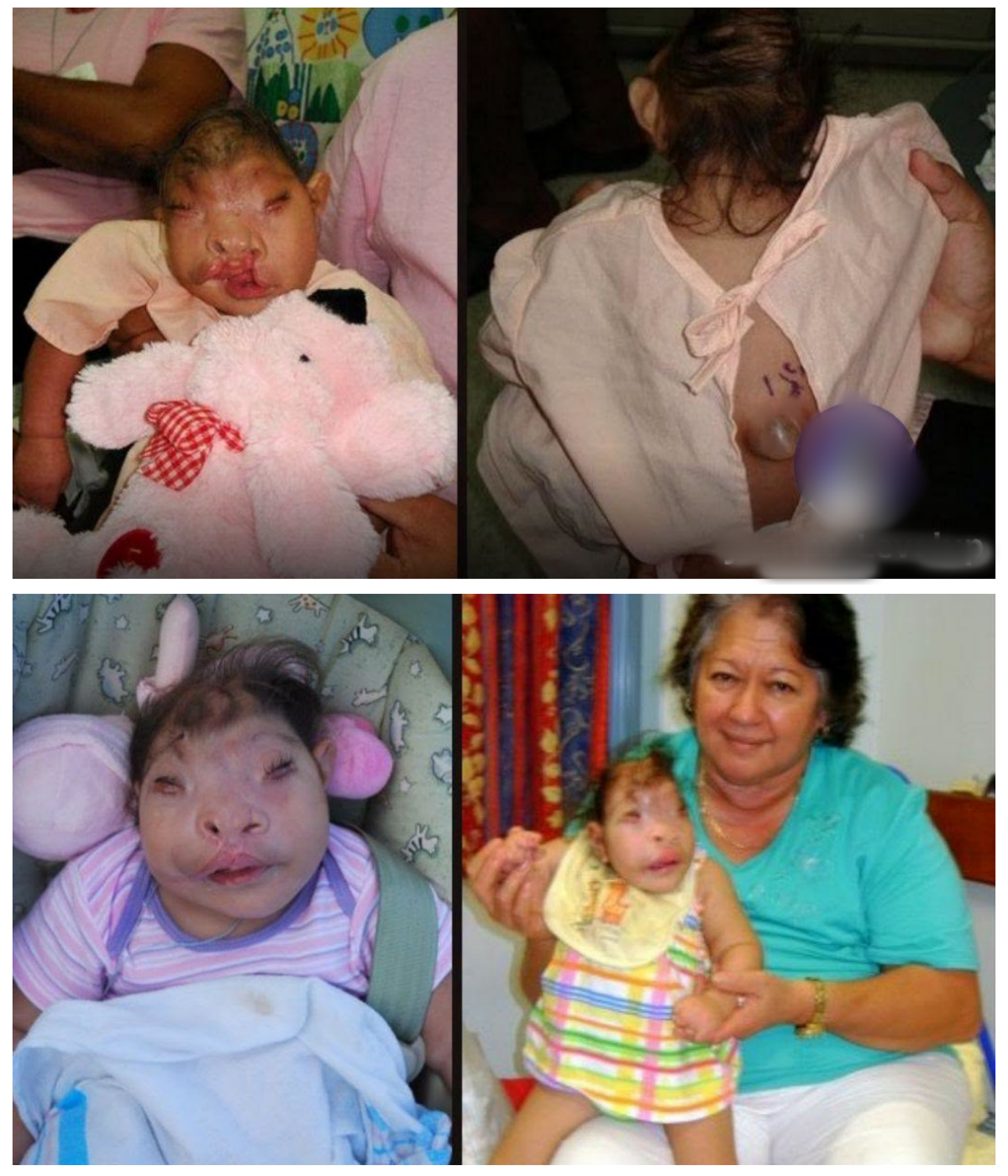
She was born with multiple severe congenital abnormalities, including spina bifida with a meningocele, major facial deformities, bilateral cleft lip and palate, malformed eyes and other limb abnormalities. Reports also stated that part of her brain and skull had not developed normally.
Doctors initially gave her family almost no hope.
They reportedly believed she might survive only a few hours.
But Miracle kept breathing.
And her parents refused to give up.
HER PARENTS REFUSED TO LET HER DIE
In the first days after her birth, Miracle faced an especially difficult problem: she could not feed normally because of the severe abnormalities affecting her mouth.
According to her father, Mikaele Nanai, hospital staff had indicated that she should not be fed because of the severity of her condition.
But her parents could not simply stand by and wait.
Mikaele secretly brought milk into the hospital and fed his daughter when he could. He later recalled hiding bottles of milk and carefully giving them to his newborn daughter.
After several days, something extraordinary happened.
Miracle was still alive.
Her family took that as a sign that she was fighting to stay with them.
The little girl who had been expected to die within hours had survived days, then weeks, and eventually months.
A STORY THAT TRAVELED AROUND THE WORLD
At first, Miracle’s family wanted to protect their daughter from public attention.
But medical treatment in Samoa was extremely limited, and the family did not have the resources to pay for the complex procedures she needed.
Eventually, her story became public.
Media organizations and supporters began raising money and searching internationally for doctors willing to treat her.
The campaign attracted attention far beyond Samoa, with supporters from New Zealand, the United States and elsewhere becoming involved in the effort to give the child a chance at life.
An early attempt to obtain medical treatment in New Zealand was unsuccessful after specialists there reportedly considered her prognosis extremely poor. Her supporters continued looking for another option.
Eventually, help came from the United States.
A TEAM OF SURGEONS STEPPED FORWARD
In March 2008, when Miracle was approximately six months old, she traveled to Miami for treatment.
According to the CFC/Child Foundation, pediatric neurosurgeon Dr. John Ragheb donated his expertise to repair her meningomyelocele.
The operation was performed on March 5, 2008.
The protruding tissue from her back had been so painful and significant that Miracle had never been able to lie comfortably on her back.
After the operation, that changed.
For the first time in her life, she could lie on her back.
A little more than a week later, on March 13, pediatric plastic surgeon Dr. S. Anthony Wolfe performed reconstructive surgery to address several of her facial abnormalities, including her bilateral cleft, as well as other congenital deformities involving her ear and ankle.
The procedures could not erase everything Miracle had been born with.
But they could make her life more comfortable and give her new possibilities.
And that was enough reason to keep fighting.
RETURNING HOME AS A HERO
After undergoing treatment in the United States, Miracle and her family returned to Samoa in May 2008.
They were welcomed home by a large celebration.
The little girl who had once been expected to die within hours had now reached her first birthday.
In September 2008, Miracle celebrated turning one.
A year later, she reached another remarkable milestone: her second birthday.
According to the Child Foundation’s contemporaneous update, Miracle remained blind but was highly aware of her surroundings. She enjoyed being around other people, cried when left alone, and especially loved music, cuddling and being kissed.
Her blindness did not mean that she was disconnected from the world.
She found other ways to experience it.
Through sound.
Through touch.
Through the people who held her.
Through the music she loved.
THEN ANOTHER DISASTER STRUCK
Miracle’s family had already endured more than most families could imagine.
Then, in September 2009, another catastrophe struck Samoa.
A powerful tsunami hit the islands on September 29, 2009, killing many people and devastating coastal communities.
Miracle and her family survived.
The Child Foundation recorded the event in its update on the little girl: “A Tsunami hit Samoa, but luckily, Baby Miracle and her family survived.”
It was another chapter in a life that had already defied expectations repeatedly.
MORE THAN A MEDICAL STORY
Miracle’s story attracted enormous attention, but her family also had to deal with something much more painful than medical uncertainty: the reactions of other people.
As she grew older, her appearance sometimes attracted cruel comments and uncomfortable stares.
Her father later spoke about the ridicule the family experienced in public.
But his response remained remarkably simple.
He loved his daughter.
He did not see a collection of deformities.
He saw Miracle.
In later interviews, her parents and supporters remembered her as a child who enjoyed affection and companionship despite the enormous challenges she faced.
A LIFE THAT LASTED A DECADE
Miracle ultimately lived far longer than the doctors who first saw her expected.
She reached the age of 10.
Then, in June 2018, her family announced that Miracletina Julie Nanai had died peacefully in Samoa.
News of her death brought renewed attention to the extraordinary journey of the little girl who had once been expected to survive only a matter of hours.
She had lived for more than a decade.
She had undergone multiple operations.
She had traveled overseas for treatment.
She had celebrated birthdays with her family.
She had survived a devastating tsunami.
And, most importantly, she had been surrounded by people who refused to believe that her disabilities made her life less valuable.
THE REAL MEANING OF “MIRACLE”
Miracle’s story is sometimes told as a story about medical miracles.
But perhaps the greatest miracle was not a particular operation.
It was the determination of her parents.
When they were told there was little hope, they kept feeding her.
When they were told treatment might not help, they kept searching.
When strangers stared at their daughter, they continued taking her into the world.
And when medical professionals could not promise a future, they chose to give their daughter every possible chance to have one.
Modern medicine helped Miracle survive.
Charitable organizations helped her reach surgeons.
Doctors helped repair some of the most serious problems affecting her body.
But throughout her life, there was one constant force behind her:
the refusal of her family to give up on her.
Miracle’s life was not long by ordinary standards.
But it was dramatically longer than anyone expected when she was born.
And perhaps that is why her name remains so fitting.
She was never simply a child with severe congenital abnormalities.
She was Baby Miracle — a little girl whose first fight began the moment she entered the world, and whose life showed just how powerful love, perseverance and hope can be.
SOURCES
- Child Foundation / CFC — Baby Miracle Tina: contemporaneous account of Miracle’s birth, her congenital conditions, the repair of her meningomyelocele, facial reconstruction, return to Samoa, blindness, love of music and the 2009 tsunami.
- New Zealand Herald — “Samoa’s Miracle Nanai dies at 10 after her brave fight touched many around globe a decade ago” (2018): details of Miracle’s childhood, her parents’ determination, medical challenges, surgeries and death at age 10.
- Samoa Observer — “The end of a Miracle” (2018): reporting on Miracle’s birth, her parents’ refusal to give up and her eventual death more than 10 years after doctors predicted she would survive only a day.
- RNZ — “Community mourns the death of Samoa’s ‘Baby Miracle’” (2018): independent reporting on her congenital abnormalities, international fundraising and medical treatment.
- New Zealand Herald — “Samoa’s ‘Baby Miracle’ needs help to live” (2007): contemporary reporting on her initial prognosis, feeding difficulties and the international campaign to obtain medical treatment.
Editorial note: Some versions of Miracle’s story describe her condition or later abilities differently. The article above follows the contemporaneous medical and news sources, which document blindness rather than a later “recovery” from blindness. The sources also identify her as Miracletina Julie Nanai and confirm that she died peacefully in 2018 at age 10.