🚨 UPDATE: LINDSAY CLANCY JURY STILL DEADLOCKED After 10+ Hours — Key Evidence Requested as Verdict Waits
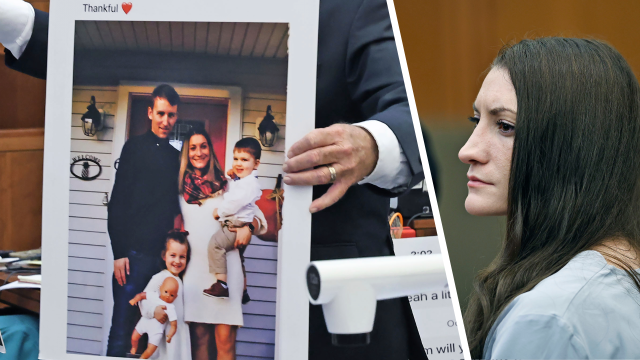
PLYMOUTH, MASSACHUSETTS — The murder trial of Lindsay Clancy has entered a tense new phase after jurors spent more than 10 hours deliberating over two days without reaching a verdict, leaving the fate of the Massachusetts mother unresolved as they prepare to return to court next week.
Clancy, 36, is accused of killing her three children — Cora, 5, Dawson, 3, and Callan, 8 months — at the family’s Duxbury home in January 2023. Both sides agree she caused the children’s deaths, but the defense argues that severe postpartum psychosis left her unable to understand or control her actions. Prosecutors argue she was mentally ill but remained aware of what she was doing and deliberately carried out the killings.
The jury began deliberating Thursday after closing arguments. By the end of Friday, there was still no verdict.

⚖️ Jurors Have Asked to See Two Pieces of Evidence
During deliberations, jurors requested access to two specific pieces of evidence from the case:
A knife Clancy used during her attempted suicide and bags containing empty prescription medication bottles.
The requests could indicate that jurors are closely examining evidence surrounding Clancy’s mental state and the events immediately surrounding the killings. However, it is impossible to know what conclusion — if any — the requests reflect.
The jury has not publicly indicated that it is leaning toward either the prosecution or defense.

🧠 The Entire Case Comes Down to Criminal Responsibility
The defense has never argued that someone else killed the children.
Instead, attorney Kevin Reddington has asked jurors to find Clancy not criminally responsible because of mental illness.
During his closing argument, Reddington described her as a mother whose mental state had deteriorated dramatically after the birth of her youngest child.
He argued that she experienced postpartum psychosis, severe sleep deprivation, disturbing thoughts and medication problems and that her mind was effectively no longer functioning normally when the killings occurred.
The defense also blamed what it described as failures in the mental-health system for not recognizing how serious Clancy’s condition had become.
Prosecutors Say She Deliberately Created the Opportunity
Assistant District Attorney Jennifer Sprague offered a sharply different interpretation.
She acknowledged that Clancy had serious mental-health problems, but argued that those problems did not eliminate her criminal responsibility.
According to the prosecution, Clancy deliberately sent her husband out of the house on errands before killing the children.
Sprague told jurors that Clancy’s behavior showed planning and awareness rather than an uncontrollable psychotic episode.
Prosecutors have also challenged Clancy’s claim that a mysterious male voice instructed her to kill her children.
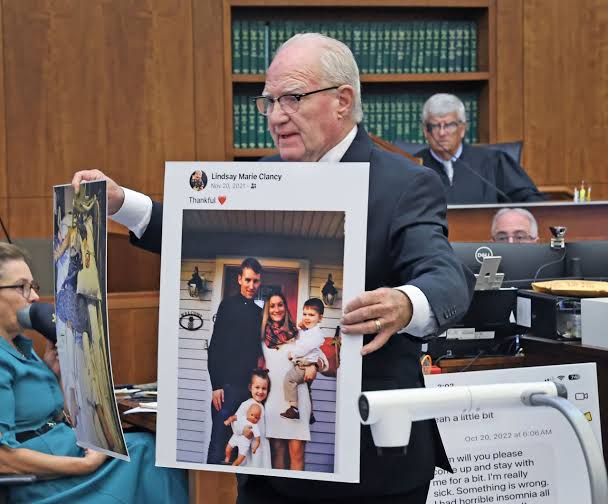
🔊 The Alleged Voice Remains One of the Biggest Disputes
Clancy has said she heard a male voice telling her to kill her children and then herself.
That claim became central to the defense’s psychiatric argument.
But prosecution experts questioned the consistency of her descriptions of the voice.
They argued that the circumstances surrounding the alleged hallucination did not fit the defense’s explanation of an uncontrollable psychotic episode.
Their testimony gave jurors two very different ways of interpreting the same evidence.
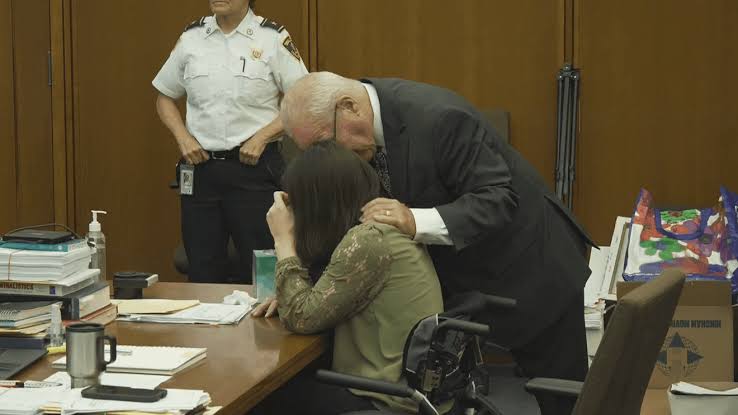
👩⚕️ Experts Agreed She Was Ill — But Disagreed on How Ill
Perhaps the most important point of agreement between both sides is that Clancy was struggling with significant mental-health problems.
The dispute is about what those problems meant legally.
Defense experts testified that she was psychotic and unable to appreciate the wrongfulness of her conduct.
Prosecution experts said she was severely depressed and psychologically unwell but still capable of understanding right from wrong.
That difference could determine whether she spends the rest of her life in prison or is committed to psychiatric treatment.

🏠 The Children Were Killed in Their Duxbury Home
The tragedy occurred on January 24, 2023.
According to prosecutors, Patrick Clancy left the family home to pick up food and medication.
While he was away, Clancy strangled the three children with exercise bands.
Afterward, she attempted suicide by cutting herself and jumping from a second-story window.
She survived but suffered catastrophic injuries that left her paralyzed from the waist down.
💔 Patrick Clancy’s 911 Call Was Heard in Court
One of the most emotional pieces of evidence was Patrick Clancy’s emergency call after he returned home and discovered the children.
His testimony and the 911 evidence gave jurors a firsthand account of the immediate aftermath.
The defense has also emphasized Patrick’s support for Lindsay and his belief that she was suffering from a devastating mental illness.
The prosecution, however, has argued that compassion from her family does not determine whether she was legally responsible.
👩⚖️ Jury Has Five Possible Verdicts to Consider
Jurors have been instructed that they can reach one of several outcomes.
They can convict Clancy of:
First-degree murder
Second-degree murder
Manslaughter
They can also find her not criminally responsible because of mental illness, or return a traditional not-guilty verdict.
The difference is enormous.
A first-degree murder conviction could mean life in prison without parole.
A finding of lack of criminal responsibility would instead place Clancy in a psychiatric facility rather than a conventional prison.
🔥 Closing Arguments Produced Two Completely Different Stories
The prosecution’s closing argument portrayed Clancy as a deeply troubled woman who nevertheless made deliberate choices.
The defense offered the jury a portrait of a mother whose psychological condition had deteriorated to the point where she had lost her grip on reality.
Reddington argued that the medical system failed Clancy.
Sprague argued that Clancy retained enough awareness to understand what she was doing.
Now jurors must determine which account is supported by the evidence.
⏳ Second Day Ends Without a Verdict
After two days of deliberations, jurors were dismissed Friday evening without reaching a decision.
They will return to Plymouth Superior Court on Monday, August 31, to continue their deliberations.
The jury consists of nine women and three men.
There is currently no public indication of how divided they may be.
A Verdict Could Still Take Time
The jury heard weeks of evidence from family members, first responders, doctors, psychologists, psychiatrists and investigators.
More than 80 witnesses testified during the proceedings.
With such a large amount of evidence and several legally distinct verdict options, deliberations could continue for some time.
The fact that jurors have requested physical evidence suggests they are actively reviewing important details rather than simply relying on memory of testimony.
The Case Has Sparked a National Conversation
The trial has received widespread attention because it sits at the intersection of maternal mental health, postpartum psychosis and criminal responsibility.
The case has also fueled renewed discussion over whether women experiencing severe psychiatric symptoms receive adequate care before a crisis becomes dangerous.
Supporters of Clancy have highlighted what they believe were failures in her treatment.
Prosecutors have emphasized that mental illness and legal insanity are not the same thing.
The jury now has to make that distinction using the evidence presented in court.
What Happens Next?
The immediate next step is simple but potentially historic:
The jury will return Monday and continue deliberating.
No verdict had been reached by the end of the second day.
The jury is now considering whether Lindsay Clancy should be convicted of murder or a lesser offense, acquitted, or found not criminally responsible because of mental illness.
The requests to examine the knife and medication bottles show that jurors are still digging into the evidence.
But until they reach a unanimous decision, the outcome remains unknown.
Two days of deliberations have produced no verdict. A Massachusetts jury will return Monday to decide whether Lindsay Clancy was a mother overcome by psychosis or a defendant who remained legally responsible for the deaths of her three children.
Sources:
CNN — Lindsay Clancy trial closing arguments