Doctors Said He Wouldn’t Survive the Night. He Grew Up Mute — Then Wrote a Rap the World Heard Anyway.
Doctors Said He Wouldn’t Survive the Night. He Grew Up Mute — Then Wrote a Rap the World Heard Anyway.
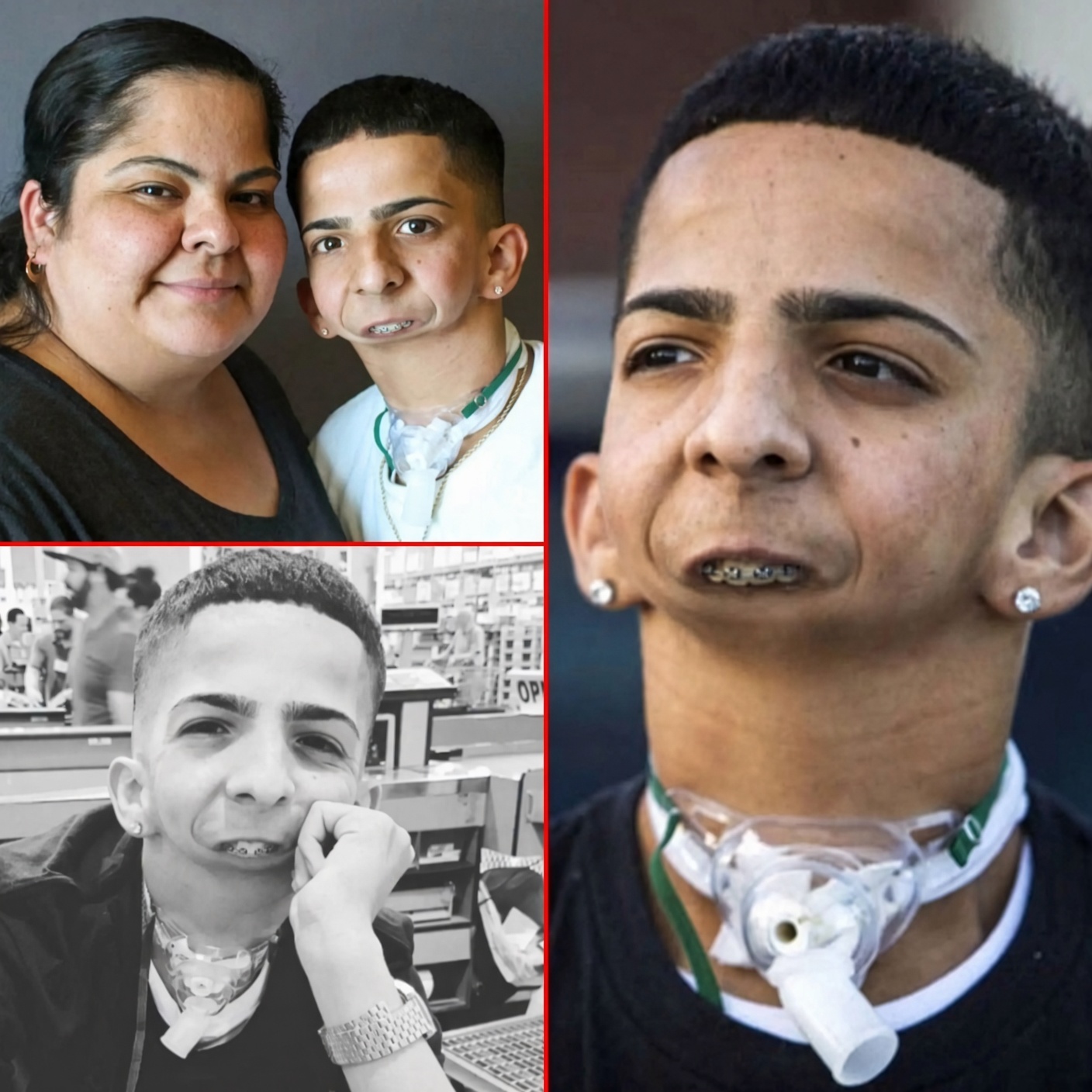
Isaiah Acosta was born in Arizona without a lower jaw and without the usual pathways for air to enter his body. He needed tubes to breathe and a feeding tube to eat. He has never spoken a word. He has never tasted food. Doctors told his mother, Tarah, he might not last minutes. Then they said days. Then weeks. If he lived, they said, he would likely be bed-bound and never walk. Quality of life, they warned, would be almost none.
He lived. He walked. He learned to talk through his phone, through signs, through gestures. He was offered a cosmetic jaw and turned it down. What he wanted was not a face that looked more ordinary. He wanted verses. Hip-hop had gotten into him the way air had not: notebooks, beats, lines about still being here. People told him a mute kid could not be a rapper. He kept writing.
Children’s Miracle Network Hospitals and Phoenix Children’s Hospital already knew him as a patient and later as an ambassador. When he said — by text — that he wanted to record a song, they introduced him to a Phoenix rapper named Trap House. Isaiah wrote the lyrics. Trap House became the voice. The track was called “Oxygen to Fly.” The hook is not subtle. Neither is the point.
Could’ve died but I’m still here. Could’ve cried but I’m still here. Bullies try but I’m still here. Mother tries so I’m still here.
The song and a short film dropped in March 2017. The video went viral. They took it to South by Southwest. Downloads sent money back to children’s hospitals. Isaiah danced in the clip while another man delivered the bars he had written about a body that should not have made it this far. International outlets picked it up. Later he spoke — through assistive tech — on a TEDx stage about labels and unmuting yourself. He sat as a guest at a State of the Union. He graduated high school. The first single did not become a long mainstream career so much as a proof of concept: the instrument he lacked was not the last word.
The medical facts did not change. He still breathes through a trach. He still eats through a tube. Situs inversus means his organs sit as a mirror image of the usual map. What changed is who gets to hear him. He turned the thing that was supposed to silence him into the reason people leaned in — and into a way to send help back to the hospitals that kept him alive.
Sources
- AZ Central / The Arizona Republic reporting on Isaiah Acosta and Trap House (2017–2018)
- PEOPLE magazine profile (May 2017)
- Children’s Miracle Network Hospitals project page and “Oxygen to Fly” documentary
- Phoenix New Times, FOX 10 Phoenix, 12 News, ABC15 Arizona