🚨 A FATHER KILLED HIS TWO DAUGHTERS, CLAIMED MENTAL ILLNESS — THEN FACED THE DEATH PENALTY

DALLAS, TEXAS — Nearly 25 years after John Battaglia shot and killed his two young daughters, his case remains a haunting example of the difficult line American courts must draw between severe mental illness and criminal responsibility.

Battaglia killed Faith, 9, and Liberty, 6, in May 2001 while their mother, Mary Jean Pearle, listened helplessly on the telephone.
Years later, Battaglia would argue that his mental illness should prevent him from being executed.
It did not.
He was ultimately put to death in Texas on February 1, 2018.
His case has resurfaced now because another high-profile parent-killing case is forcing jurors and the public to confront a remarkably similar question: What happens when horrific violence is undisputed, but a defendant’s mental state is fiercely contested?
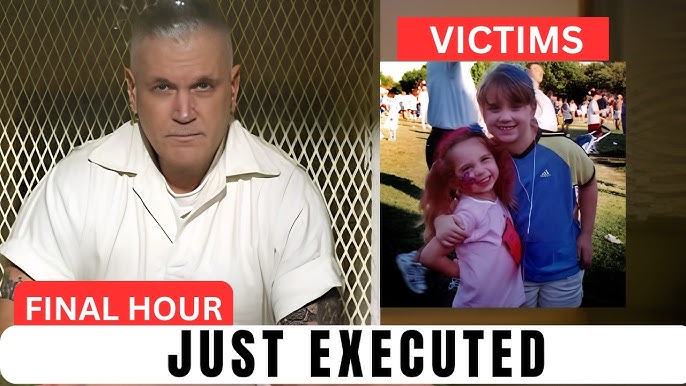
💔 THE NIGHT BATTAGLIA KILLED HIS DAUGHTERS
On May 1, 2001, Battaglia went to his Dallas apartment with his two daughters.
Their mother was speaking with him by phone when the situation suddenly turned deadly.
Battaglia put the call on speaker and shot Faith and Liberty while Pearle remained on the line.
The killings were especially devastating because of the deliberate way the children became part of a conflict between their parents.
Battaglia was later convicted of capital murder and sentenced to death.

🧠 THE MENTAL-ILLNESS QUESTION FOLLOWED HIM TO DEATH ROW
Battaglia’s legal battle did not end with the conviction.
His attorneys argued that he suffered from serious mental illness and, at different points, challenged whether he was competent to be executed.
A 2017 decision from the Texas Court of Criminal Appeals shows just how contentious that issue became.
Three mental-health experts believed Battaglia was incompetent to be executed.
A fourth expert reached the opposite conclusion.
The trial court ultimately found Battaglia competent, and the Texas appeals court upheld that finding.
The distinction was critical.
A person can suffer from severe mental illness and still, under the law, be considered competent to face execution.

⚖️ WHAT THE COURTS WERE REALLY DECIDING
Battaglia’s case was not simply about whether he had psychiatric problems.
The legal question was whether those problems had reached the level required to prevent the state from carrying out his death sentence.
The Texas Court of Criminal Appeals concluded that the evidence did not establish that he was legally incompetent to be executed.
That decision removed the final major obstacle standing between Battaglia and the death chamber.
His attorneys continued filing appeals, including a final challenge on the day of his execution involving Texas’ lethal-injection protocol.
The U.S. Supreme Court ultimately rejected the last-minute effort.
Battaglia was executed that evening.

🕯️ HIS LAST MOMENTS WERE HAUNTING
Battaglia’s final statement was brief.
As his former wife watched from behind the glass, he said:
“Well, hi Mary Jean. See y’all later.”
He was then executed by lethal injection.
Texas records list his execution date as February 1, 2018.
The moment remains one of the most disturbing details of the case because the person Battaglia addressed was the mother of the two children he had murdered.
🔎 WHY THE CASE IS BEING DISCUSSED AGAIN
Battaglia’s story has returned to public attention because of Lindsay Clancy, whose Massachusetts murder case has raised a different but related question about mental illness.
Clancy is accused of killing her three young children in January 2023. She has acknowledged the killings but has pleaded not guilty by reason of a lack of criminal responsibility, with her defense arguing that she was experiencing severe postpartum psychosis.
Unlike Battaglia, however, the Clancy case did not end with a jury deciding that she was legally responsible.
After more than 38 hours of deliberations, jurors remained deadlocked.
On September 4, 2026, Judge William Sullivan declared a mistrial.
That means there is still no final criminal verdict against Clancy.
🚨 THE TWO CASES SHOW HOW DIFFERENT THE SAME QUESTION CAN LOOK IN COURT
Battaglia’s jury reached a decision in minutes.
Clancy’s jury deliberated for days and ultimately could not agree.
But deliberation time does not determine guilt.
The two cases also involved different evidence, different legal standards and different arguments over mental illness.
In Battaglia’s case, the courts ultimately determined that his mental illness did not prevent criminal responsibility or execution.
In Clancy’s case, jurors could not reach a unanimous conclusion about whether she was criminally responsible for the deaths of her children.
That disagreement was significant enough that the trial collapsed without a verdict.
⚠️ A MISTRIAL DOES NOT MEAN AN ACQUITTAL
The September 4 ruling is important because a mistrial is not the same thing as being found not guilty.
Clancy remains charged.
The prosecution has not yet announced whether it will seek another trial, and a status hearing is scheduled for September 29, 2026.
So the question surrounding Clancy’s case remains open.
The court has not determined that she was legally insane.
It has also not determined that she was criminally responsible.
The jury simply could not reach the unanimous decision required to resolve the case.
💭 MENTAL ILLNESS DOES NOT HAVE A SINGLE LEGAL OUTCOME
Battaglia’s case is sometimes presented as proof that mental illness cannot shield a defendant from execution.
But the legal reality is more complicated.
Mental illness can be powerful evidence in a criminal case without automatically eliminating criminal responsibility.
Courts must examine the defendant’s mental state, the applicable legal standard and the evidence available at the time of the offense and later proceedings.
That is why two defendants can both have substantial psychiatric evidence in their cases and still receive completely different outcomes.
🕯️ TWO FAMILIES, TWO ERAS, ONE DIFFICULT QUESTION
Battaglia’s daughters were killed in 2001.
Clancy’s children died more than two decades later.
The technology, medical knowledge and public conversation surrounding mental health have changed significantly during that time.
But the fundamental legal question has remained remarkably similar:
When someone commits an unimaginable act during a period of severe mental illness, where should the law draw the line between illness and responsibility?
For Battaglia, the courts ultimately drew that line in favor of execution.
For Clancy, the jury could not decide where to draw it — and the first trial ended in mistrial.
🚨 THE NEXT CHAPTER OF THE CLANCY CASE REMAINS UNWRITTEN
John Battaglia’s story ended in a Texas execution chamber in 2018.
Lindsay Clancy’s story has not reached that point.
There is no conviction, no sentence and no final determination of criminal responsibility against her.
The mistrial means the legal battle may continue, potentially with another jury deciding a question that the first jury could not settle.
And that is what makes Battaglia’s case relevant again.
It is not proof of what should happen to Clancy.
It is a reminder of how dramatically a case can change depending on what a jury believes about a defendant’s mind — even when the underlying tragedy is beyond dispute.
The killings can be established. The mental state can be debated. The legal responsibility can still remain the hardest question of all.
Sources:
Townhall — Remember This Parent Who Killed Their Kids, Claimed Insanity, and Was Executed Anyway