A Tiny Patient, a Giant Tumor, and a Hospital Ship: How Mercy Ships Saved 10-Month-Old Memunatu
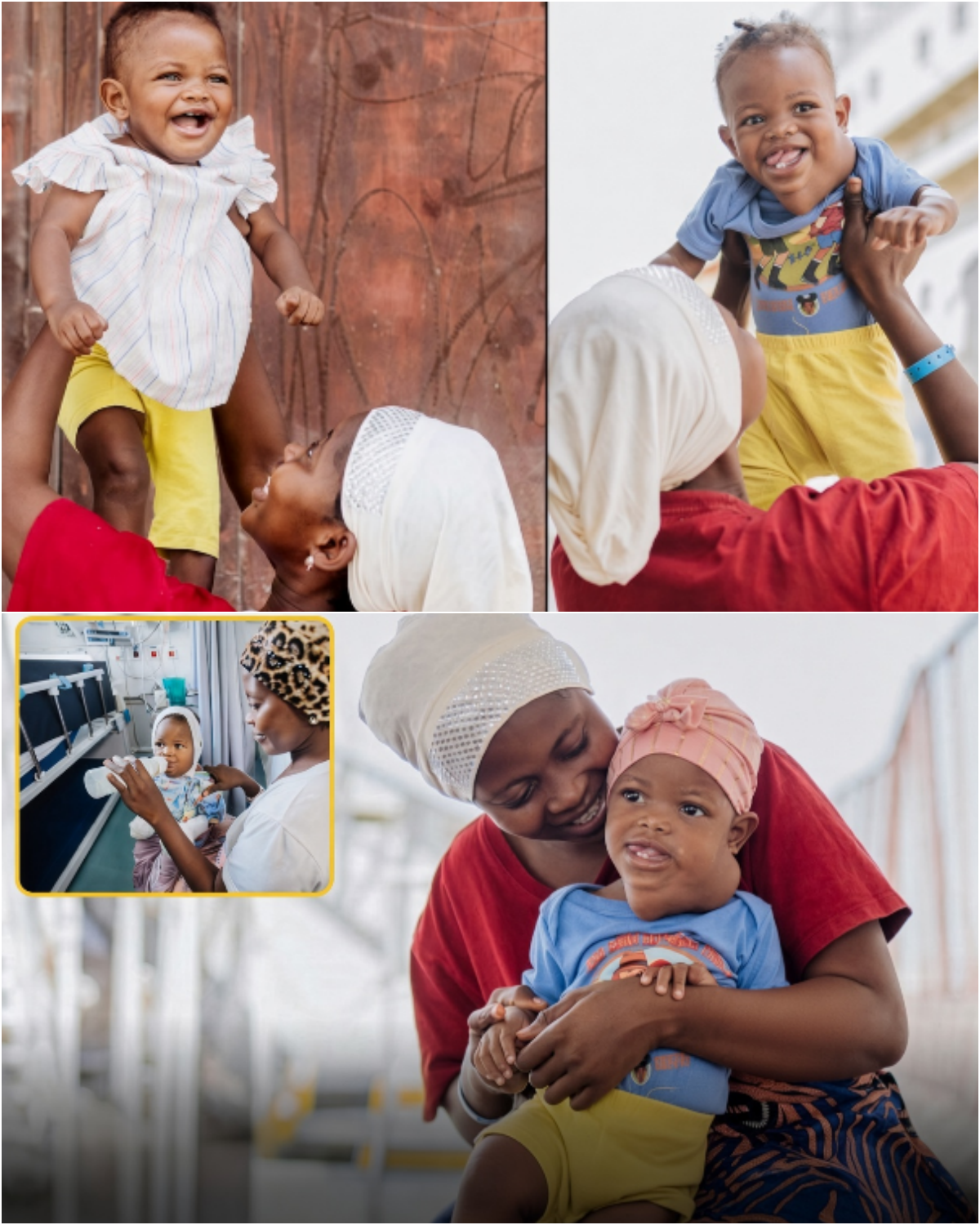
In Sierra Leone, a 10-month-old baby named Memunatu arrived at the Global Mercy—the world’s largest civilian hospital ship—with a tumor on her neck so large it rivaled the size of her own face. The mass, which had begun as a small lump when she was five months old, compressed her airway, made swallowing and eating difficult, and even hindered her ability to cry. Local clinicians first treated it as a cold. Later, doctors told her mother, Aminata, that the infant was too young and fragile for surgery. Without intervention, the benign but rapidly growing tumor threatened to suffocate her and deform her developing jaw.
Aminata had searched across clinics and hospitals. Help arrived through a chance encounter. Anne-Marie van Tonder, a South African Mercy Ships volunteer, met the mother and child at a local hospital in Freetown while delivering food. Moved by the baby’s condition, she secured a referral to the Global Mercy, then docked in the port. Preoperative manager Krystal Franke and the ship’s team reviewed CT scans from a local hospital and fast-tracked the case despite a full surgical schedule. The scans showed the mass pushing the jaw joint and slowly dislocating it.
Dr. Leo Cheng, a consultant maxillofacial and head-and-neck surgeon from the Royal London Hospital who has volunteered with Mercy Ships for more than two decades, led the operation. He confirmed the tumor was not cancerous but posed an immediate threat. “Without the surgery, her condition would have continued to worsen, affecting her ability to swallow, eat, speak, or even cry. It could have become life-threatening,” he said. Anesthesia and intubation were especially difficult because the mass already compromised the airway. The team proceeded with extreme caution.
The surgery itself lasted three to four hours; Memunatu was under anesthesia for about five to six hours. Cheng described working millimeter by millimeter, constantly calculating to protect the carotid vessels and recurrent laryngeal nerves and to prevent bleeding. “With every single millimeter, I was estimating, calculating, and trying to prevent any bleeding. It went very slowly, but very positively,” he recalled. When swelling later subsided, Memunatu’s face was free of the obstruction. She could breathe, feed, and smile without the weight that had defined her first months of life. Aminata later said that if Mercy Ships had not operated, her daughter would have lost her life.
The case illustrates both the human cost of limited surgical access and the role of hospital ships. Mercy Ships, a faith-based charity, provides free reconstructive and life-saving operations in ports across sub-Saharan Africa. The Global Mercy has performed thousands of such procedures since entering service. Cheng has emphasized that restoring function and appearance also restores dignity for patients who might otherwise face stigma or isolation. For one infant and her mother, a meticulous operation on a ship in Freetown turned a life-threatening mass into a story of recovery.
Sources
Mercy Ships official accounts: “Meet Memunatu” (mercyships.org) and “Dr. Leo Cheng Restores Hope Through Lifesaving Surgeries” (mercyships.africa); contemporaneous reports from Keep The Faith, AllAfrica, and related Mercy Ships field coverage (2025).