NEARLY 20 YEARS LATER, NEW FILES PUT THE MADELEINE MCCANN INVESTIGATION BACK UNDER THE MICROSCOPE

For nearly two decades, one question has refused to disappear: what happened to Madeleine McCann?
The three-year-old vanished from Praia da Luz, Portugal, on May 3, 2007, while on holiday with her family. Despite an enormous international investigation, countless interviews, searches and years of speculation, Madeleine has never been found. Now, almost 20 years later, the case is again attracting intense attention after reports that British investigators have received a new dossier containing material connected to Christian Brückner, the German man authorities have identified as the prime suspect.
The development sounds dramatic, but the reality is more complicated.
Reports published in 2026 say Scotland Yard’s Operation Grange has received files from German authorities relating to Brückner. Some media reports have described the material as potentially crucial or containing significant evidence. However, the Metropolitan Police has not publicly announced that the dossier solves the case or proves what happened to Madeleine.
That distinction matters.
Brückner remains a suspect. He has never been charged with Madeleine’s disappearance and continues to deny involvement. There has been no public court finding establishing that he abducted or killed the child.
German prosecutors have for years maintained that they believe Madeleine is dead and that Brückner is responsible. But that remains the German authorities’ investigative position, not a conviction. The absence of Madeleine’s body has also remained one of the central difficulties surrounding the case.
The latest dossier therefore does not represent a confirmed ending. Instead, it potentially represents another stage in an investigation that has already lasted almost two decades.
Operation Grange was established by the Metropolitan Police in 2011 after the British government requested a review of the investigation. In 2013, the operation became a formal investigation. More than a decade later, it remains active, with British officers continuing to communicate with authorities in Germany and Portugal.
That fact alone is significant.
The investigation has not been formally closed, and British police continue to say they will pursue viable lines of inquiry.
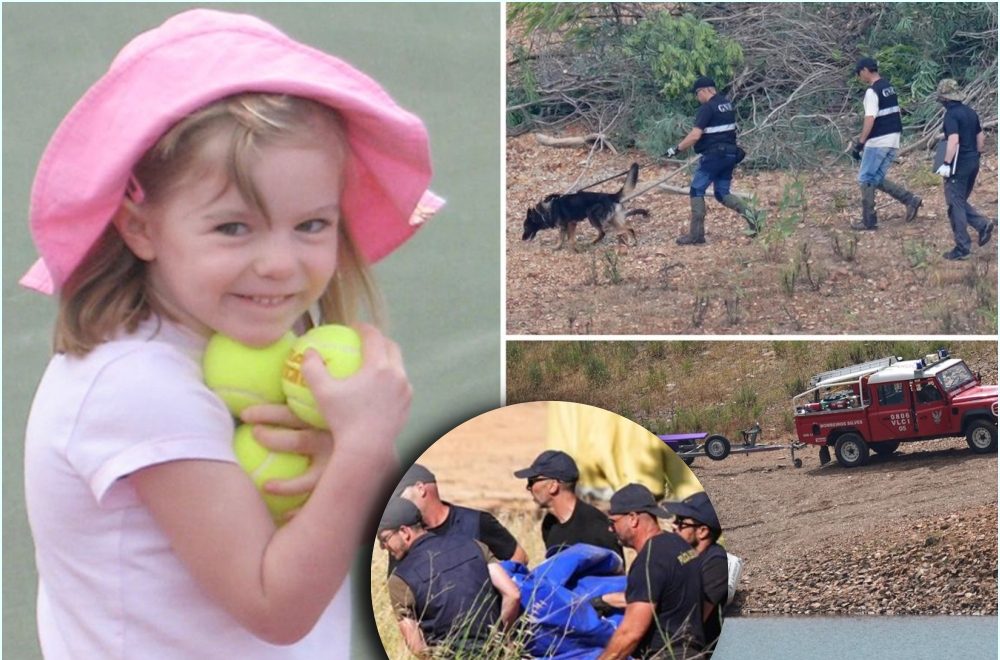
The renewed focus on Brückner also comes after years of German investigation. Authorities have previously searched areas in Portugal connected to him and examined digital and other material. A major search operation in the Algarve in June 2025 involved German and Portuguese investigators, heavy machinery and ground-search technology.
But that search did not publicly produce a confirmed discovery identifying Madeleine or proving Brückner’s responsibility.
Now the focus has shifted toward the information reportedly contained in the new dossier.

What exactly does it contain?
That remains one of the biggest unanswered questions.
Some reports have suggested the material includes evidence previously gathered by German investigators, while other reports have linked it to photographs and accounts concerning Brückner. However, the precise contents have not been publicly released in full, meaning the public cannot independently determine how strong the evidence actually is.
This creates a difficult situation for investigators.
Information may help police build a theory. Suspicious behavior may strengthen an existing line of inquiry. Statements may lead detectives to witnesses or locations. But ultimately, prosecutors need admissible evidence capable of meeting the legal standard required for a criminal case.
That is the gap investigators have struggled to bridge for years.
The latest development therefore raises two different questions.
The first is whether the new material genuinely contains information that was previously unavailable to British investigators.
The second is whether that information can be independently verified and transformed into evidence strong enough to support a prosecution.
Those are not the same thing.

Brückner’s wider legal situation is also attracting attention. Germany’s Federal Court of Justice has scheduled a January 11, 2027 hearing concerning appeals related to his acquittal on five separate sexual-offence charges. That proceeding is unrelated to Madeleine’s disappearance, although it could place renewed public attention on Brückner and the evidence surrounding his wider criminal history.
It would be misleading, however, to describe that January hearing as a Madeleine trial.
There is currently no announced trial of Brückner for Madeleine’s disappearance.
There is also no confirmed announcement that British authorities are preparing to charge him.
For Madeleine’s family, that means the fundamental situation remains unchanged. Their daughter disappeared in 2007 and has never been found.
For investigators, however, the investigation remains alive.
And that may be the most important development of all.
After nearly 20 years, police are still examining new material rather than formally declaring the case unsolved and closed. The dossier now reportedly in British hands could lead to additional interviews, forensic examination, investigative checks or other lines of inquiry.
But until authorities reveal what the files actually contain, claims that the case has finally been solved remain premature.
The world is once again waiting for an answer.
The difference this time is that investigators reportedly have another collection of information to examine.
Whether that information becomes the missing link—or simply another chapter in the longest search for answers—remains to be established.