He Woke From a Month-Long Coma With His Face Changed — Randy Adams Chose to Start Again
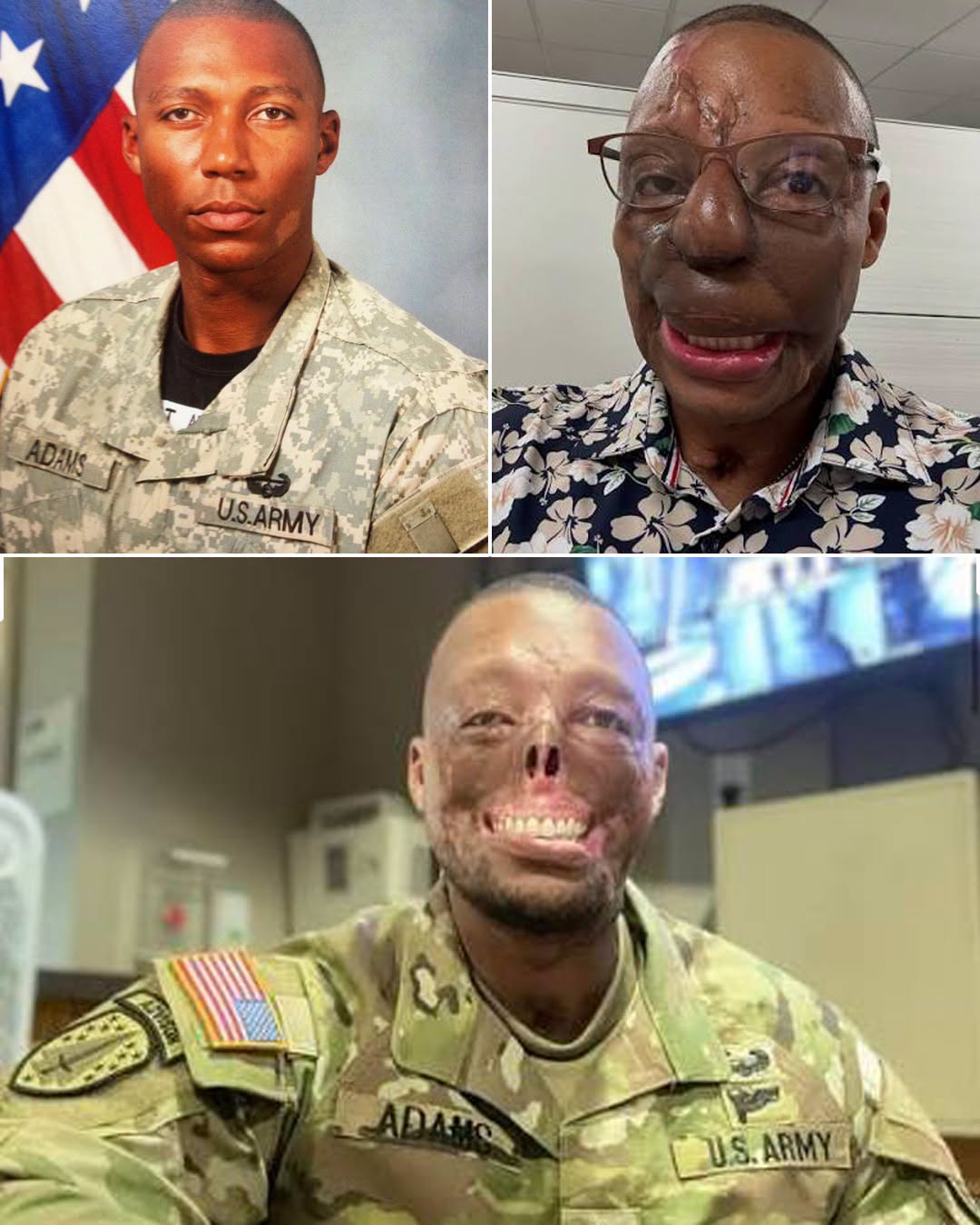
In January 2021, U.S. Army Sergeant First Class Randy Adams believed he was preparing for the next chapter of his military career.
Instead, he would soon find himself fighting for his life—and eventually waking up to a reality he could never have imagined.
Adams, who had nearly 16 years of Army service, was home in Chicago on leave before preparing to begin a new assignment in Germany. During that time, an encounter outside a relative’s home turned violent, leaving him seriously injured.
He was initially taken to a local emergency room for treatment.
But his condition deteriorated rapidly.
Adams later became unresponsive and was rushed back to the hospital. Over the following days, he experienced multiple organ failure and a severe systemic infection that spread throughout his body.
Doctors placed him into a medically induced coma.
Nearly a month later, Adams awoke at Brooke Army Medical Center in San Antonio, Texas.
His life had changed dramatically.
The infection had caused extensive damage to his face, leaving him facing a long and complicated road to recovery.
There would be no single operation capable of fixing everything.
Instead, his recovery became a years-long process involving reconstructive surgeons, speech therapists, mental-health professionals, eye specialists and prosthetic experts.
In 2021, a military medical team developed a custom facial prosthesis designed to more closely resemble Adams’ appearance before his injuries.
For Adams, the prosthesis represented more than a medical device.
He described it as a “game-changer.”
But his recovery was not limited to hospitals and operating rooms.
Adams eventually made a decision that required a different kind of courage: he began showing his face publicly.
Rather than hiding the challenges he encountered while eating, drinking, exercising or navigating everyday life with visible facial differences, he began speaking openly about his experiences online.
His story attracted an audience that followed his recovery and his discussions about discipline, faith, mental health and rebuilding a life after trauma.
Throughout the process, his connection to the U.S. Army remained an important part of his identity.
During his recovery, Adams expressed his determination to return to duty.
His journey, however, became about more than returning to the career he had known before.
It became about discovering what life could look like after everything changed.
He did not choose the events that left him fighting for his life.
But after waking from that coma, he began making choices about what came next.
Randy Adams’ story is ultimately not defined only by the injuries he survived.
It is also defined by the decision to keep moving forward, to be seen, and to rebuild his life one step at a time.
Sources / Further Information:
- Brooke Army Medical Center (BAMC), U.S. Army
- U.S. Army medical and public-affairs reports concerning Randy Adams’ recovery
- Military medical coverage regarding facial prosthetics and reconstructive treatment
- Public interviews and statements by Randy Adams about his recovery and return-to-duty efforts