A Hole in the Skull, a Chance at Life: The Newborn Operated for Giant Occipital Encephalocele
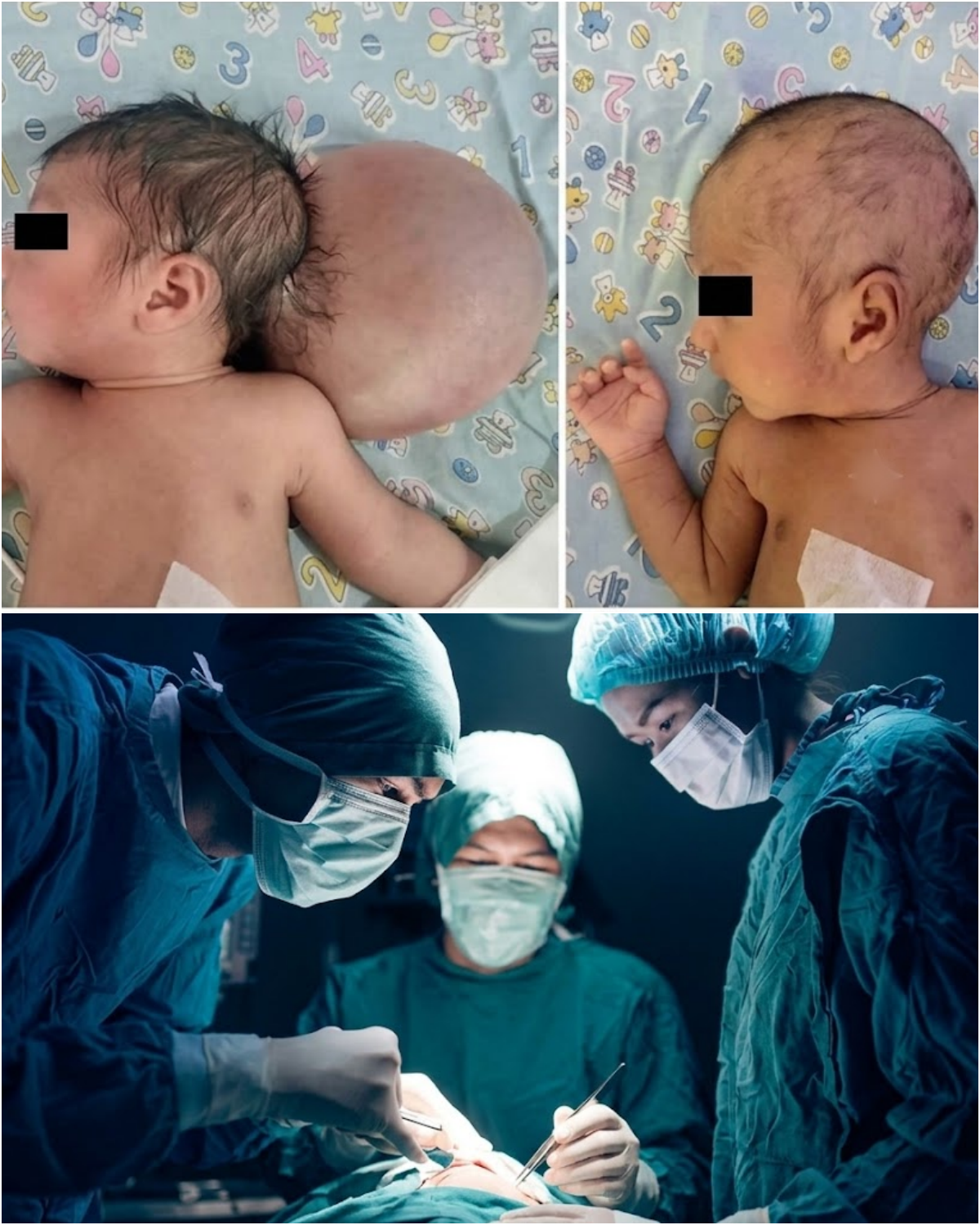
The baby arrived by planned caesarean section at a nursing home in Barakar with a swelling so large it sat on the back of the head like a second skull. The mass pulled the infant’s posture out of line and threatened the thin covering that kept brain and spinal fluid inside. Doctors recognised an occipital encephalocele: brain tissue, membranes and cerebrospinal fluid pushing through a gap in the occipital bone because the neural tube had failed to close in early pregnancy. The condition is uncommon—on the order of one in ten thousand live births—and large lesions of this kind still carry a hard prognosis even when surgery is possible. The child was sent to IQ City Hospital in Durgapur.
A CT scan mapped the bony defect and showed what was herniating through it. After the newborn was stabilised, paediatric surgeon Dr C. S. Singh and a team of paediatric anaesthetists, paediatricians and theatre and neonatal intensive-care staff operated on the fourth day of life. The procedure lasted about three hours. They dissected the sac, removed the protruding mass, repaired the dura and closed the scalp and the gap in the vault. The infant came off the ventilator the next day. There were no immediate surgical complications. In the hospital’s account the child was neurologically normal and gaining weight.
That sequence—caesarean delivery of a giant posterior sac, imaging, early repair, reconstruction—is the standard modern approach when the lesion is operable and the infant can tolerate anaesthesia. Outcome still depends on how much functioning brain was outside the skull, whether hydrocephalus develops, and whether other malformations are present. Giant sacs look dramatic in photographs; they are not automatically hopeless, because much of the bulk can be fluid rather than working cortex. They are also not automatically safe. Infection, leak, bleeding and later developmental delay remain real risks. Folic acid before and during early pregnancy reduces the chance of neural-tube defects; it does not erase every case.
The before-and-after images that travel online compress a quieter medical fact: a team in a regional Indian hospital treated a rare congenital rupture of the skull, put the covering back where it belonged, and sent a baby home without the mass that had defined the first days of life. Long-term development will be judged over years, not in a single postoperative picture. The operation itself was the necessary first step.
Sources: Dr C. S. Singh, Paediatric Surgeon, public case summary of giant encephalocele surgery at IQ City Hospital, Durgapur (March 2023); general clinical literature on occipital encephalocele incidence, surgical timing and outcome (Child’s Nervous System reviews and related paediatric neurosurgery series).