Born Knowing the Heart Was Open: Zephyr and AVSD
A routine scan told Zephyr’s parents the news before he arrived: an atrioventricular septal defect, a hole where the walls between the heart’s chambers should meet and a single valve where two should sit. About two thousand babies are born with some form of AVSD in the United States each year; it accounts for a few percent of congenital heart disease and is more common when Down syndrome is also present, though many children have the heart defect alone. Complete AVSD lets blood mix between all four chambers, overloads the lungs and, if left unrepaired, can scar the pulmonary vessels. Partial forms are quieter. His was serious enough to shape the pregnancy and the delivery.
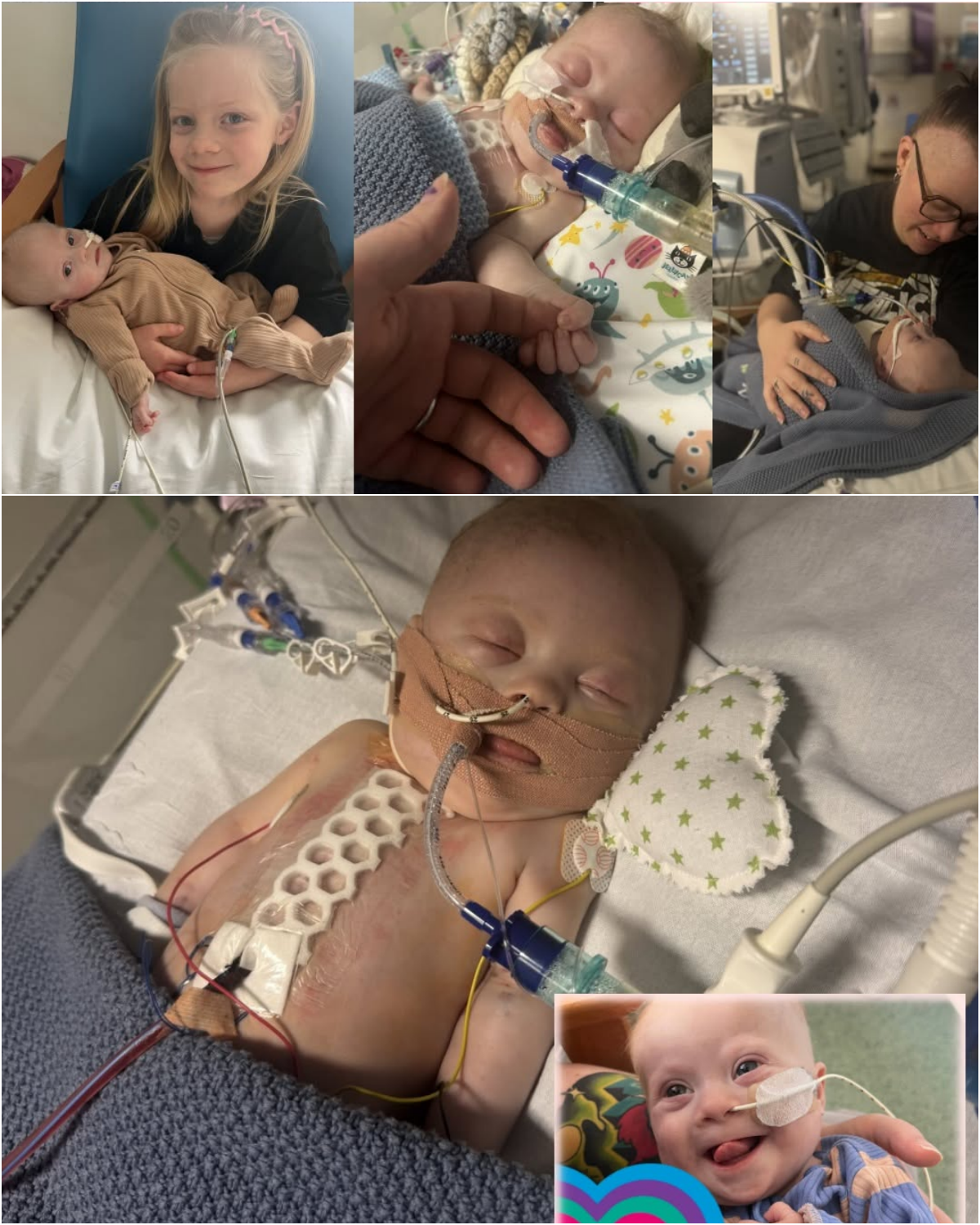
He came seven weeks early. The first weeks were machines instead of a nursery: tubes, monitors, a sternum later opened under a honeycomb dressing after surgeons patched the septa and divided or reconstructed the common valve. That repair is usually timed for the first months of life, when the infant is big enough for bypass yet before the lungs are permanently damaged. Prematurity complicates every step—lungs that are not ready, feeding that fails, infections that find a child already working too hard to breathe. He went home, then came back. Breathing trouble pulled him into hospital again for months. A sister held him on a ward bed. His mother sat through nights with glasses on and hair pulled up, watching a chest rise against tape and lines.
AVSD surgery is not a cure in the fairy-tale sense. The reconstructed valve can leak. The heart rhythm can stumble. Some children need another operation or a pacemaker. Most who reach a good repair grow, run and go to school with follow-up rather than a second infancy in intensive care. His parents have said the diagnosis would not be the whole of him—that they wanted a happy boy, not a walking chart. The photographs show both truths at once: an infant asleep under a heart-shaped pillow, an older girl proud to hold her brother, a smiling face after the worst hours, and a body still mapped with the evidence of what it took to keep that face possible. The journey is not over. Each ordinary day after a repair of this kind is the point of the work.
Sources: Family account accompanying the photographs; Yale Medicine overview of atrioventricular septal defect; standard paediatric cardiology descriptions of complete AVSD presentation, timing of repair and long-term surveillance.