163 CHILDREN, 3 ARRESTS, AND A TRAIL THAT MAY NOT BE FINISHED
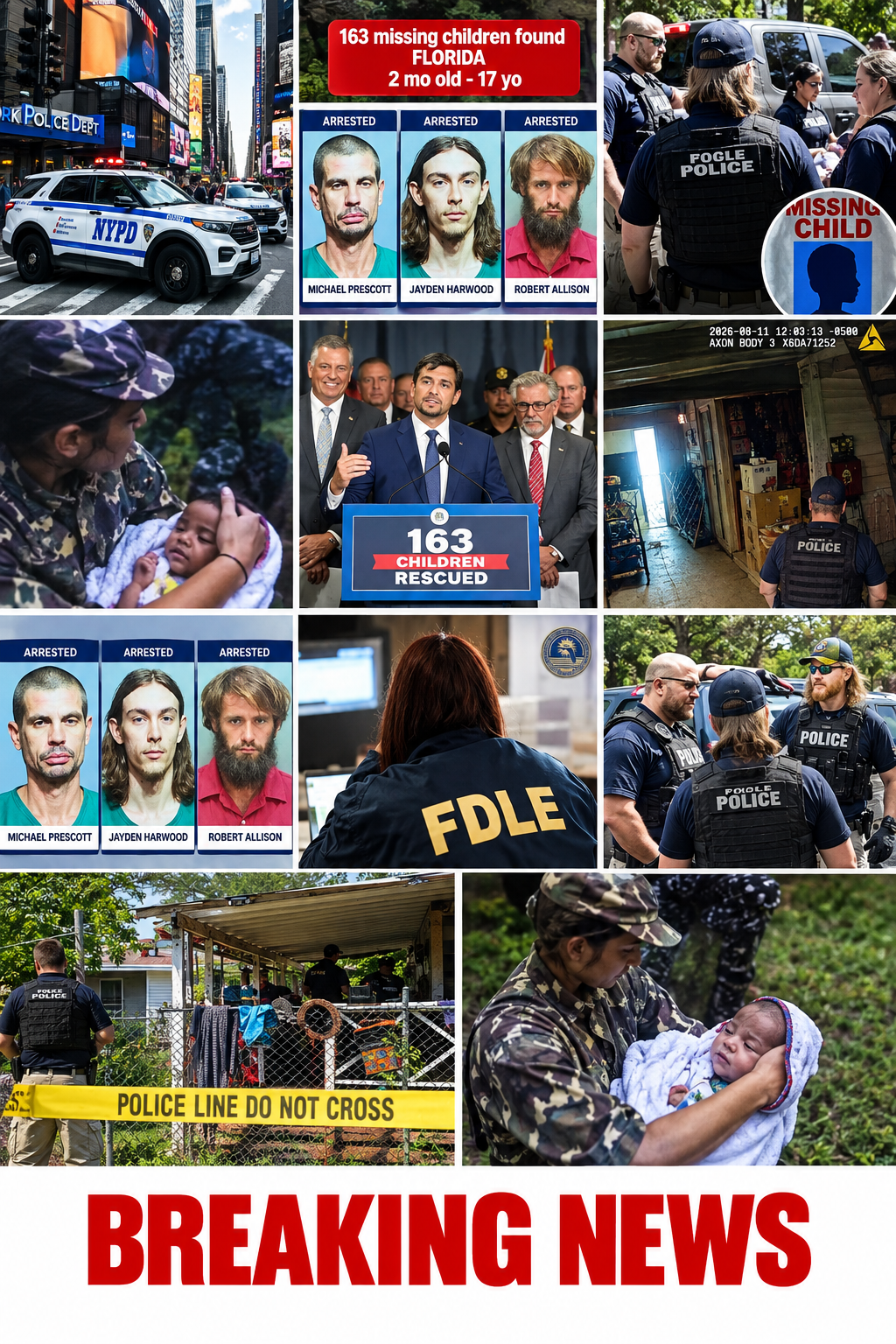
Three arrests. One massive statewide operation. One hundred and sixty-three children recovered.
Those numbers have generated intense attention across Florida, but they do not tell the whole story.
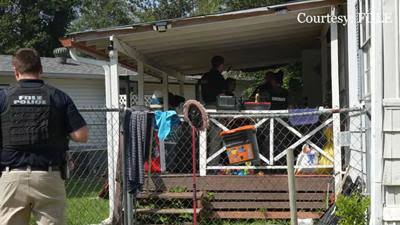
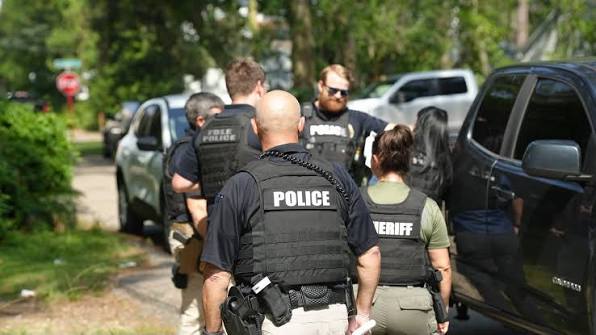
Operation Statewide Shield was carried out between August 17 and August 21, 2026, before Florida officials publicly announced its results on August 25. The operation involved the Florida Department of Law Enforcement and numerous state and local partners, with investigators working across multiple regions to locate missing and vulnerable children.
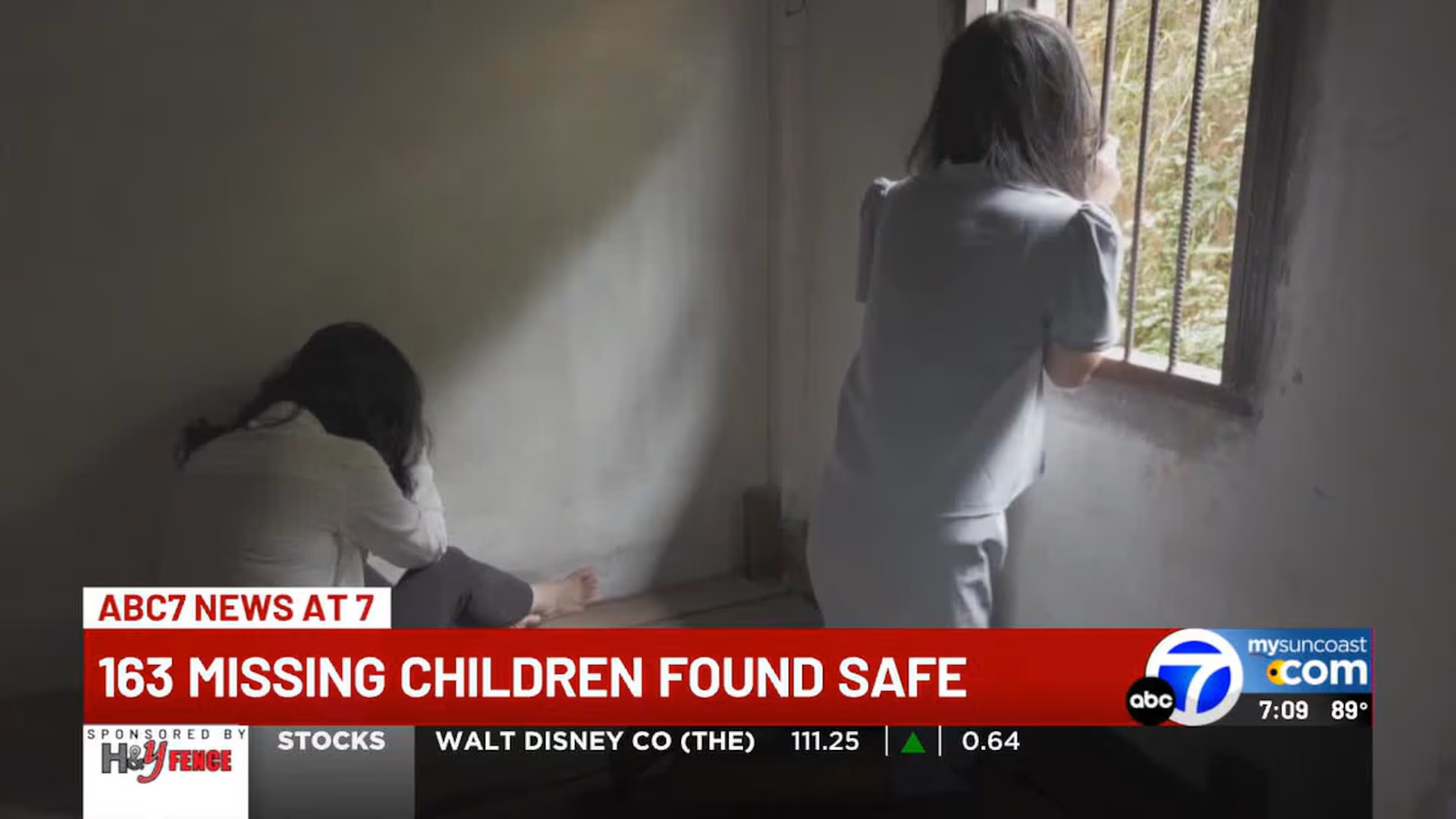
By the end of the operation, authorities announced that 163 children had been recovered.
But the arrest count was much smaller.
Three felony cases were initially announced.
That difference has naturally prompted questions.
How can an operation involving 163 recovered children produce only three publicly announced arrests?
The answer begins with the fact that the children were not all part of the same criminal case.
Authorities explicitly indicated that the circumstances differed from child to child. Some cases involved custody disputes, domestic situations, foster-care circumstances or runaway children. Others involved allegations of abuse, exploitation or human trafficking.
In other words, the operation was not a single raid against one organization.
It was a coordinated effort to locate children whose cases had different histories.
That makes the three arrests more difficult to interpret than social media headlines suggest.
The announced allegations included lewd and lascivious acts involving a minor, lewd and lascivious battery involving a victim between 12 and 16, interference with child custody and resisting officers. Charges are allegations, and the accused are entitled to due process.
The authorities also indicated that investigations remained ongoing.
So the obvious question becomes:
Were investigators finished when the press conference ended?
There is no official evidence that they were.
In fact, officials said more investigative work was continuing.
That means the three arrests should be viewed as an early public snapshot of the criminal side of the operation — not necessarily a final accounting.
At the same time, it would be inaccurate to suggest that additional arrests are guaranteed.
They are not.
Investigations can end without further charges.
Evidence may not support prosecution.
Different cases may ultimately be handled differently.
And some children may have been located without evidence that a criminal offense occurred.
That is why the 163-child figure should never automatically be translated into 163 criminal cases.
The geography of the operation tells another part of the story.
Tampa Bay accounted for 46 recoveries.
Miami accounted for 41.
Jacksonville had 32.
Orlando had 21.
Fort Myers had 12.
Pensacola had eight.
Tallahassee had three.
Together, those figures show that the operation was spread across Florida rather than concentrated in one community.
Investigators also reported activity beyond the state, involving six other states, one U.S. territory and 12 countries.
That raises another question:
How many agencies had to communicate with one another before some of these children could be safely returned or placed into appropriate care?
A missing-child investigation can involve police departments, sheriff’s offices, state agencies, child-welfare officials, prosecutors and courts.
When a child is found outside the jurisdiction where the original report was made, coordination becomes even more important.
And when a case crosses an international border, the investigative process can become more complicated still.
The operation also had a component that is easy to overlook: recovery services.
Officials said children who required assistance were taken to designated recovery hubs. There, they could receive support from social services, child-welfare professionals, medical providers, victim advocates and other child-focused resources.
That suggests authorities were not treating every recovery simply as an arrest opportunity.
The welfare of the children was also part of the operation.
But the questions surrounding the criminal investigations remain.
Were there adults who knowingly concealed children?
Were there people who interfered with custody arrangements?
Were there individuals who exploited vulnerable minors?
Were there cases where the original circumstances were more complicated than the initial missing-person report indicated?
Authorities have not publicly answered all of those questions.
And there is another reason to be cautious.
After the operation became widely discussed online, misleading claims began spreading rapidly.
One viral narrative claimed that three arrested men were responsible for abducting all 163 children.
Fact-checkers found no evidence supporting that claim. The defendants were facing charges involving individual victims or cases, not responsibility for all 163 recoveries.
Another wave of posts circulated video footage allegedly showing the operation.
Some of those videos were unrelated.
Fact-checkers identified recycled footage from other incidents that had been repackaged as Statewide Shield material.
The misinformation is significant because it can obscure the actual investigation.
The real story is already complicated enough.
There were 163 recoveries.
There were different categories of missing-child cases.
There were multiple jurisdictions.
There were three publicly announced felony cases at the initial briefing.
And there were continuing investigations.
As of September 21, the official FDLE news listings do not show a new announcement increasing the 163 total or announcing a final resolution of the criminal cases arising from Statewide Shield. September child-related arrests listed by FDLE have been announced as separate matters and should not automatically be connected to the August operation.
That leaves the public waiting for the next major development.
Will prosecutors announce additional charges?
Will investigators identify more suspects?
Will individual cases lead to court proceedings that reveal more about how the children came to be missing?
Or will many of the cases remain primarily child-welfare and custody matters rather than criminal prosecutions?
At this stage, there is no reliable basis to predict which of those possibilities will occur.
What is known is that the operation recovered 163 children.
What remains unknown is how many unanswered questions those recoveries created.
And that may be why Operation Statewide Shield is not simply a story about a five-day operation.
It could become a much longer story about what investigators discover after the children are found.