AFTER THE HEADLINES FADE: THE UNANSWERED QUESTIONS BEHIND 163 CHILD RECOVERIES
The cameras have moved on.
The press conference is over.
But the investigation surrounding Operation Statewide Shield may be far from finished.
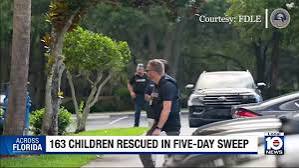
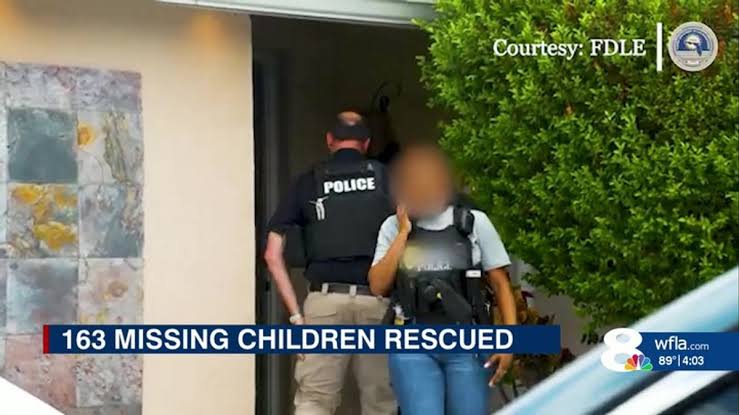
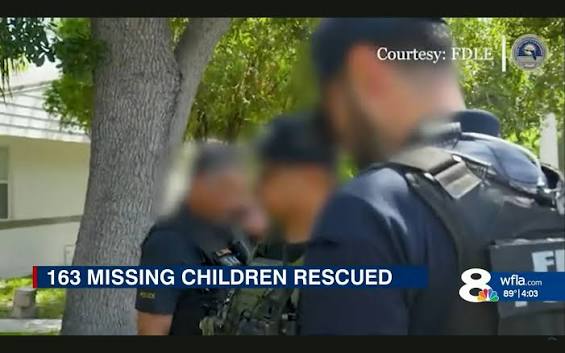
On August 25, Florida officials announced that a five-day operation had resulted in the recovery of 163 children, ranging in age from approximately two months to 17 years old.
The announcement immediately became national news.
But nearly a month later, another question deserves attention:
What happens after 163 children are found?
Operation Statewide Shield was conducted from August 17 through August 21 and was described by Florida officials as the state’s first state-led statewide child-recovery initiative. Investigators operated across Tampa Bay, Miami, Jacksonville, Orlando, Fort Myers, Pensacola and Tallahassee, while also working on cases involving other states, a U.S. territory and 12 countries.
The regional numbers alone show the scale.
Forty-six children were recovered in Tampa Bay.
Forty-one in Miami.
Thirty-two in Jacksonville.
Twenty-one in Orlando.
Twelve in Fort Myers.
Eight in Pensacola.
Three in Tallahassee.
But numbers can hide individual stories.
One child may have been reported missing after running away.
Another may have been caught in a custody dispute.
Another may have been located after investigators became concerned about abuse or exploitation.
Another may have been found in circumstances involving criminal activity.
Officials have emphasized that these cases were not all connected.
That is one of the most important facts surrounding the operation.
The 163 children were not presented by authorities as victims of one single trafficking organization. Instead, officials said the cases involved a range of circumstances, including custody disputes, domestic situations, foster-care issues, runaway cases and allegations involving trafficking, abuse or exploitation.
So perhaps the most important unanswered question is:
What did investigators learn from each individual case?
Finding a missing child does not automatically explain why the child disappeared.
It does not automatically identify everyone involved.
It does not automatically establish whether a crime occurred.
And it does not automatically answer whether the child can safely return to the environment from which they disappeared.
That is why the recovery hubs were an important part of the operation.
Officials said children needing assistance were brought to designated locations where they could access social services, child-welfare professionals, medical providers, victim advocates and other child-centered resources.
The investigation therefore had two sides.
One side was law enforcement.
The other was child protection.
And both sides could generate additional questions.
For investigators:
Who was responsible?
Was evidence available?
Did anyone knowingly violate custody orders?
Did abuse occur?
Was exploitation involved?
Were other children potentially at risk?
For child-welfare professionals:
Where should the child go?
What services are needed?
Is reunification appropriate?
Does the child need medical or psychological support?
What happens next?
These questions cannot be answered simply by announcing that a child has been “found.”
The criminal side of the operation also remains a developing story.
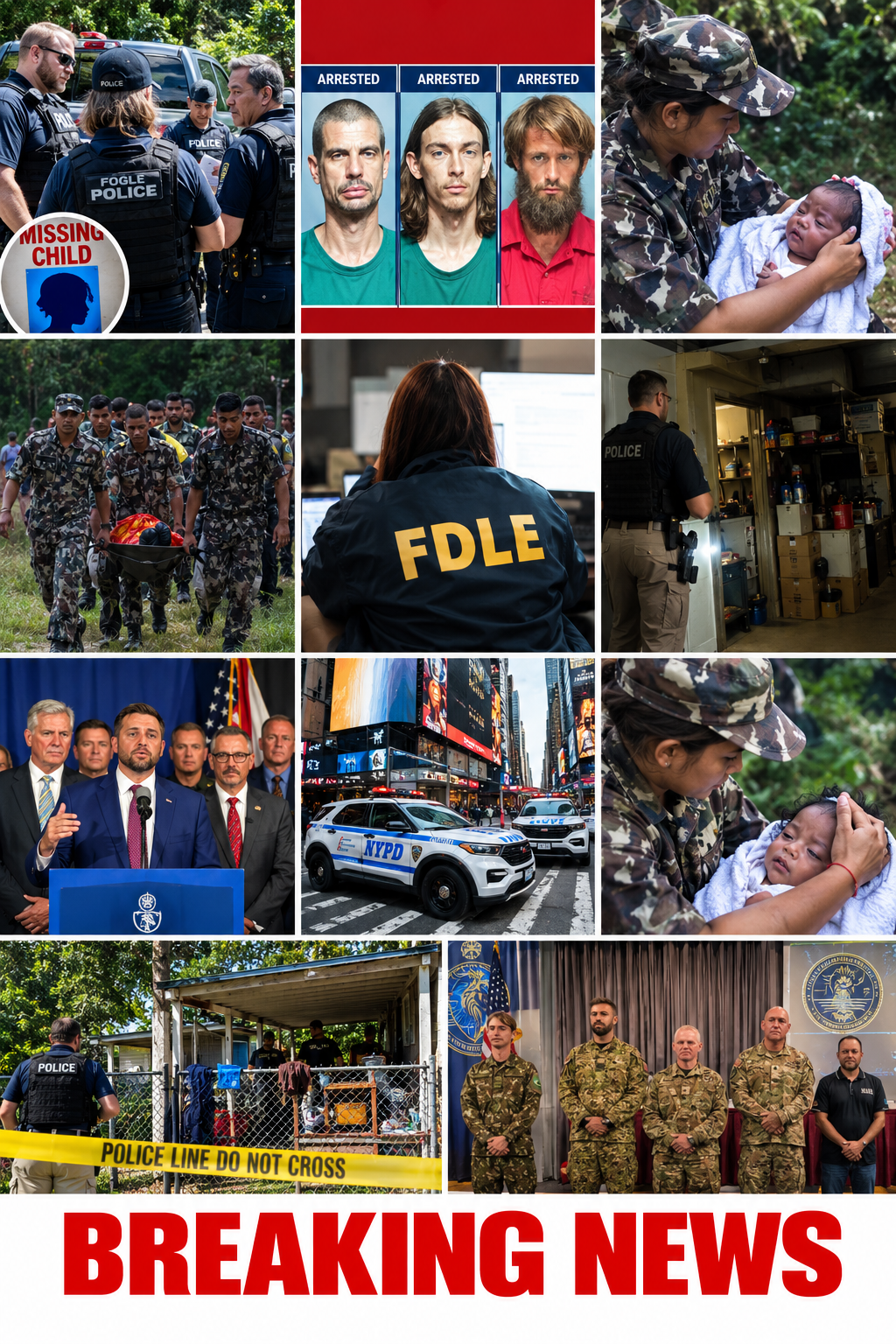
Three felony cases were announced in connection with the operation at the initial briefing. The allegations included sexual offenses involving minors, interference with child custody and resisting officers.
But those arrests do not mean three people were responsible for all 163 children.
That claim circulated online and was fact-checked as false. The defendants faced allegations involving individual victims or cases, and there was no evidence establishing that they collectively abducted the children recovered across the statewide operation.
This distinction matters because sensational claims can transform a complicated investigation into a story that is easier to understand — but inaccurate.
The real investigation is much more fragmented.
One suspect may eventually face charges in one case.
Another investigation may lead nowhere.
A custody dispute may remain a family-court matter.
A child may have been missing because of circumstances that do not involve a criminal offense.
Another case may uncover evidence of serious criminal conduct.
The 163 figure does not tell us which category applies to each child.
And authorities have not publicly released a complete case-by-case explanation.
There is also the question of whether the operation uncovered information that could lead investigators beyond the original cases.
Large-scale investigations can generate new leads.
Could one interview produce information relevant to another case?
Could a recovered child provide investigators with information about another vulnerable child?
Could evidence found during one investigation reveal a previously unknown suspect?
Could authorities eventually announce additional arrests?
These are reasonable investigative questions.
But they remain questions.
As of September 21, 2026, there is no official FDLE announcement establishing that such a larger criminal network has been uncovered through Statewide Shield. The official FDLE news listings continue to show the August 25 Statewide Shield announcement, while later September releases concern other investigations and arrests.
That means the public should be cautious about treating every new Florida child-related arrest as a development from Statewide Shield.
There is another warning for anyone following the case online.
Several videos have circulated claiming to show dramatic moments from the operation.
Fact-checkers determined that some of those clips were recycled from unrelated incidents.
The same problem occurred with images and claims involving the three arrested men.
The actual facts are powerful enough without exaggeration.
Florida authorities recovered 163 children.
The operation crossed multiple jurisdictions.
Many of the children had experienced abuse, neglect, exploitation or exposure to criminal activity, according to officials.
Three felony cases were publicly announced.
Investigations continued.
And the circumstances of the 163 children were not identical.
Now comes the slower phase of the story.
Court proceedings.
Evidence review.
Interviews.
Child-welfare decisions.
Additional investigative work.
Potentially, additional charges.
Or, in some cases, no further criminal action.
The public may want an immediate explanation for every case.
But investigations do not always move at the speed of social media.
And perhaps that is the most important thing to remember as attention moves elsewhere.
163 is not the end of the story.
It is the number announced when authorities completed the recovery phase.
The deeper story may be found in the individual cases that follow.
Who were these children?
Where were they?
Why did they disappear?
Who knew where they were?
What happened before authorities found them?
And what will investigators discover now that those children are no longer missing?
Those answers remain incomplete.
For the families, investigators and children involved, the most consequential chapter may be the one that happens after the headlines disappear.