Both Arms Gone in One Night: Ali Ismail Abbas After the Baghdad Strike
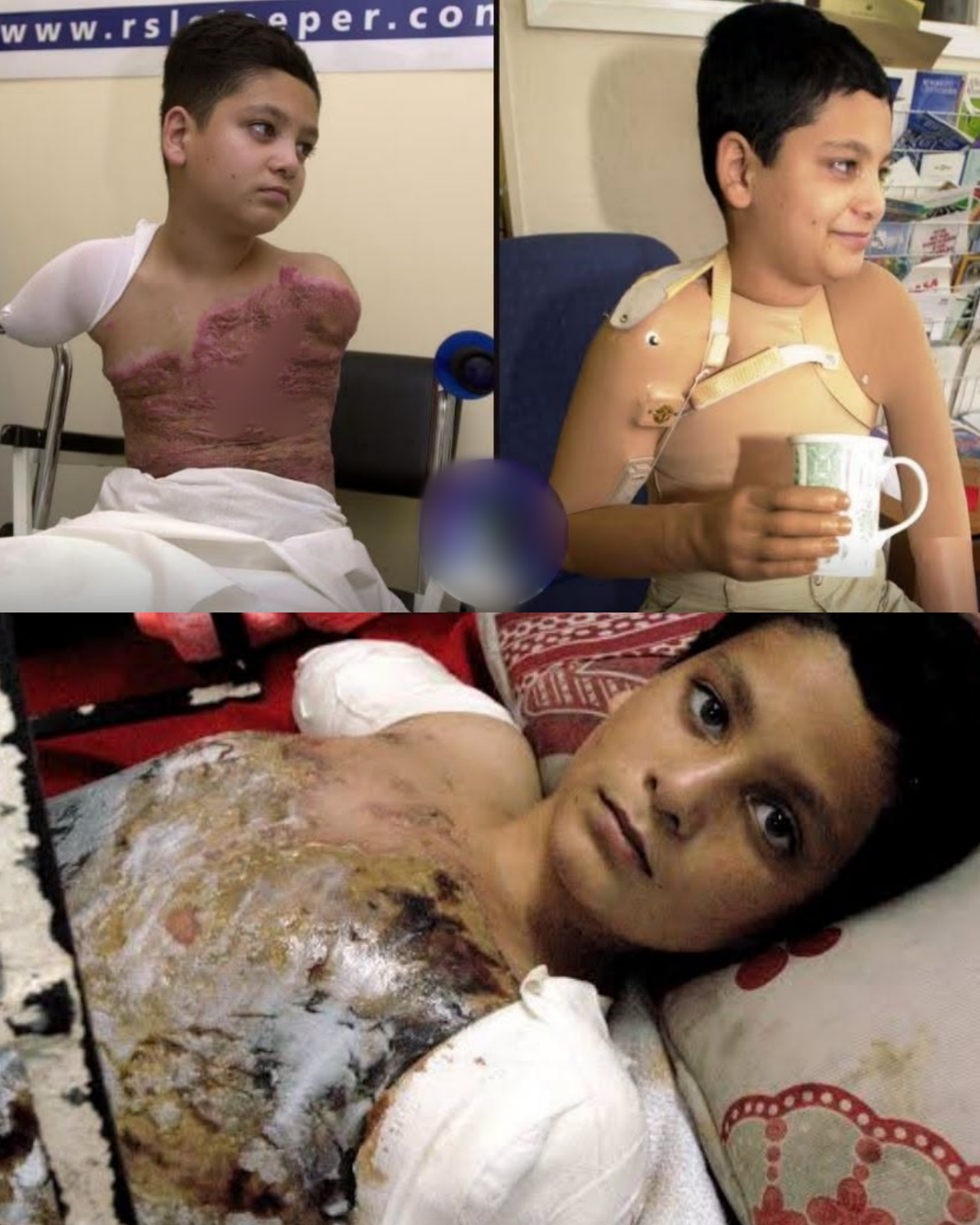
On the night of 30 March 2003, twelve-year-old Ali Ismail Abbas was asleep in his family’s house near Diala Bridge, on the edge of Baghdad. A coalition missile hit the building. His father, his pregnant mother, a brother and more than a dozen relatives died. A neighbour ran into the fire and pulled Ali out. Both arms were destroyed at the shoulder. Flames had eaten across his chest and thighs. In a filthy Baghdad ward he asked reporters whether doctors could give him hands again; if not, he said, he would rather die.
Photographers made him the face of the invasion. Tabloids in Britain opened funds. Iraqi doctors, short of everything, amputated what was left of the limbs and feared sepsis. In mid-April a U.S. aircraft flew him to Kuwait’s Al-Babtain burns centre. Surgeons grafted skin from his back and legs onto the chest. He learned to walk again. A second injured boy, Ahmed Mohammed Hamza, became his friend.
In August 2003 both boys reached Queen Mary’s Hospital, Roehampton — the British centre for amputees — under the Limbless Association. RSL Steeper helped supply arms: a cosmetic left limb and a myoelectric right hand that opened when muscle in the stump fired. Ali wore them to school so classmates would look at a boy with sleeves, not at empty shoulders. They were heavy. He preferred his feet.
In Kuwait a doctor had already shown him how to eat and brush his teeth with his toes. In London he practised until writing, painting, a television remote and a computer keyboard were ordinary. He attended Hall School Wimbledon. He became a British citizen in 2010. He married a childhood friend, Ankam Hamza, and in 2018 he and his wife had a son, Yusuf — a child he had not believed he would live to hold.
He still blamed the crew that bombed a house with no soldiers in it, only farmers and livestock. Ten years after the strike he told an interviewer the war had not been the right option. He used prostheses less and less. The work of living moved to the feet that learned to hold a brush.
Ali Abbas did not become a symbol by choice. He became one because a camera found a burned child without arms, and because enough strangers paid for grafts, sockets and a second country. The rest — painting, citizenship, a son — he did himself.
Sources
The Guardian profile of Ali Ismaeel Abbas and the press response, 2003
CBS News and Reuters hospital reporting from Baghdad and Kuwait
BBC interviews with Ali on painting and writing with his feet
The Independent and Limbless Association accounts of Roehampton and RSL Steeper fittings
The Telegraph and Daily Mirror on British citizenship, marriage and the birth of Yusuf
ITV News ten-year interview on the war and prosthetic use
NPR and The Times features on rehabilitation in Britain