The Stolen Triplets Part 5 — The Mother They Never Expected
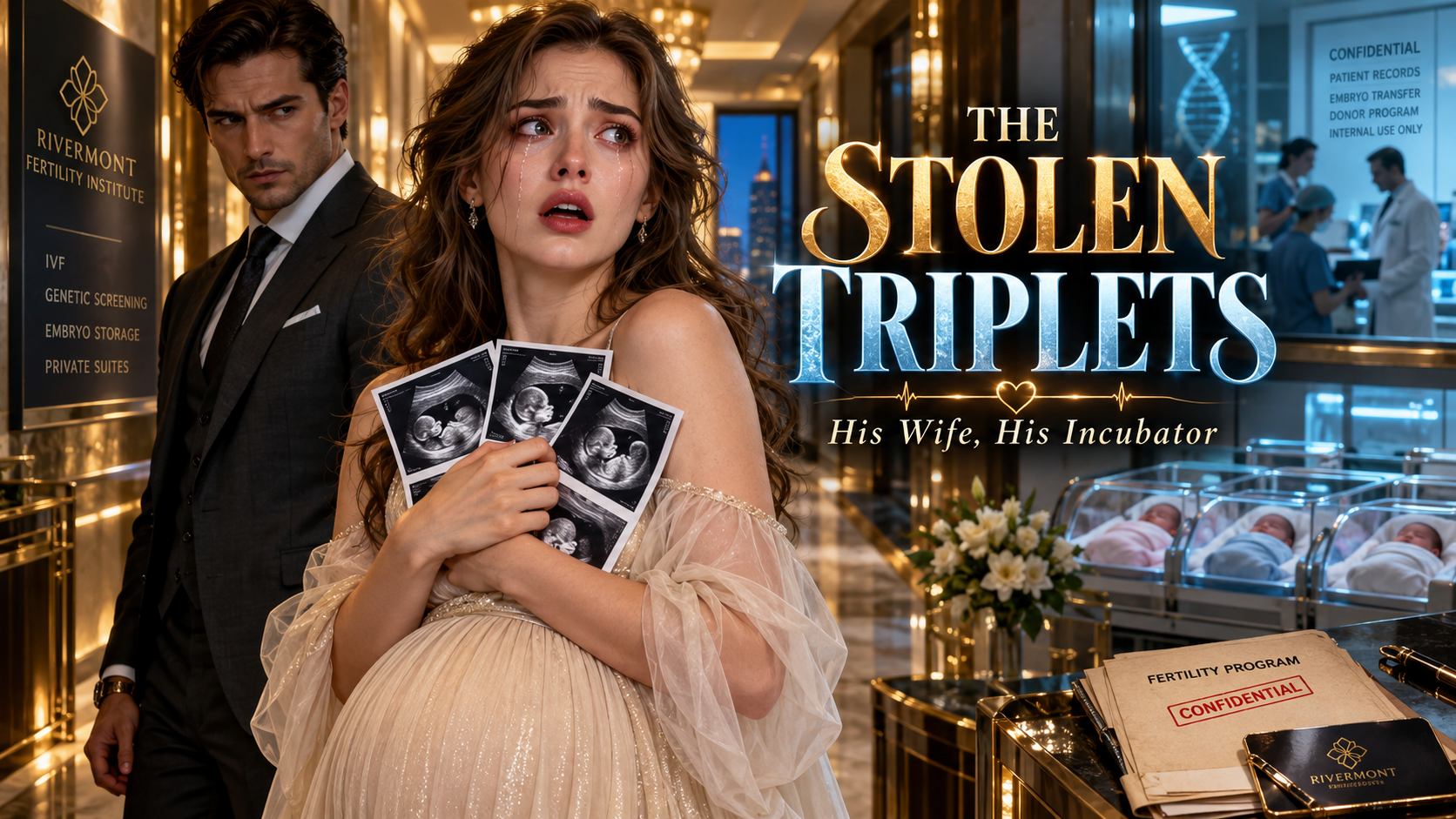
For six months, I believed I was carrying the three miracles my husband and I had prayed for.
Then I discovered he had lied about their origins.
I learned he’d forged my medical consent, accepted enormous payments from three families, and arranged for my only remaining embryo to be transferred into another woman.
I thought nothing could hurt more.
I was wrong.
Because the person who had helped Harrison build his entire plan was a man I had known since childhood.
Edward Whitmore.
The man who had promised my father he would always protect me.
***
Edward had been our family’s attorney for more than thirty years.
He attended every birthday dinner.
Every Christmas gathering.
Every important family celebration.
He sent flowers when my father died.
He paid for part of my education when my mother struggled financially.
And when Harrison proposed, Edward had smiled and told me:
“Your father would have liked this young man.”
Now I knew why.
He had chosen him.
My marriage hadn’t begun with a chance meeting.
It had begun with a plan.
***
Rebecca arranged a secure conference call with my mother and Isabel.
For the first time in my life, I heard my mother’s entire story.
Years earlier, my grandfather had established a family trust containing real estate, investments, and ownership interests in several private companies.
Edward managed much of its legal administration.
But over time, irregularities appeared.
Money moved through entities the beneficiaries didn’t recognize.
Documents were amended without clear authorization.
And Edward became increasingly determined to prevent an independent review.
Isabel had discovered the discrepancies while looking through old family papers.
That was when Edward introduced Harrison to her.
Harrison was charming.
Educated.
Ambitious.
And willing to help Edward maintain influence over the family’s assets.
They married.
But Isabel soon discovered that her husband was pressuring her to sign financial documents she didn’t understand.
When she refused, he threatened her.
She fled with help from our mother.
Edward and Harrison lost access to the person they believed could be persuaded to cooperate.
Then they turned their attention to me.
I had been twenty-three when I first met Harrison.
He’d approached me at a charity fundraiser.
He knew my favorite flowers.
My favorite books.
He even knew the name of the dog I’d loved as a child.
I had thought we were soulmates.
But someone had given him every detail.
He hadn’t been discovering who I was.
He’d been studying me.
***
When my mother finished speaking, I sat in silence.
Natalie held my hand.
“Chloe,” she whispered, “say something.”
I stared out the window.
All I could think about were the seven years I’d spent loving Harrison.
Every anniversary.
Every holiday.
Every night I’d fallen asleep with his arms around me.
How much of it had been real?
Had he ever loved me?
Or had every kiss been another step toward something he wanted?
Then I felt movement inside my belly.
A tiny kick.
Then another.
And another.
Three little lives.
Completely innocent.
I pressed both hands against my abdomen.
For the first time, I understood something important.
Harrison had stolen my choices.
But he hadn’t stolen my ability to love.
And he wouldn’t decide what kind of mother I became.
***
Over the following weeks, Rebecca and the investigators worked to preserve records and establish what had happened.
Dr. Vale provided evidence concerning the unauthorized transfers.
Dr. Cross produced laboratory records showing that consent procedures had been bypassed.
Elena testified about the false information given to her before her pregnancy.
Harper provided financial documents and messages.
Madison Reed also came forward.
She told investigators that Harrison had described me as an experienced, willing gestational carrier who had agreed to help families struggling with infertility.
Audrey Whitmore’s relatives produced similar documents.
All three families had been given agreements bearing my forged signature.
Some had ignored warning signs.
Others had trusted what appeared to be legitimate legal and medical paperwork.
But none of those documents could erase what had happened to me.
Rebecca explained that the babies’ parentage and care would need to be addressed through appropriate legal proceedings, separate from the criminal investigation.
The situation was complicated.
Painfully complicated.
But for once, I was included in the decisions.
I was allowed to ask questions.
I was allowed to say no.
And I was allowed to be heard.
***
Then, at twenty-nine weeks, everything changed.
I woke before dawn with a pain so intense that I couldn’t speak.
Natalie was sleeping in the chair beside my hospital bed.
I reached for her.
“Natalie.”
She opened her eyes.
One look at my face and she was already standing.
“Chloe?”
“Get the nurse.”
The pain returned.
Harder.
My body tightened.
The monitors began beeping.
Doctors rushed into the room.
I heard phrases I didn’t want to hear.
Premature labor.
Triplet pregnancy.
Neonatal team.
Emergency delivery.
For a moment, I was transported back to the hotel hallway.
The place where my world had fallen apart.
But this time, I wasn’t alone.
Natalie gripped my hand.
“I’m right here.”
I began crying.
“I’m scared.”
She brushed my hair away from my forehead.
“I know.”
“What if something happens to them?”
She leaned close.
“Then we’re going to face it together. You’re not facing anything alone anymore.”
***
The babies arrived just after sunrise.
Three tiny cries.
Three fragile little bodies.
Three children who had already survived more than they would ever understand.
The medical team moved quickly, providing the specialized care premature newborns needed.
I watched through tears as they were taken to the neonatal intensive care unit.
I wasn’t able to hold them immediately.
But before the nurses wheeled them away, one stopped beside me.
She gently tilted a tiny bundle so I could see the baby’s face.
A little girl.
Her eyes were closed.
Her mouth was smaller than my thumb.
“She’s beautiful,” I whispered.
The nurse smiled.
“She certainly is.”
I reached out and touched the baby’s tiny hand.
Her fingers curled around mine.
And something inside me changed.
I had spent months wondering whether I had any right to love these children.
In that moment, I stopped asking.
Love wasn’t a medical record.
It wasn’t a contract.
And it couldn’t be measured by a genetic test.
I had carried them.
I had protected them.
I had whispered to them when I was afraid.
Whatever decisions the courts eventually made, no one could erase those months.
***
The next several weeks were exhausting.
The babies needed careful monitoring and support in the neonatal unit.
I visited them every day I was medically able.
I learned the sounds of their monitors.
I memorized their tiny expressions.
I celebrated every small improvement.
And I began meeting with the three genetic families.
Harper cried when she first saw the little girl connected to her embryo.
Madison stood silently beside her baby’s incubator, holding a photograph she’d brought from home.
Audrey’s parents arrived together.
Her mother carried a small knitted blanket.
“Audrey made this before she became ill,” she told me.
Her voice broke.
“She always wanted a child.”
I looked at the blanket.
And suddenly, the three women I’d once imagined as enemies became people standing in front of me.
Women with hopes.
Fears.
Regrets.
And losses of their own.
We had all been caught in Harrison’s lies.
That didn’t erase what had happened.
It didn’t make the consequences simple.
But it meant we could begin discussing the children’s futures without pretending the past hadn’t happened.
***
One afternoon, Harper asked to speak with me privately.
We sat beside the hospital garden.
She looked nervous.
“Chloe, I’ve been thinking about what I want to say.”
I waited.
She twisted her wedding ring.
“When Harrison first approached me, I thought I understood everything. I believed I was helping arrange a pregnancy that everyone had agreed to.”
She swallowed.
“I should have asked more questions.”
I looked down.
“Yes. You should have.”
Tears filled her eyes.
“I know.”
For a moment, neither of us spoke.
Then she reached into her bag.
“I brought something.”
She handed me an envelope.
Inside was a letter.
Not from a lawyer.
Not a contract.
A handwritten letter.
“Whatever the court decides,” Harper said, “I want the child to know the truth about you.”
I unfolded the paper.
It began:
“To the woman who carried you when I could not understand what motherhood truly required…”
My vision blurred.
Harper continued.
“I don’t want your place in this child’s story erased.”
I looked at her.
For the first time, I didn’t see the woman who had taken something from me.
I saw someone beginning to understand what had been done to both of us.
“Thank you,” I whispered.
***
But the greatest surprise came three months later.
Elena went into labor.
Her baby was born healthy.
A boy.
My biological son.
The child whose embryo Harrison had secretly transferred into another woman’s body.
When Rebecca called me with the news, I cried so hard I couldn’t speak.
Elena had already expressed her wishes through independent counsel.
She wanted the truth acknowledged.
She wanted the child’s future decided lawfully.
And she wanted me to have the opportunity to know him.
There were still legal questions.
There were still hearings, medical records, and decisions to be made.
But for the first time, the little boy existed outside a file bearing the words “unaccounted for.”
He had a face.
A heartbeat.
A tiny hand that could close around someone’s finger.
And he was alive.
***
Months passed.
The investigation expanded.
Edward Whitmore faced proceedings connected to alleged financial fraud and falsified documents.
Harrison and Dr. Vale faced separate legal consequences arising from the evidence gathered about the clinic arrangements.
Not every issue was resolved quickly.
But the network of secrecy they had relied upon was finally exposed.
I filed for divorce.
I sought independent financial control over my own affairs.
I attended counseling.
I learned how to make decisions without wondering whether Harrison would approve.
And slowly, painfully, I began rebuilding my life.
Then came the day I would never forget.
A family court hearing had concluded after months of negotiations, evidence review, and independent assessments concerning the children’s welfare.
The three genetic families had agreed to arrangements that recognized their roles and maintained my meaningful place in the children’s lives.
Each child would grow up with a truthful account of their origins.
There would be no fabricated story about where they came from.
No forced separation from people they knew and loved.
No agreement signed behind someone’s back.
The court approved the arrangements after reviewing the relevant evidence and the children’s interests.
And the case involving my biological son progressed toward an order recognizing my legal relationship with him.
For the first time in almost a year, I left a legal appointment without feeling as if my future belonged to someone else.
***
I thought that was the end of the surprises.
But one Saturday morning, Isabel came to visit.
She brought Lily.
My niece was wearing a yellow dress.
Exactly like the one in the photograph Harper had shown me.
She ran straight into my arms.
“Aunt Chloe!”
I hugged her tightly.
Then I looked up.
A woman stood beside Isabel.
Silver hair.
Tired eyes.
A familiar smile.
My mother.
For a moment, I couldn’t move.
We hadn’t seen each other in person since the truth came out.
There had been phone calls.
Apologies.
Long, painful conversations.
But not this.
She stood in the doorway, clutching a small package.
“I wasn’t sure you’d want me here,” she whispered.
I looked at her.
Part of me still hurt.
Part of me still remembered every year she’d kept Isabel’s existence secret.
But I also saw a woman who had made terrible decisions out of fear and had finally begun telling the truth.
I walked toward her.
“I needed you to protect me with the truth, Mom.”
Tears filled her eyes.
“I know.”
“Not with silence.”
She nodded.
“I know.”
We stood facing each other for several seconds.
Then I opened my arms.
She began sobbing.
And I held her.
Not because everything was forgiven.
Not because the past no longer mattered.
But because healing had to begin somewhere.
***
That afternoon, Isabel gathered us in the living room.
Natalie sat beside my mother.
Lily was drawing pictures at the coffee table.
And my phone was filled with photographs of the four babies whose lives had become connected through one terrible deception.
Isabel smiled.
“There’s something else we want you to see.”
I frowned.
“What?”
She handed me an old envelope.
Inside was a photograph.
Two little girls stood in a sunny garden.
One was about four.
The other was a baby wrapped in a white blanket.
I stared at it.
The older child had dark hair.
A familiar smile.
It was Isabel.
And the baby…
My mouth fell open.
“That’s me?”
My mother nodded through her tears.
“Yes.”
I stared at the photograph.
“But I thought Isabel didn’t know me when I was little.”
My mother shook her head.
“She did. For a short time.”
Isabel sat beside me.
“When you were born, I came to see you. I was still living with the relatives who raised me, but Mother arranged a few visits.”
She touched the photograph.
“You used to grab my hair every time I held you.”
I laughed through my tears.
Then Isabel continued.
“After that, the family situation became complicated. We were separated again.”
I studied the photograph.
Two sisters.
One holding the other.
Separated by secrets.
Reunited by a nightmare.
And suddenly, I realized something.
Harrison had spent years manipulating my family because he believed money was the most powerful thing we possessed.
But the photograph showed me what he had never understood.
The family he had tried to control existed long before him.
And it would continue long after he was gone.
***
One year later, I stood outside a small white house with a wide front porch.
It wasn’t the mansion Harrison and I had shared.
There was no marble staircase.
No expensive chandelier.
No grand dining room designed to impress strangers.
There were toys scattered across the living room.
Tiny shoes by the door.
A collection of children’s drawings taped crookedly to the refrigerator.
And four photographs on the mantel.
Three newborns.
And one little boy whose arrival I had once believed impossible.
The children’s care arrangements differed, and their everyday homes were not all the same.
But I remained part of their lives through the relationships and agreements we had carefully built.
There were birthdays.
Visits.
Shared photographs.
And a growing circle of adults determined to put the children before the conflict that had brought them into the world.
My biological son was at home with me that afternoon.
He was laughing in his high chair as I prepared lunch.
I looked at him.
My little miracle.
The embryo Harrison had tried to hide.
The baby Elena had carried under false pretenses.
The child whose existence had eventually helped expose the truth.
He reached toward me.
“Mama.”
I froze.
He had made sounds like it before.
But never so clearly.
I turned toward him.
“What did you say?”
He giggled.
“Mama.”
My eyes filled with tears.
I picked him up.
He pressed his little face against my shoulder.
And I began to cry.
Not from betrayal.
Not from fear.
But from a happiness I had almost forgotten was possible.
***
That evening, Rebecca called.
“I have news.”
My stomach tightened instinctively.
Even after everything, unexpected phone calls still frightened me.
“What happened?”
“Your grandfather’s trust has completed its independent review.”
I held my breath.
“The financial arrangements that were improperly controlled have been identified, and the trustees have approved the next steps for protecting the beneficiaries’ interests.”
I sat down.
“So Edward can’t control it anymore?”
“He’s no longer in that position. The remaining legal proceedings will continue, but your family’s interests are being protected independently.”
I closed my eyes.
“Thank you.”
Rebecca hesitated.
“Chloe, there’s something I want you to understand.”
“What?”
“The most important thing you recovered wasn’t money.”
I looked toward my son.
He was playing with a wooden elephant on the rug.
“I know.”
***
Later that night, I opened the blue jewelry box one last time.
Inside were my grandmother’s locket.
My mother’s letter.
And the photograph of Isabel holding me as a baby.
I added one more photograph.
A picture of four tiny children, taken during a carefully arranged family gathering, surrounded by the people who loved them.
Their beginnings had been complicated.
Their futures would require honesty, patience, and care.
But those futures belonged to them.
Not to Harrison.
Not to Edward.
Not to anyone who believed a human life could be bought, transferred, or controlled.
I closed the box.
And for the first time, I understood what my grandmother had meant when she said some family treasures were meant to be discovered later.
They weren’t hidden in bank accounts.
They weren’t written into contracts.
They were the people we fought to protect.
***
Six months after that, an envelope arrived in the mail.
There was no return address.
Inside was a short letter from Harrison.
He wrote that he had made mistakes.
That he had lost everything.
That he hoped I could someday forgive him.
I read it once.
Then I folded it and placed it in a drawer with the remaining legal documents.
I didn’t cry.
I didn’t call him.
I didn’t spend another night wondering whether he’d ever truly loved me.
Because I finally understood that I didn’t need his answer to live my life.
I had my own answer now.
I had survived.
I had reclaimed my choices.
And I had built a family from truths that Harrison had tried desperately to keep hidden.
I walked into the nursery.
My son was sleeping peacefully.
Moonlight fell across his small face.
I brushed a curl away from his forehead.
Then I whispered the words I had once said to three tiny heartbeats inside my womb.
“Stay with me, baby.”
He stirred.
His little fingers wrapped around mine.
And this time, there was no fear in my voice.
Only love.
Because the man who believed I was nothing more than an incubator had been wrong about one very important thing.
I was never powerless.
I was a mother.
And the future he had tried to steal was finally mine to build.
The End.