PART 5 – THE LAST SIGNATURE
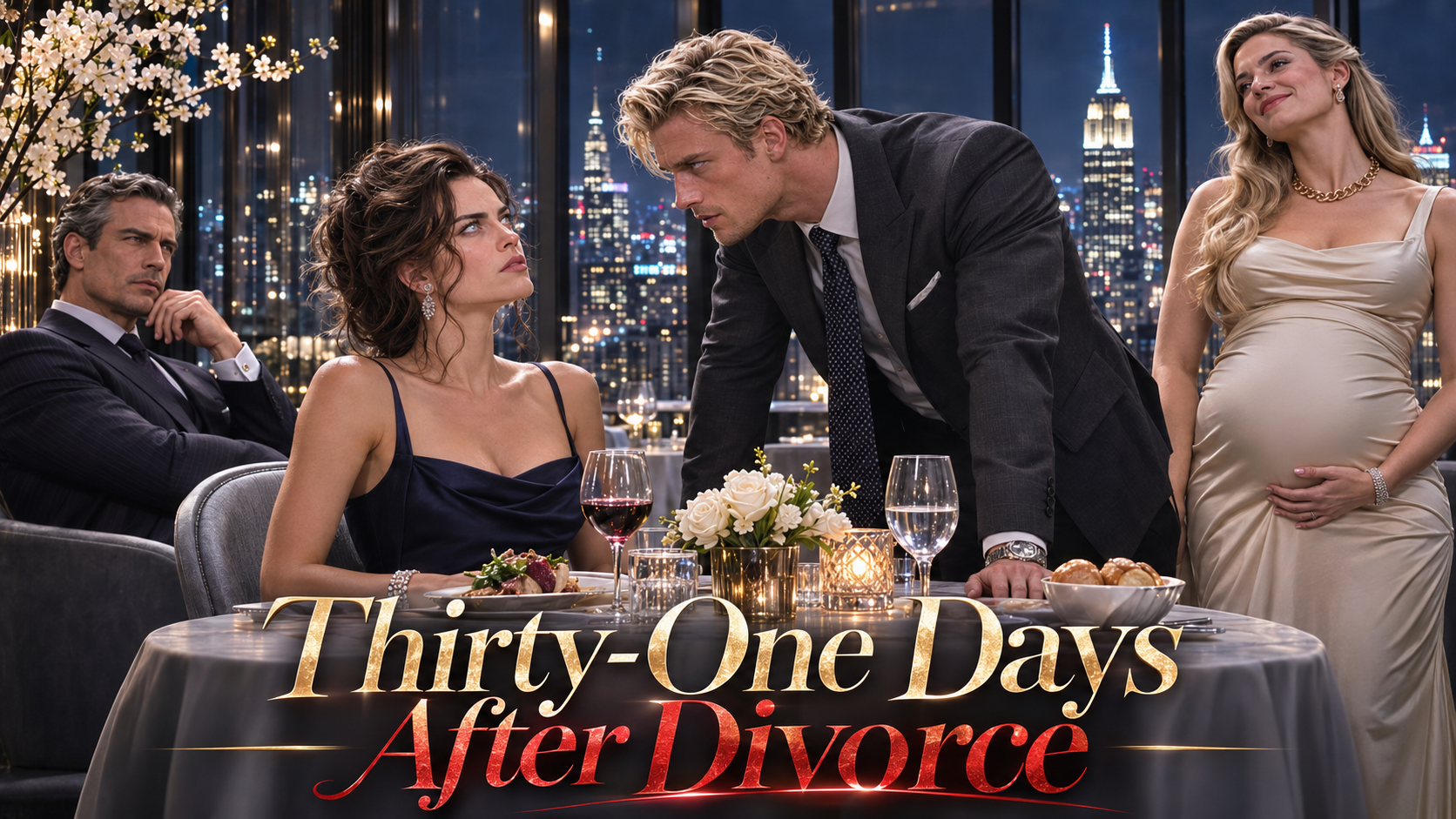
“Tell me you didn’t sign this.”
Everett stood across the conference table.
For the first time in thirty-four years, my older brother couldn’t meet my eyes.
“Laurel, I can explain.”
I stepped backward.
“Then explain.”
He looked at Rebecca.
“Show her the second page.”
Rebecca hesitated.
Then opened another document.
It was an authorization agreement dated three months earlier.
Everett’s signature was real.
So was the corporate seal.
My stomach dropped.
“You gave Nathan access to Harborlight?”
“No,” Everett said. “I gave him access to a controlled account.”
“Why?”
“Because I knew someone was trying to get inside the company.”
I stared at him.
“What?”
Everett pulled out a chair.
“Six months ago, our security division discovered unauthorized attempts to access Harborlight’s ownership records. The requests came through companies connected to Keene Industrial.”
“Nathan.”
“We suspected him. But we couldn’t prove it.”
“So you signed an agreement?”
“A limited authorization. It was supposed to help us identify whoever was behind the requests.”
Rebecca turned the laptop toward me.
“The document Nathan showed in his recording is incomplete. The original agreement requires a second independent authorization before any voting shares can move.”
I read the clause.
It was true.
Everett had signed the first authorization.
But the second required my signature.
In person.
With independent legal verification.
Nathan couldn’t transfer the shares without me.
Unless he could convince a court that I was no longer capable of managing them.
Suddenly, I remembered the divorce.
Bryce’s attorney had insisted on including a strange paragraph describing me as financially dependent and professionally inexperienced.
At the time, I thought it was merely insulting.
Now I understood.
Nathan had been collecting documents to build a false picture of my competence.
See more Stories :
“He’s trying to have me removed as trustee,” I whispered.
Rebecca nodded.
“A petition was filed yesterday. It claims you concealed financial information, mishandled company funds, and allowed your personal relationships to compromise corporate assets.”
My hands began shaking.
“The stolen eleven million.”
“Exactly,” Rebecca said. “He’s trying to make the forged transactions look like your misconduct.”
I looked at Everett.
“Why didn’t you warn me?”
His eyes filled with regret.
“Because we believed we could stop him before he reached you.”
I laughed bitterly.
“Everyone keeps deciding what I should know.”
Everett lowered his head.
“You’re right.”
For a moment, the room was silent.
Then my phone rang.
Bryce.
I almost ignored it.
But something told me to answer.
“Laurel,” he said.
His voice sounded different.
Stripped of arrogance.
“Nathan’s gone.”
“What?”
“His apartment is empty. His phone is disconnected. And someone just sent me a photograph of Sienna’s baby.”
I froze.
“What kind of photograph?”
“A picture of her hospital bracelet.”
My blood turned cold.
“Bryce, where are you?”
“Outside St. Catherine’s.”
“Don’t go inside. Call hospital security.”
Then he said something that made me stop breathing.
“Laurel, there’s a message.”
“What does it say?”
He swallowed.
“‘Tell Laurel to come alone if she wants the child to stay safe.'”
I looked at Everett.
He was already moving.
Within minutes, the hospital confirmed that Sienna’s baby was safe in the neonatal intensive care unit.
But Nathan had entered the building using an old visitor credential.
Security footage showed him leaving through a service corridor.
He had never reached the child.
The photograph was a threat designed to frighten us.
And it worked.
Not because I believed Nathan could defeat our security.
But because I realized how far he was willing to go.
At eight fifteen that morning, Rebecca received an email.
Nathan wanted to meet me at an abandoned manufacturing plant in Newark.
The same facility where his father had worked.
He demanded the second authorization.
And he threatened to release forged evidence against me if I refused.
Everett wanted to call the police immediately.
Rebecca had already contacted investigators about the financial crimes and the hospital threat.
But I made one decision myself.
“I’ll meet him.”
See more Stories :
Everett stared at me.
“Absolutely not.”
“I won’t be alone.”
I looked at Rebecca.
“And I won’t sign anything.”
At nine forty-two, I walked into the old factory.
Investigators were positioned nearby, and a security team monitored the building.
Nathan stood beneath a rusted overhead crane.
He looked exhausted.
“You came.”
“Of course I did.”
He laughed.
“Your family always thinks it can buy its way out of everything.”
I stopped ten feet away.
“My grandfather wronged your father.”
Nathan’s smile vanished.
“You don’t get to say that.”
“I read the files.”
He stared at me.
“All of them?”
“Yes.”
“Then you know what happened.”
I nodded.
“Arthur Winslow concealed evidence that could have cleared your father.”
Nathan’s hands trembled.
“He lost his business. His reputation. Everything.”
“I’m sorry.”
“Sorry?”
He laughed bitterly.
“My father spent years writing letters. Nobody answered. He couldn’t get another job. People crossed the street to avoid him.”
I felt tears burning behind my eyes.
“He deserved justice.”
Nathan stepped closer.
“And what did he get?”
“Nothing.”
He stared at me.
Then I said something he clearly hadn’t expected.
“Until now.”
I opened my bag.
Nathan stiffened.
“What is that?”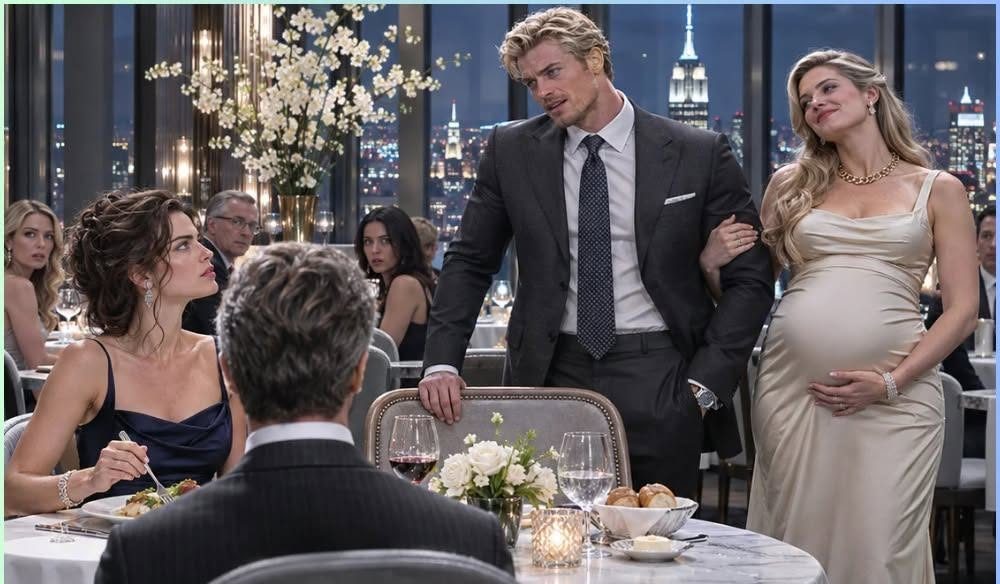
“A signed resolution from Winslow Meridian’s board.”
I handed it to him.
The document authorized an independent investigation into the original fraud, public disclosure of the findings, and a compensation fund for everyone harmed by the concealed contracts.
Nathan read it.
His expression changed.
“You did this?”
“Everett and I approved it this morning.”
He looked up.
“Why?”
“Because the truth doesn’t stop mattering when it becomes inconvenient.”
His eyes filled with tears.
For a moment, I saw the young man who had watched his father lose everything.
Then his face hardened again.
“You think this fixes what you did?”
“No.”
I stepped closer.
“And it doesn’t excuse what you’ve done either.”
Nathan’s jaw tightened.
“You don’t understand.”
“I understand that you forged my signature. Stole money. Manipulated Bryce. Used Sienna. And threatened an innocent baby.”
He looked away.
“You became the kind of person you hated.”
That struck him harder than anything else I could have said.
For several seconds, he said nothing.
Then he reached into his coat.
The security team moved.
But Nathan didn’t pull out a weapon.
He pulled out a folded letter.
“My father wrote this before he died.”
He handed it to me.
I unfolded the paper.
The handwriting was uneven.
There were only a few lines.
“My son, if the truth ever comes out, don’t let my suffering become the reason you destroy your own life. I wanted justice, not revenge.”
Nathan began crying.
Not dramatically.
Not loudly.
Just a broken man standing in the ruins of a factory that had once employed his father.
“I thought if I ruined your family, it would make things right.”
“It wouldn’t,” I said.
He looked at me.
“I know.”
Then he placed his phone and the remaining forged documents on the floor.
“I’ll cooperate.”
Investigators entered the building.
Nathan surrendered without resistance.
His confession eventually helped recover most of the stolen funds and identify the accounts used in the scheme.
But the consequences did not disappear.
He faced criminal charges.
Sienna agreed to testify about the documents she had helped conceal.
And Bryce was left to confront the ruin of the company he had believed was entirely his own achievement.
Three months later, I received a letter.
From Bryce.
It was handwritten.
For the first time, he didn’t blame me.
He admitted that his arrogance had made him vulnerable to Nathan.
He admitted that he had humiliated me because he couldn’t tolerate the possibility that I had built a life beyond him.
And he admitted something else.
“I thought your silence meant you had nothing. I never understood that you were simply choosing not to show me everything you had.”
I folded the letter.
And put it away.
I didn’t hate Bryce.
But I didn’t want him back.
Keene Industrial Supply survived after a court-supervised restructuring.
Winslow Meridian helped protect the jobs of its employees through a transparent refinancing arrangement.
Bryce lost control of the business but remained responsible for the obligations he had signed.
Sienna’s daughter, whom she named Hope, grew stronger every week.
Sienna moved home with her father and began rebuilding her life.
She sent me a photograph of Hope smiling in a yellow blanket.
On the back, she wrote:
“Thank you for helping us when you had every reason to walk away.”
I kept that photograph.
Six months later, Everett and I attended the opening of the new Harborlight Children’s Medical Center.
The facility was funded through a charitable trust established in our mother’s name.
It provided specialized treatment and equipment assistance to families who couldn’t afford it.
At the opening ceremony, Everett handed me a small wooden box.
“There’s something else,” he said.
Inside was a letter.
Our mother’s handwriting.
I recognized it immediately.
“Laurel, if you’re reading this, I hope you’ve learned that being loved is not the same as being needed. Some people will admire what you own. Others will depend on what you give. But the people who truly love you will stay when you have nothing to offer except yourself.”
I couldn’t finish reading.
Everett put his arm around me.
“I should have told you everything sooner,” he whispered.
“Yes,” I said.
He nodded.
“I know.”
Then I hugged him.
Because forgiveness wasn’t pretending someone had never made a mistake.
It was deciding what kind of future could exist after the truth.
One year after my divorce, I returned to Aster House.
Same restaurant.
Same view.
Same table.
But this time, I wasn’t there to prove anything.
I was having dinner with a man named Daniel Mercer.
He was a pediatric surgeon at Harborlight.
We had met during the medical center’s opening.
He didn’t know who I was when we first spoke.
He had been trying to fix a broken coffee machine in the hospital lounge.
I had offered to help.
We ended up drinking terrible vending-machine coffee and talking for forty minutes.
He asked about my favorite books.
My childhood.
Why I liked old cars.
He never asked what I owned.
When he eventually learned my surname, he shrugged.
“Does that mean you’re going to stop bringing homemade banana bread to the hospital?”
See more Stories :
I laughed.
“No.”
“Good. The nurses would never forgive you.”
That evening at Aster House, Daniel reached across the table and took my hand.
“Can I ask you something?”
I smiled.
“Of course.”
“Are you happy?”
Such a simple question.
And yet it was the one Bryce had almost never asked.
I looked out across Manhattan.
For years, I had believed my greatest secret was my wealth.
Then I believed it was my family’s history.
But sitting there, holding Daniel’s hand, I finally understood.
The greatest thing I had hidden wasn’t money.
It was myself.
And I no longer needed to hide.
“Yes,” I said.
“I really am.”
Daniel smiled.
“Good.”
Then he reached into his jacket.
My heart stopped.
He pulled out a small velvet box.
“Daniel…”
He laughed.
“Relax. It’s not what you think.”
Inside was a tiny silver key.
I stared at it.
“What is this?”
“The key to the old bookstore on Hudson Street.”
I blinked.
“The one that’s closing?”
He nodded.
“I heard you wanted to save it.”
“I did, but the owner wouldn’t sell.”
“She changed her mind.”
I looked at him.
“How?”
“I told her about your plan to turn the upstairs rooms into a free reading center for children.”
My eyes filled with tears.
“You did that?”
“No,” Daniel said softly.
“You did. I just made a phone call.”
I held the key in my palm.
And suddenly I began laughing.
Because after everything that had happened, the man sitting across from me wasn’t offering diamonds, mansions, or promises of wealth.
He was offering me a door.
One I could choose to open.
I leaned across the table and kissed him.
And somewhere in the city below, millions of lights glittered against the darkness.
Thirty-one days after my divorce, my ex-husband had stood in this restaurant and demanded to know who was paying for my dinner.
He thought the answer would reveal my worth.
He was wrong.
My worth had never depended on who paid.
Or who stayed.
Or who walked away.
It had been mine all along.
And the final twist of my story wasn’t that I had been a billionaire while my husband believed I was poor.
It was that after losing the marriage, uncovering my family’s darkest secret, and nearly losing everything I had inherited, I discovered something I had never been able to buy.
A life in which I could be completely myself.
THE END.