Air defense intercept Bomber
Intercepting a bomber is one of the most critical missions in air defense, requiring speed, coordination, and advanced technology. Bombers are designed to carry heavy payloads over long distances, so stopping them before they reach their target is essential.
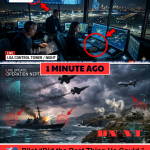
Modern air defense begins with early detection. Ground-based radar systems and airborne warning platforms like the E-3 Sentry can identify a bomber hundreds of kilometers away. Once detected, command centers assess the threat and scramble interceptor aircraft.
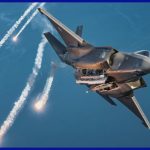
Fighter jets such as the F-22 Raptor or F-35A Lightning II are often deployed to intercept. These aircraft use high speed, stealth, and advanced sensors to approach the bomber while minimizing detection. Pilots rely on long-range air-to-air missiles to engage the target before it can release its weapons.
During the intercept, coordination is key. Data from multiple sources—radar stations, satellites, and other aircraft—is shared in real time, giving pilots a comprehensive picture of the situation. This allows them to position themselves optimally, cut off the bomber’s route, and engage at the most effective distance.
If the bomber is heavily defended or escorted by fighter jets, the intercept becomes more complex. In such cases, multiple interceptors may be used, with some focusing on escort fighters while others target the bomber itself. Electronic warfare may also be employed to disrupt the bomber’s navigation and targeting systems.
Overall, intercepting a bomber is not just about speed or firepower—it is a coordinated effort involving detection, communication, and precision engagement. Modern systems ensure that air defense forces can respond quickly and effectively to neutralize long-range aerial threats before they become a danger.