Cruise Missile Approaches Aircraft Carrier at Sea
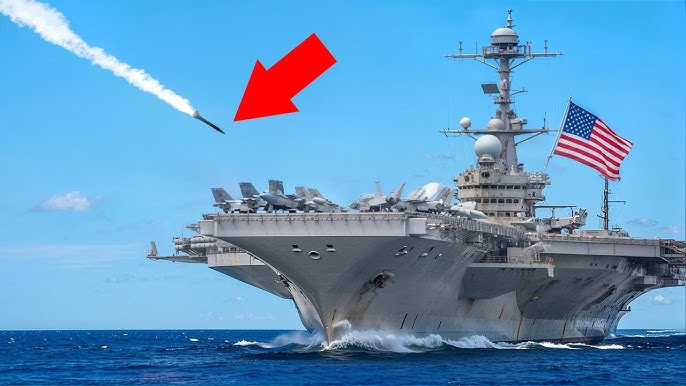
A high-speed cruise missile closing in on an aircraft carrier represents one of the most serious threats in modern naval warfare. However, U.S. Navy carrier strike groups are built with layered defenses specifically designed to detect and defeat such attacks.
At the heart of the defense network are escort ships like the Arleigh Burke-class destroyer, equipped with the powerful Aegis Combat System. These systems continuously scan the surrounding airspace and sea surface, capable of detecting low-flying cruise missiles even at long distances.
Once a missile is detected, the system rapidly tracks its speed, altitude, and trajectory. Because cruise missiles often fly at low altitude to avoid radar, detection must be quick and precise. Within seconds, the system classifies the threat and initiates a response.
The first line of defense involves long-range interceptors such as the SM-6 Standard Missile, which can engage incoming missiles far from the carrier. If the threat continues inbound, additional layers are activated.
Medium-range defenses like the RIM-162 ESSM are designed to intercept fast, maneuvering targets at closer distances. These missiles provide a critical second opportunity to neutralize the threat.
If the missile penetrates these layers, close-in systems such as the Phalanx CIWS are automatically activated. This rapid-fire gun system tracks and engages incoming threats at extremely short range, acting as the final shield protecting the carrier.
In addition to kinetic defenses, electronic warfare measures are deployed. These include jamming the missile’s guidance systems and launching decoys to divert it away from the ship.