How Massive Is a Blue Whale? Drone Captures It All
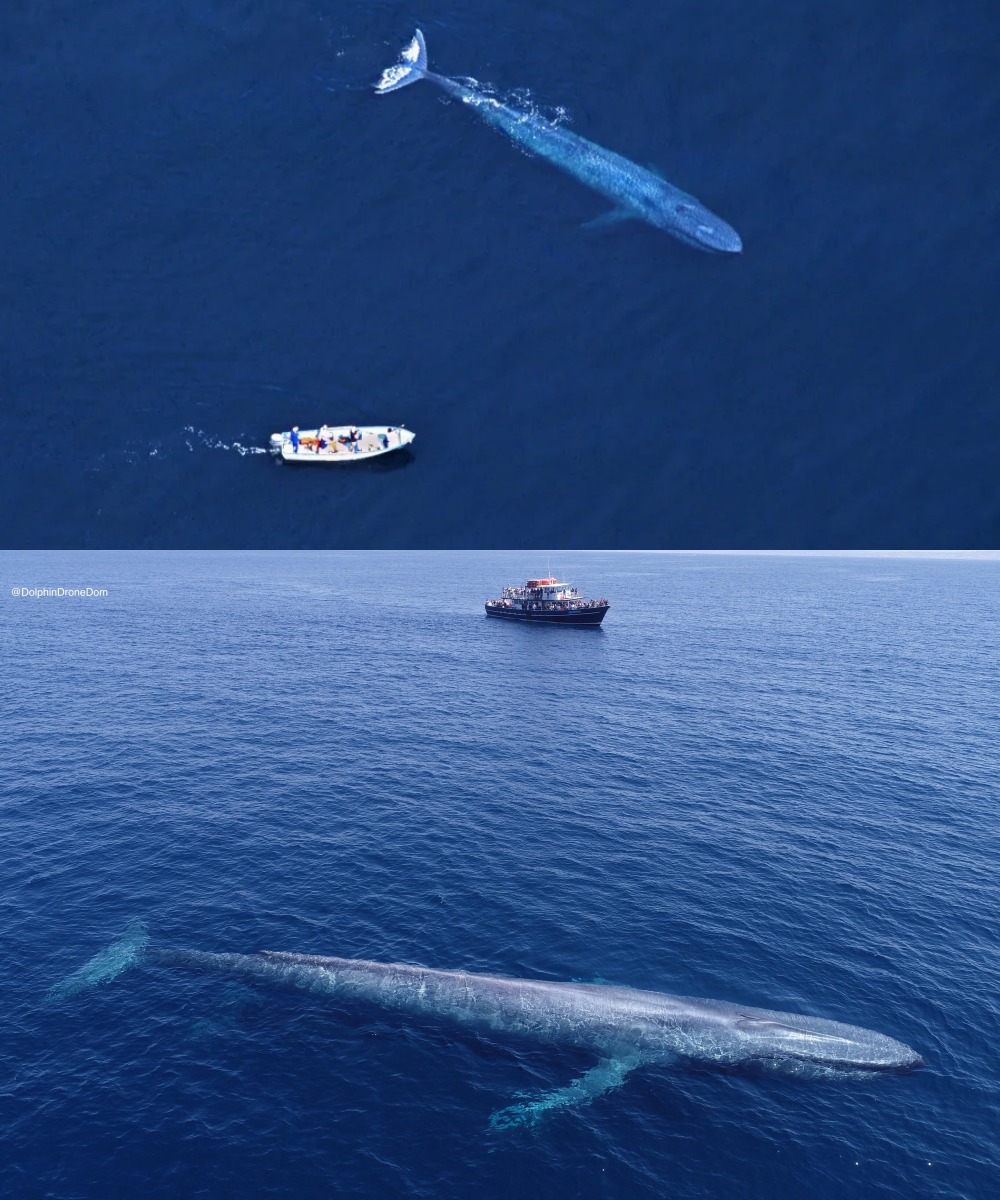
Prepare to have your mind completely blown by the sheer scale of nature’s largest masterpiece.
Drone footage offers a breathtaking aerial view that truly reveals the immense size of the blue whale (Balaenoptera musculus) — the largest animal to have ever existed on Earth. These gentle giants can reach up to 30 meters (98 feet) in length, with some historical records approaching 33 meters. They weigh between 150 and 200 tons — equivalent to the combined weight of 30 African elephants.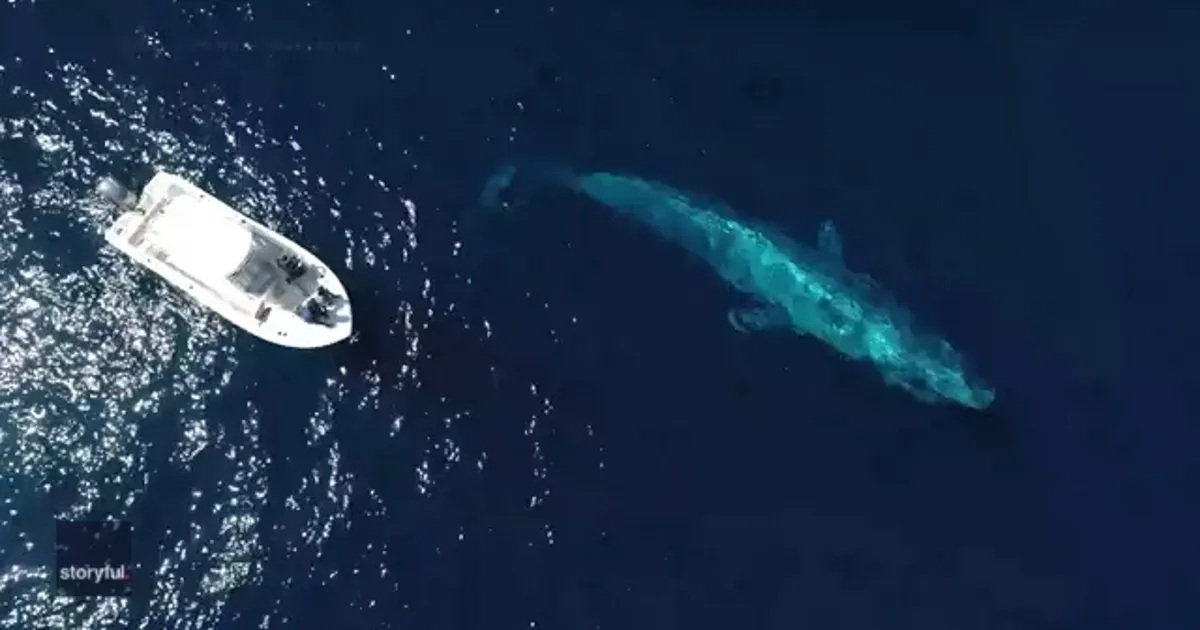
Its heart alone is the size of a small car and can weigh up to 400 pounds (180 kg), while its tongue can weigh as much as an adult elephant (around 2–3 tons). Even in the vast open ocean, seeing one from above puts its gigantic proportions into stunning perspective. The whale’s long, streamlined body glides effortlessly through the water, powered by a massive tail fluke that can propel it at speeds of up to 30 km/h when necessary.
Despite its enormous size, the blue whale is a gentle giant that feeds almost exclusively on tiny krill. In a single day, it can consume up to 4 tons of these shrimp-like creatures — filtering them through its baleen plates in enormous gulps of seawater.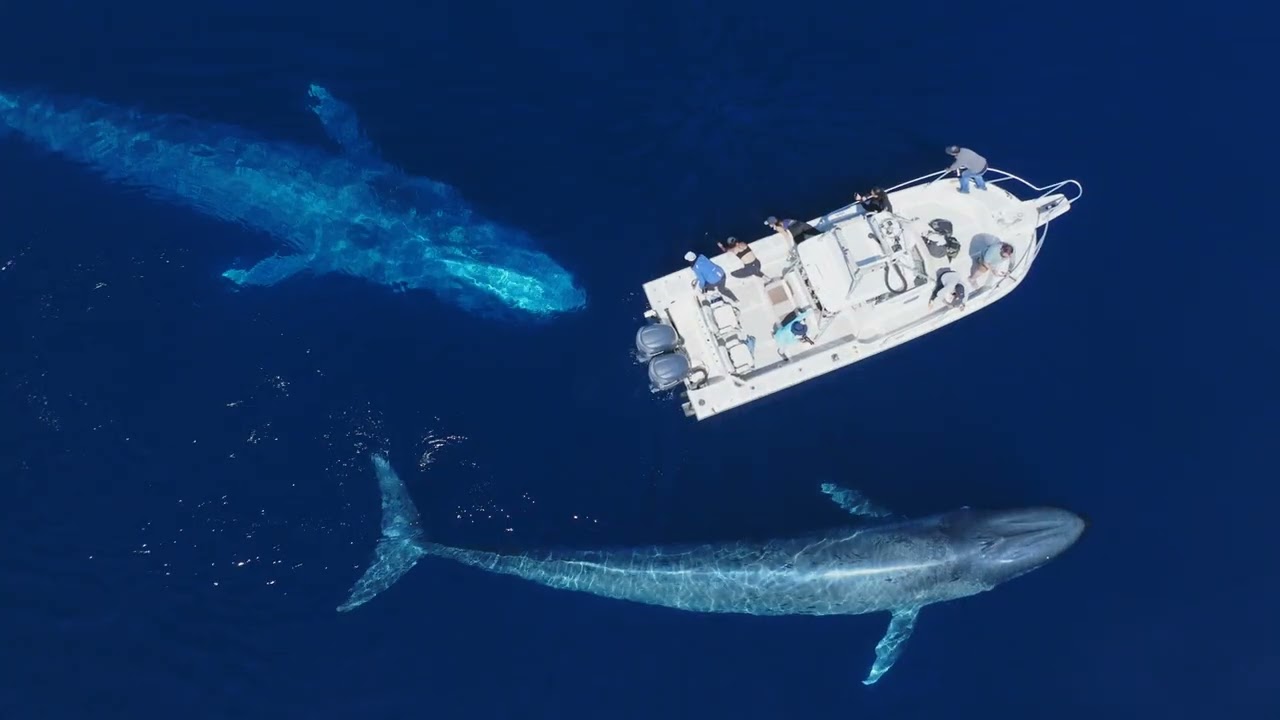
Once driven to the brink of extinction by commercial whaling, blue whale populations are now slowly recovering, though they remain endangered with an estimated 10,000–25,000 individuals worldwide. Today, witnessing one in the wild is a rare and humbling experience that reminds us how extraordinary life on Earth truly is.
From nose to tail, the blue whale is not just the biggest animal alive — it is the ultimate ocean legend, a living testament to the incredible power and beauty of nature.