A Close-Up Look at an Ant Is Pure Nightmare Fuel
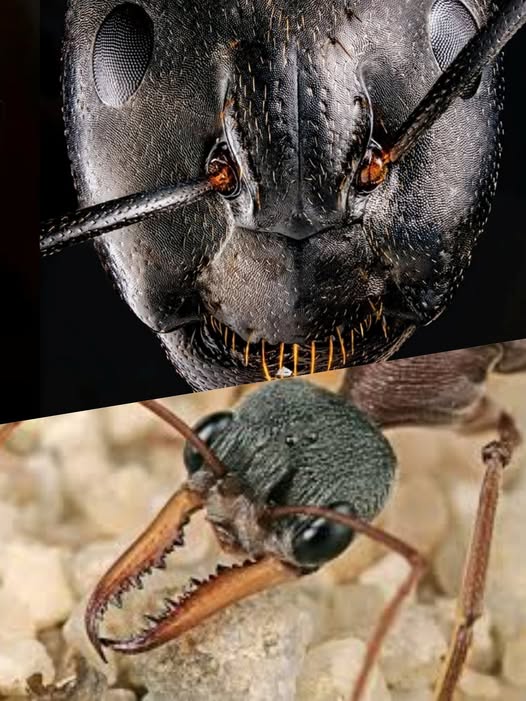
When magnified, the common ant transforms from a tiny backyard insect into a terrifying alien creature straight out of a science fiction horror film. Its armored face features massive, powerful mandibles capable of carrying objects many times its own weight, long sensitive antennae that constantly probe the environment, and fine sensory hairs covering its body that detect vibrations, chemicals, and air currents.
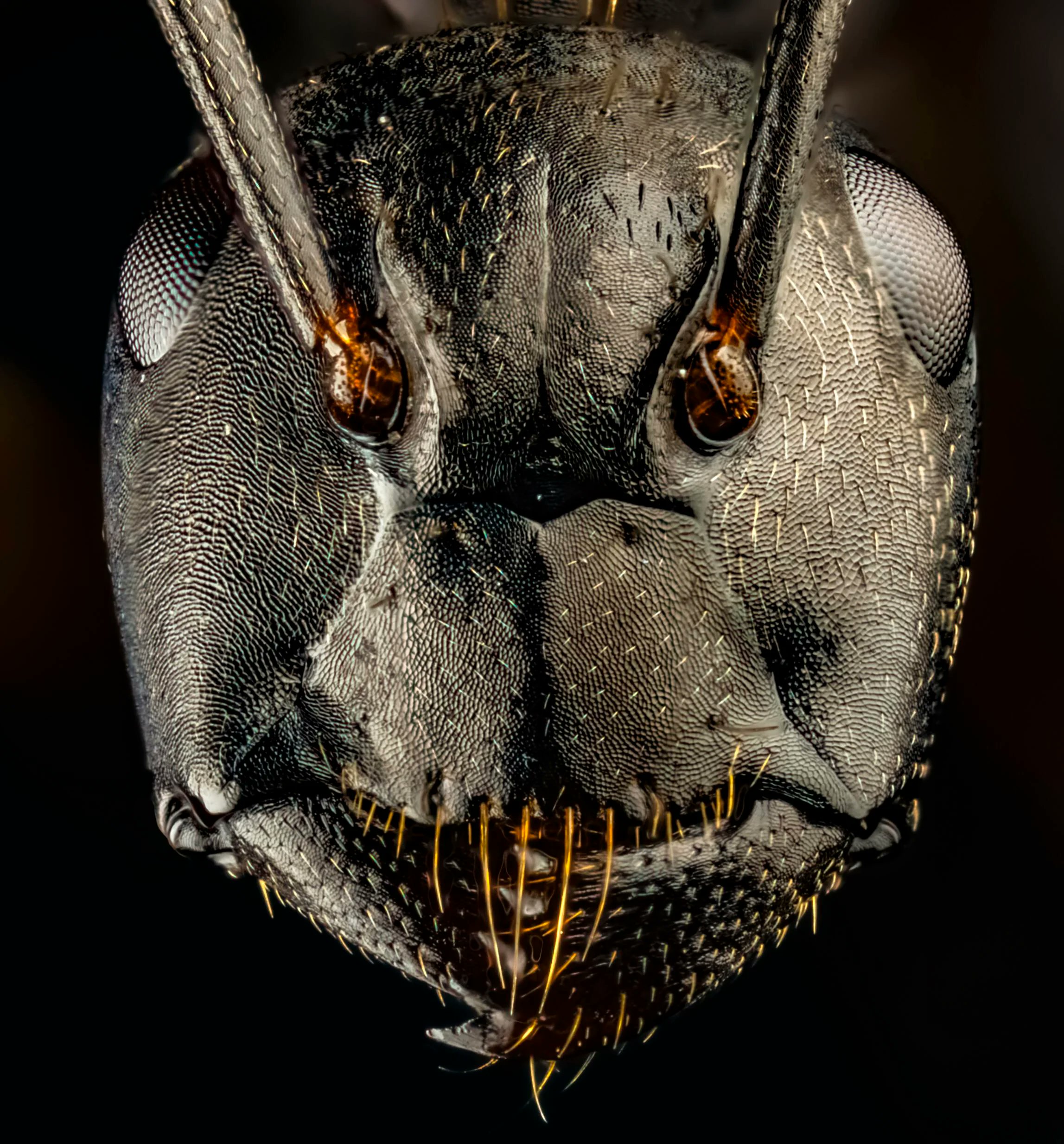 One of the most striking misconceptions in macro photography is the pair of glowing red spots often seen on an ant’s head. Contrary to popular belief, these are not its eyes. The ant’s true compound eyes are the rough, textured, kidney-shaped patches located on the sides of its head. These eyes provide a wide field of vision and the ability to detect movement, though ants rely more heavily on their antennae and sense of smell than on sight.
Under extreme magnification, the ant reveals an astonishing level of complexity: jointed legs with tiny claws, a segmented exoskeleton, and sophisticated mouthparts designed for both cutting and sucking. Despite their nightmarish appearance up close, ants are among the most successful and widespread insects on Earth, forming highly organized colonies that can number in the millions.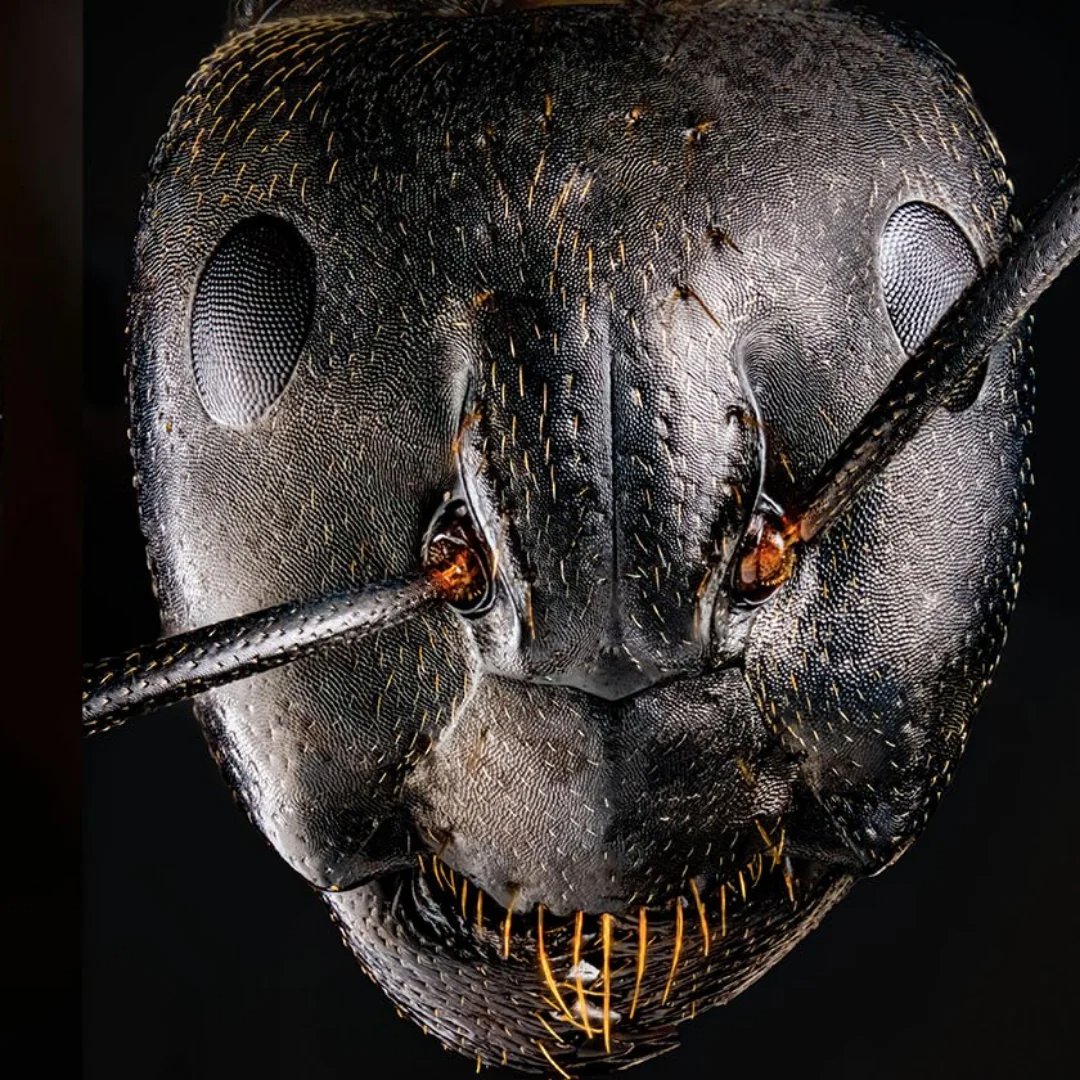
These remarkable creatures demonstrate that nature’s greatest engineering marvels often hide in plain sight — right beneath our feet. The next time you see a tiny ant marching across the sidewalk, remember: you’re looking at a miniature armored warrior with senses far more advanced than we usually realize.