“The Grave That Held the Wrong Name: A Soldier’s Return From the Dead”
- SaoMai
- May 9, 2026
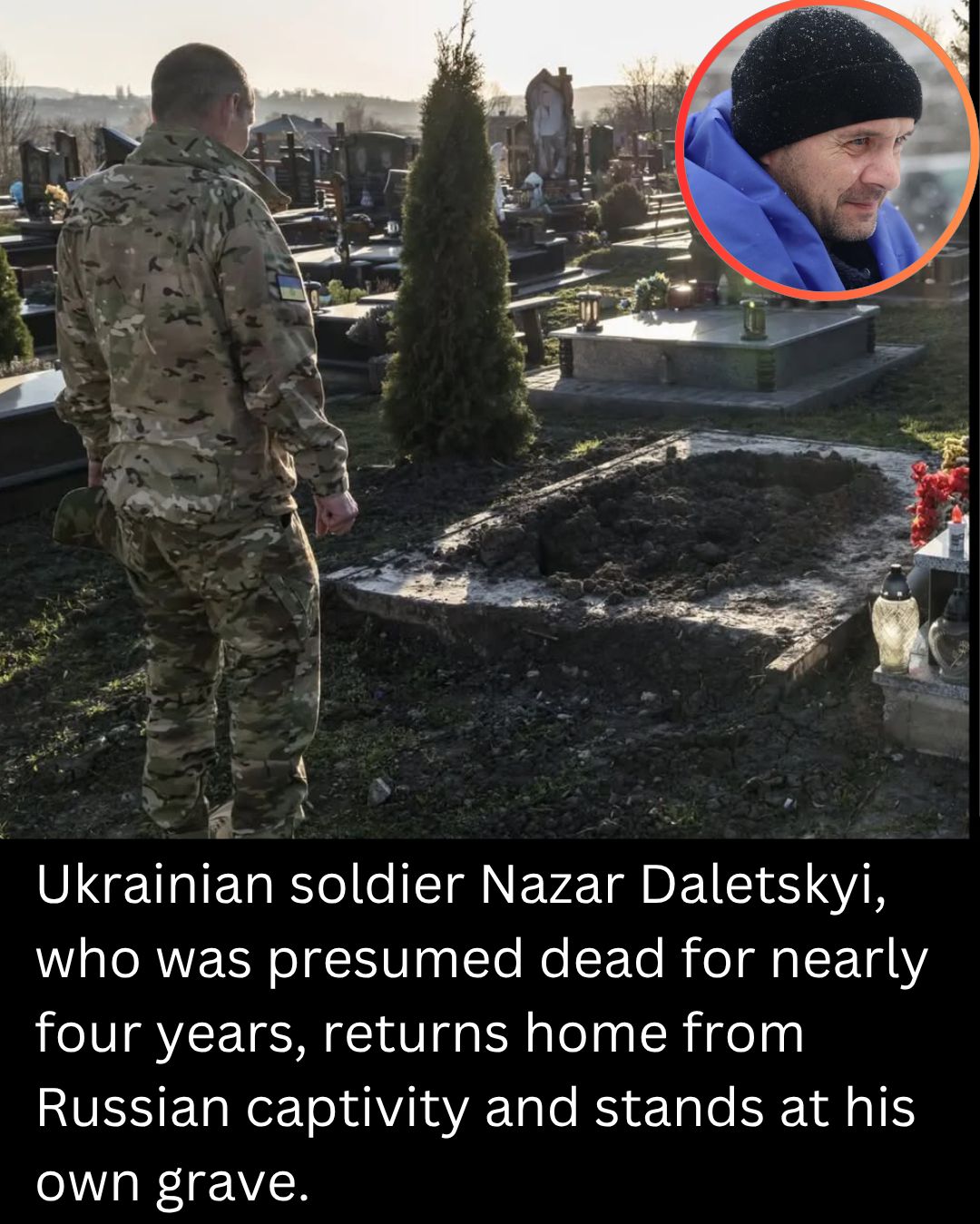
“The Grave That Held the Wrong Name: A Soldier’s Return From the Dead”
Nazar Daletskyi vanished in May 2022 during intense fighting in the Kharkiv region of Ukraine. For months, there was no confirmed word about his fate—only silence, uncertainty, and the slow erosion of hope that families of missing soldiers know too well.
Then came the message that shattered what little remained of that hope. On his birthday, September 25, the military informed his family that Nazar had been killed in action. The details were limited, but the conclusion felt final. A year later, DNA testing of remains recovered from a bullet-riddled vehicle produced an almost undeniable result: a 99.99987% match to his mother’s genetic sample.
The identification was accepted. A funeral was held. Nazar Daletskyi was laid to rest with full military honors. His coffin was draped in the Ukrainian flag. An orchestra played as his family stood in mourning, trying to absorb a loss that now felt confirmed by science and ceremony alike.
His mother visited the grave often. She planted flowers, spoke quietly to the earth, and lived with the belief that her son was there beneath it. She never saw the body—only the official findings that told her it was him.
 For two years, that version of reality remained unchanged.
Then, in July 2025, everything shifted.
A Ukrainian soldier recently released from Russian captivity made a statement that stunned officials: Nazar Daletskyi was alive. At first, it was treated with caution. But then two more returning prisoners confirmed the same impossible claim. And then a third.
The reports were verified. Cross-checked. Investigated.
On February 5, 2026, Nazar returned to Ukraine as part of a prisoner exchange.
When his mother’s phone rang and she heard his voice, she could not speak. The grief she had carried for years collided violently with the presence of the son she believed she had buried. “It was so strange,” she later said. “My son had died. I had buried him. But here was his voice. Can you imagine the feelings of a mother?”
Her first question to him was not about where he had been, or what he had endured. It was simple, urgent, human: “You have your arms, your legs, everything?”
On his first day back home, Nazar went to the cemetery.
He stood in front of the grave bearing his name.
Inside it lay remains later understood to belong to an unknown soldier—someone else’s son, still without identity, still waiting for recognition in a system strained by war.
In that moment, Nazar faced something few people ever will: the physical proof of his own absence, and the realization that the world had moved forward without him.
He later reflected that not everyone gets the chance to discover who mourned them, or how deeply they were loved while they were gone.
Today, his family speaks of him with a new kind of disbelief and gratitude. They say he has two lives now—the one they thought ended, and the one that was returned to them. And the day he came home has become something more than a reunion.
It has become a second birthday.