
Rabbit vs Hare: They Look Similar, But They’re Very Different
At first glance, rabbits and hares seem almost identical — both are adorable, long-eared, fluffy members of the Lagomorpha family. But behind the similarities lie major differences in how they’re born, how they live, and how they survive.
Here’s a clear breakdown:
Born
- Rabbit: Babies (called kittens) are born hairless, blind, and completely helpless in underground nests.
- Hare: Babies (called leverets) are born fully furred, with eyes open, and can hop around within minutes of birth.
Social Life
- Rabbit: Highly social animals that live in groups (called colonies) inside complex underground burrow systems called warrens.
- Hare: Mostly solitary and independent. They prefer to live and rest above ground in shallow depressions called “forms.”
Speed
- Rabbit: Can reach speeds of up to 18 mph (29 km/h).
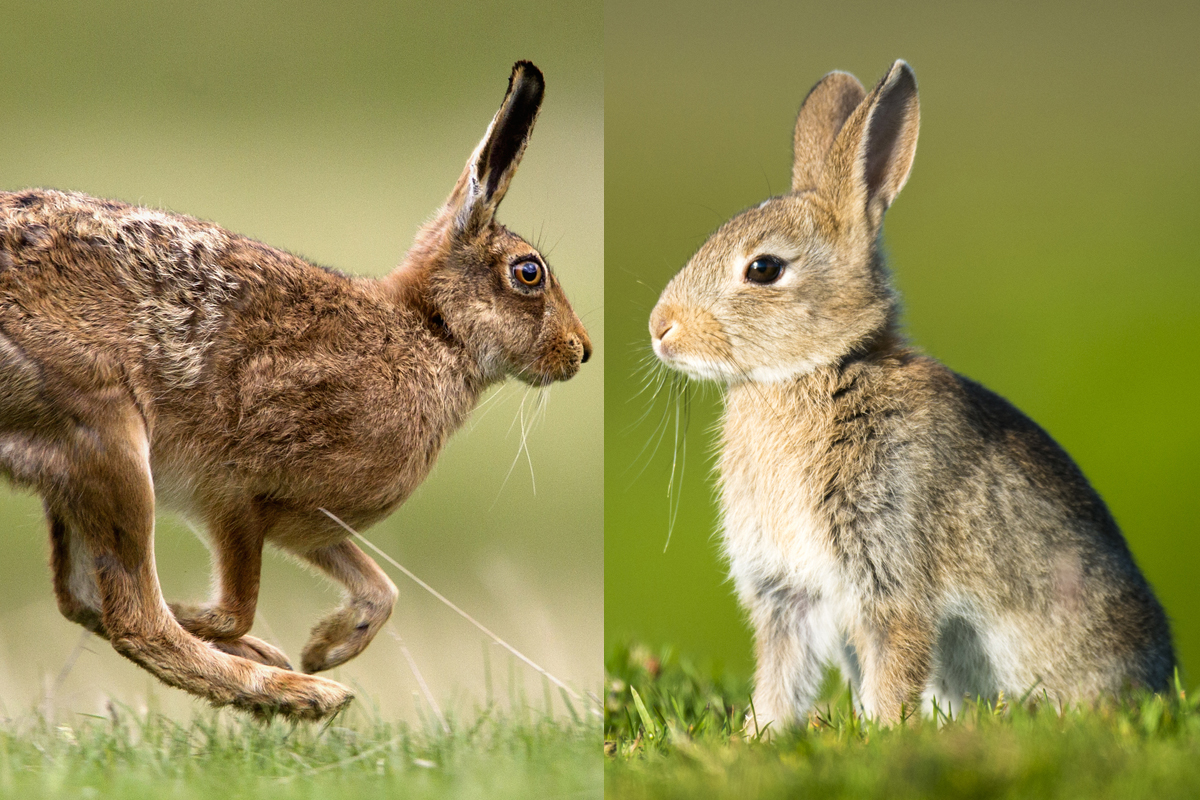
- Hare: Much faster — capable of bursts up to 45 mph (72 km/h), thanks to their longer, powerful hind legs.
Ears & Build
- Rabbit: Shorter ears (usually 2–4 inches) and a more compact, rounded body.
- Hare: Significantly longer ears (4–6 inches) and a leaner, taller build with longer legs.
Habitat
- Rabbit: Prefer areas with plenty of cover — forests, thickets, fields near human areas, and dense vegetation where they can quickly duck into burrows.
- Hare: Thrive in open spaces — wide grasslands, meadows, and fields where their speed and keen eyesight give them an advantage.
Survival Strategy
Rabbits rely on hiding and living in underground communities for safety. Hares rely on speed, alertness, and camouflage in open terrain to outrun predators.
In short: Rabbits are the homebodies — social, burrow-dwelling, and focused on protection. Hares are the athletes — solitary, fast, and built for life in the open.
Even though they’re often confused, they’ve evolved very different lifestyles to survive in the wild.
Which one surprises you more — the newborn hares that can already run, or the complex underground cities that rabbits build?