Early Homo and Australopithecus Lived Side-by-Side 2.7 Million Years Ago in Ethiopia, Rewriting Human Evolution
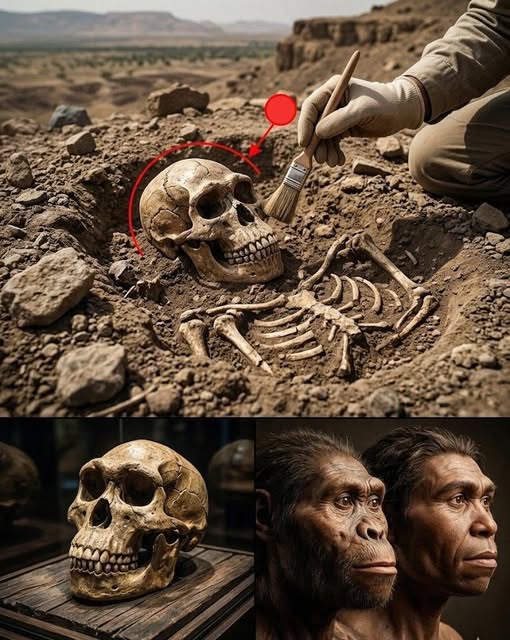
The finds, recovered from the Ledi-Geraru Research Project area, include jaw fragments and teeth from early Homo — characterized by more slender teeth showing signs of tool-use microwear — found in the same sediment layers as robust Australopithecus skulls. Advanced CT scans reveal significant differences in their chewing mechanics and dietary adaptations, indicating the two groups coexisted in a challenging environment filled with predators such as saber-toothed cats and large crocodiles.
This discovery challenges the traditional linear model of human evolution — often portrayed as a straightforward progression from ape-like ancestors to modern humans. Instead, it supports a more complex, branching tree in which multiple hominin species competed for resources in ancient East Africa.
Scientists note that the Australopithecus specimens appear to represent a previously unidentified species, distinct from both Australopithecus afarensis (famously known as “Lucy”) and Australopithecus garhi. The presence of early Homo alongside this cousin species raises intriguing questions: Did early Homo outcompete Australopithecus through tool use and intelligence, contributing to their eventual extinction? Or were they part of a richer, more diverse hominin landscape than previously imagined?
The fossils were dated using volcanic ash layers, placing Homo specimens at approximately 2.78 and 2.59 million years ago, and the Australopithecus remains at about 2.63 million years ago. This overlap provides some of the strongest evidence yet of contemporaneous hominin lineages in the Afar region before 2.5 million years ago.
Experts say the discovery adds important nuance to the “ancestry war” in paleoanthropology. It highlights how messy and competitive early human evolution truly was, rather than a neat, single-file march toward modernity.
Further analysis is underway to better understand their diets, behaviors, and potential interactions. The findings, published in leading scientific journals including Nature, are already prompting researchers worldwide to reconsider long-held assumptions about the origins of our genus.
This breakthrough not only enriches the story of human evolution but also underscores the scientific importance of the Afar Depression — one of the world’s richest cradles of human ancestry.