Early Homo and Australopithecus Lived Side-by-Side 2.7 Million Years Ago in Ethiopia – Rewriting Human Evolution
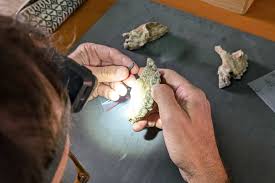
The fossils, recovered from the Ledi-Geraru Research Project site, include jaw fragments and teeth from early Homo showing slender teeth with microwear patterns consistent with tool use. These were found in the same sediment layers as robust Australopithecus skulls. Advanced CT scans indicate clear differences in chewing mechanics and dietary preferences between the two groups, suggesting they occupied the same ancient landscape near lakes and rivers.
This environment was harsh and dangerous, inhabited by large predators including saber-toothed cats and massive crocodiles. The discovery provides some of the strongest evidence yet of overlapping hominin lineages in East Africa before 2.5 million years ago.
The findings, published in the journal Nature, challenge the traditional “linear progression” model of human evolution. Instead of a simple, straight-line development from ape-like ancestors to modern humans, the evidence points to a more complex and competitive evolutionary tree with multiple hominin species living alongside one another.
Key questions now facing researchers include:
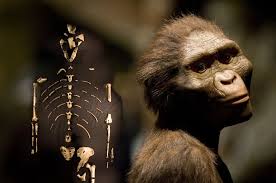
- Did early Homo, with their developing tool use and potentially more flexible diets, outcompete Australopithecus species and contribute to their decline?
- Or does this reflect a richer, branching family tree with greater diversity than previously recognized?
The fossils were precisely dated using volcanic ash layers, placing early Homo specimens at around 2.78 and 2.59 million years ago, and the Australopithecus remains at approximately 2.63 million years ago. The Australopithecus specimens appear to represent a new species, distinct from both the famous Australopithecus afarensis (“Lucy”) and Australopithecus garhi.
This breakthrough adds important detail to the “ancestry debate” in paleoanthropology. It underscores how messy, competitive, and dynamic early human evolution really was in Africa.
Further studies are underway to analyze diets, behaviors, and possible interactions between these groups. The Afar Depression continues to be one of the world’s most important regions for understanding human origins, steadily revealing new chapters in our deep past.
This discovery not only enriches the scientific narrative but also reminds us how much remains to be learned about the origins of our genus.