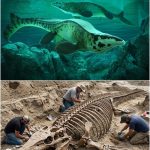
380-Million-Year-Old Antarctic Fish Fossil Sheds Light on the Transition from Water to Land
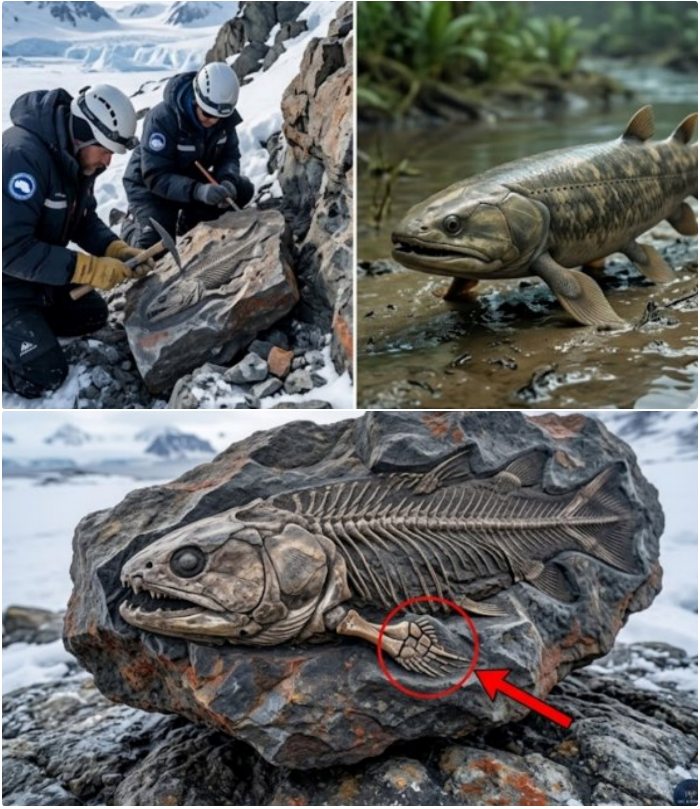
Scientists have uncovered a remarkable 380-million-year-old fish fossil in Antarctica that is providing important new insights into one of evolution’s greatest transitions — how vertebrates first began moving from water onto land.
The fossil displays a unique mix of aquatic features and early adaptations for terrestrial life, including specialized fin structures that suggest the beginnings of limb-like movement.
According to researchers, this discovery supports the theory that the shift from sea to land was a gradual process that occurred in shallow-water environments during the Devonian period, also known as the “Age of Fishes.”
This find offers a rare window into a distant prehistoric world — long before the age of dinosaurs — when early vertebrates were slowly experimenting with life beyond the water’s edge.
The Antarctic fossil adds valuable evidence to our understanding of how the first four-limbed animals (tetrapods) eventually evolved, marking a pivotal chapter in the history of life on Earth.