Madeleine McCann Case Update: New Files Reportedly Handed to British Police 19 Years After Her Disappearance

Madeleine McCann Case Update: New Files Reportedly Handed to British Police 19 Years After Her Disappearance
Updated June 24, 2026
Nineteen years after Madeleine McCann disappeared from a holiday apartment in Portugal, her case remains active, unresolved and under investigation by authorities in Britain, Germany and Portugal.
Madeleine was three years old when she vanished from apartment 5A at the Ocean Club resort in Praia da Luz on May 3, 2007. Her parents, Kate and Gerry McCann, were dining with friends at a nearby restaurant while Madeleine and her younger twin siblings slept inside the apartment.
When Kate returned to check on the children at approximately 10 p.m., Madeleine was gone. The disappearance triggered an international search, thousands of reported sightings and one of the most widely followed missing-child investigations in modern history.
Despite countless searches, interviews and public appeals, Madeleine has never been found. No person has ever been charged in connection with her disappearance.
Reported transfer of new files
The most recent development emerged in June 2026, when several British news outlets reported that officers from the Metropolitan Police had received a dossier from German investigators concerning Christian Brueckner, the principal suspect identified by German authorities.
According to those reports, the files contain information German police gathered during their investigation, including digital material and evidence connected to Brueckner’s activities in Portugal.
However, neither the Metropolitan Police nor German prosecutors have publicly disclosed the dossier’s full contents. Descriptions of the material as “bombshell evidence” originated in media reports and should not be treated as confirmation that investigators have found decisive forensic proof.
The Metropolitan Police gave a more cautious response, saying its investigation has remained active since 2011 and that officers continue working closely with police in Germany and Portugal. The force said it would continue pursuing every viable line of enquiry.
The official British investigation, known as Operation Grange, remains classified as a missing-person inquiry rather than a murder investigation. It is led by the Metropolitan Police’s Specialist Crime Command and continues to receive UK Home Office funding.
Focus remains on Christian Brueckner
Christian Brueckner, a German national with previous convictions for sexual offences, was publicly identified as a suspect by German investigators in 2020. Portuguese authorities formally named a suspect in 2022, widely understood to be Brueckner.
He lived in Portugal’s Algarve region for years and spent time near Praia da Luz when Madeleine disappeared. Investigators have previously reported that a mobile phone associated with him was active in the area on the evening of May 3, 2007.
German prosecutors have said they believe Madeleine is dead and that Brueckner was responsible. Nevertheless, he has not been charged over her disappearance, and no court has determined that he was involved.
Brueckner has repeatedly denied any connection to the case.
He was released from prison in Germany in September 2025 after serving a seven-year sentence for the rape of a 72-year-old woman in Praia da Luz in 2005. That conviction was unrelated to Madeleine.
Before his release, Metropolitan Police officers requested permission to interview him through an international letter of request. Brueckner declined to speak with the British investigators.
Reports in June 2026 said continuous German police surveillance of Brueckner had ended following a court decision, although he was still expected to remain subject to electronic monitoring. This raised concerns that investigators could have difficulty tracking him if he left Germany.
His release does not mean he has been cleared in the McCann investigation. Equally, his status as a suspect does not establish guilt.
Could he face trial in Britain?
British media have reported that Metropolitan Police detectives are examining whether evidence could be submitted to the Crown Prosecution Service in support of possible UK charges.
Any prosecution would face major evidential and legal challenges. Before charges could be authorised, prosecutors would need sufficient admissible evidence to provide a realistic prospect of conviction.
Extradition would present another obstacle. Germany generally does not surrender its own citizens to countries outside the European Union, and Britain left the EU following Brexit. Legal specialists have said Germany would be highly unlikely to extradite Brueckner directly to the United Kingdom while he remained on German territory.
If sufficient evidence were available, a German prosecution might be more realistic. Alternatively, Brueckner could become vulnerable to arrest under different arrangements if he travelled outside Germany.
As of June 24, 2026, no official extradition request has been announced, the Crown Prosecution Service has not publicly authorised charges, and Brueckner has not been indicted in Britain, Germany or Portugal over Madeleine’s disappearance.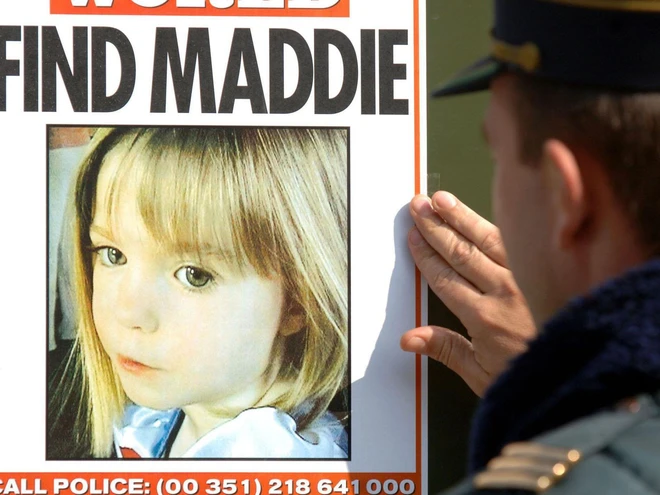
What did the 2025 search uncover?
The latest major physical search took place in June 2025. German and Portuguese officers examined approximately 120 acres of scrubland, abandoned buildings and wells near Praia da Luz.
The location was close to a property where Brueckner had once lived. Search teams used drones, ground-penetrating radar, heavy machinery and specialised equipment.
Several items were reportedly collected for examination, but authorities did not announce a significant breakthrough or publicly establish a connection between the recovered material and Madeleine.
This remains an important distinction because social-media posts have repeatedly claimed that Madeleine’s remains, DNA or definitive personal belongings were discovered. There has been no official confirmation of any such finding.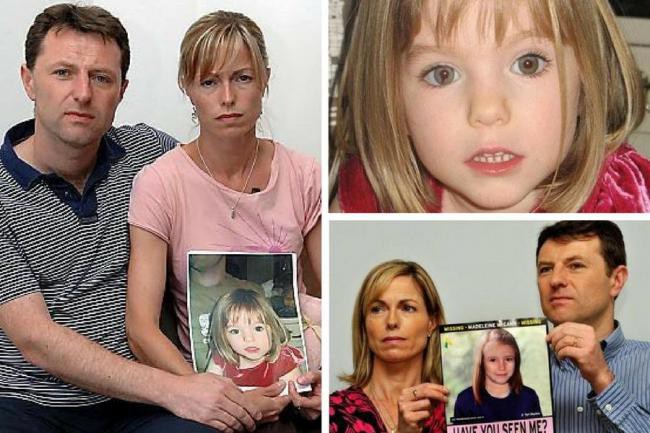
The family marks 19 years
On the nineteenth anniversary of Madeleine’s disappearance, Kate and Gerry McCann attended a prayer vigil in their home village of Rothley, Leicestershire.
They were joined publicly by Madeleine’s younger siblings, Sean and Amelie, now adults. Candles were lit during the service, and prayers were offered for Madeleine and other missing children.
In an anniversary message, the family said the search continued and reaffirmed: “We will never give up.” They thanked relatives, friends, supporters and the authorities who have continued working on the case.
If alive, Madeleine would now be 23 years old.
For her family, the passing of time has not removed the central questions: What happened inside or around apartment 5A? Who took Madeleine? Where was she taken? And can enough reliable evidence still be found to bring the person responsible before a court?
Where the investigation stands
The reported transfer of German files to Scotland Yard may help British detectives reassess the evidence against Brueckner. However, it is not yet a confirmed breakthrough, an arrest or a criminal charge.
Operation Grange remains open. Portuguese police continue to list Madeleine as missing, while German prosecutors maintain their belief that Brueckner was responsible. The legal standard required to prove that allegation has not yet been met.
Nineteen years after Madeleine disappeared, the case therefore remains caught between renewed investigative activity and the same painful absence of a definitive answer.
The search continues, but the most important fact has not changed: Madeleine McCann has not been found, and no one has been convicted of causing her disappearance.