Conjoined Twins Callie and Carter Defy the Odds: From 24-Hour Prognosis to Thriving Schoolgirls
When Chelsea and Nick Torres learned they were expecting conjoined twins in 2016, doctors painted a grim picture. The girls, later named Callie and Carter, had only about a 5% chance of surviving more than 24 hours after birth. Some specialists recommended terminating the pregnancy. The young Idaho couple refused.
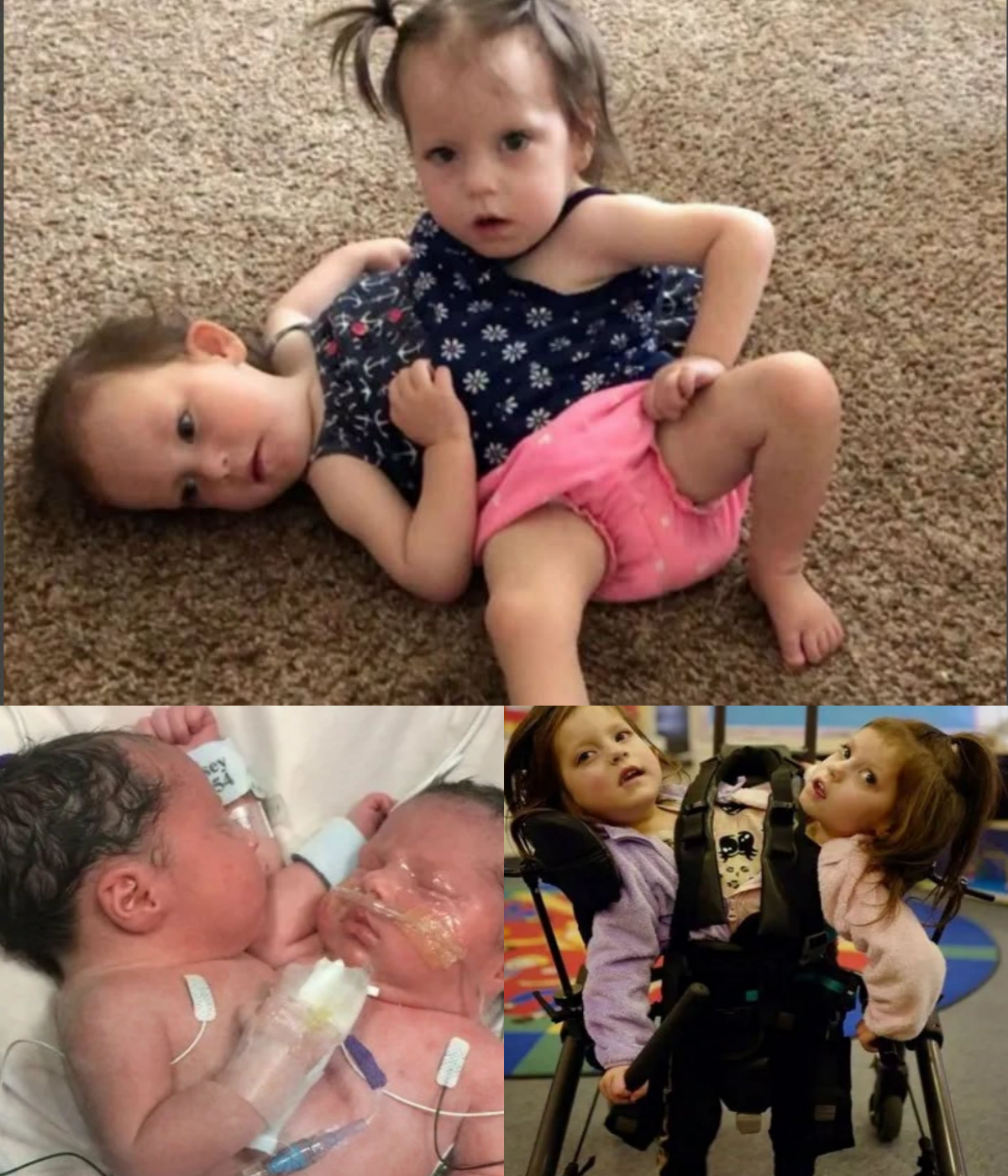
Callie and Carter Torres were born in early 2017 via cesarean section at Texas Children’s Hospital. They are omphalo-ischiopagus conjoined twins—joined from the lower chest and abdomen through the pelvis. Each has her own heart and stomach, but they share a liver, parts of the intestinal tract, and a bladder. Between them they have two legs, with each girl controlling one.
Against every expectation, the newborns were remarkably healthy. Carter needed oxygen for only a couple of hours. The twins spent about five weeks in the hospital mainly because the family was waiting for a specially designed car seat before the long drive home to Blackfoot, Idaho.
Doctors determined that separation surgery carried significant risks and was not medically necessary. Chelsea and Nick chose to keep the girls together. Years later, the twins themselves have said they do not want to be separated. “They’re happy in the skin that they’re in,” their mother has explained.
Life as conjoined twins brought unique challenges. Early on, Chelsea often covered the girls in their stroller to shield them from stares and invasive photos. She even smashed a stranger’s phone after one particularly intrusive incident. Over time, the family shifted from concealment to advocacy. Chelsea began sharing their everyday lives on social media under the name “Beating the Odds with Callie and Carter,” aiming to educate the public and normalize difference.
Progress has been steady and hard-won. Through years of physical therapy, the sisters learned to coordinate their movements. They progressed from crawling to taking steps with support, and eventually walking and playing more independently—sometimes using a specialized wheelchair or standing frame for longer distances. By age six they were taking dozens of steps at a time and exploring playground equipment.
School became another major milestone. The twins started kindergarten around age six, made friends, and advanced through the early grades. Classmates have largely treated them like any other students; the girls themselves describe lunch and recess as highlights. Their personalities remain distinct: Callie is often described as the “girly” one, while Carter leans toward video games and more tomboyish interests. They argue like typical sisters, yet also comfort each other instinctively.
Today the Torres family continues to focus on ordinary childhood experiences—swimming, bike rides in adaptive equipment, family outings, and school—while acknowledging the ongoing need for customized clothing, medical follow-ups, and accessibility solutions. Chelsea has connected with adult conjoined twins who lead independent lives, reinforcing her belief that her daughters can achieve whatever they set their minds to.
Callie and Carter’s story is not only one of medical survival. It is a testament to parental determination, the power of adaptive therapy, and the simple truth that two closely bonded sisters can thrive when given the chance to live on their own terms.
Sources
- TODAY.com interview with Chelsea Torres (2023)
- Metro, The Mirror, UNILAD, and KTVB reporting on the family’s journey
- Family social media and earlier coverage from Texas Children’s Hospital and local Idaho outlets (2017–2024)