Pakistani Teen Afsheen Gul: Life-Changing Free Surgery Corrects Extreme Neck Deformity
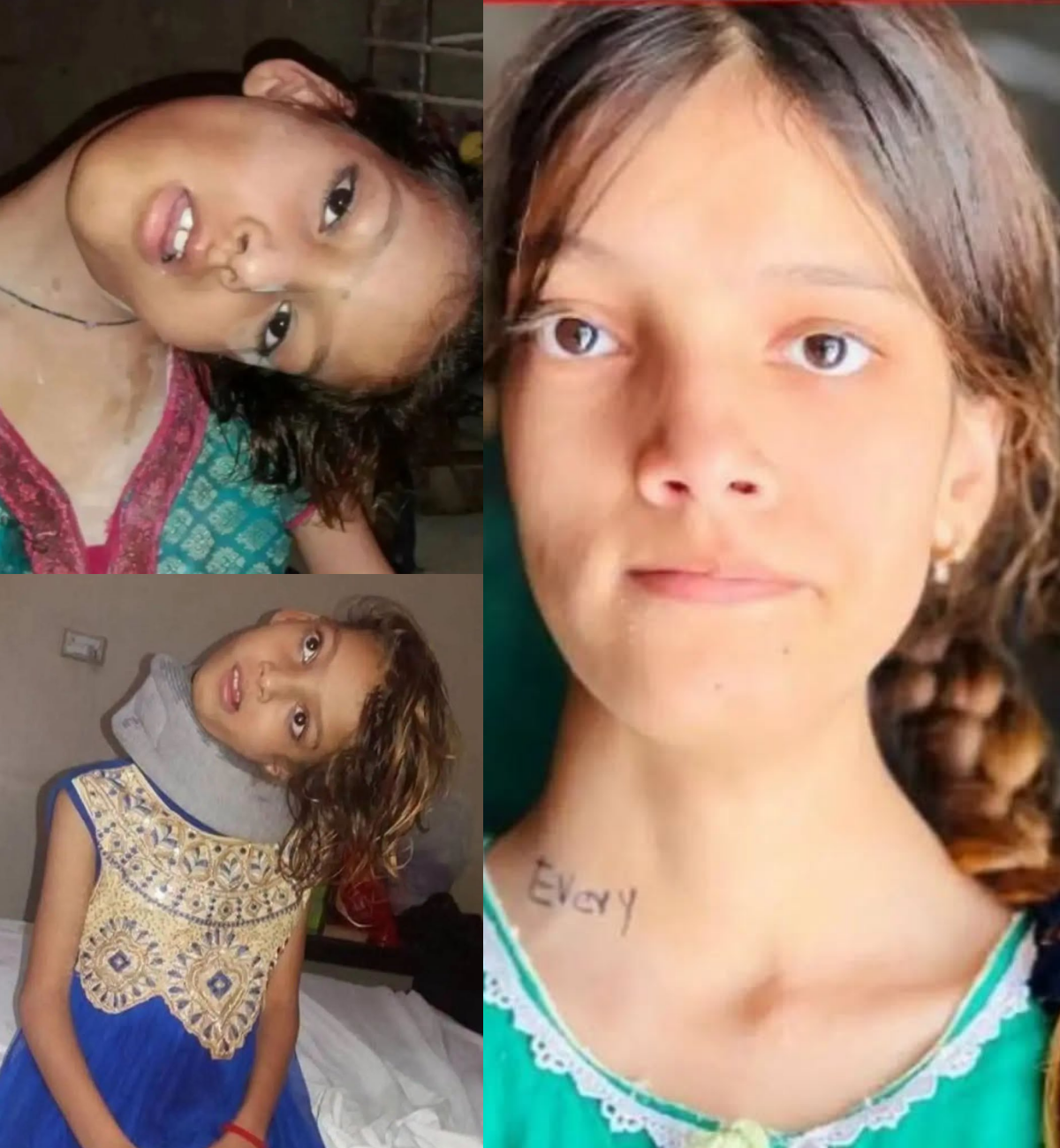
For most of her life, Afsheen Gul lived with her neck fixed at a nearly 90-degree angle. The severe deformity stemmed from an injury sustained when she was only 10 months old—she fell from her sister’s arms—and was complicated by undiagnosed and progressive problems at the cranio-cervical junction (the critical connection between the skull and the upper cervical spine), along with elements of cerebral palsy and cervical dystonia. Over the years the condition worsened, leaving her unable to hold her head upright, limiting her speech, breathing, mobility, and overall quality of life. She never attended school or played with other children in the usual way.
Afsheen’s family, from Mithi in Pakistan’s Sindh province, faced overwhelming barriers. Specialized treatment was financially out of reach, and local doctors had been unable to offer a viable solution. Her father, a labourer, died in 2020. The family had largely come to accept that correction was impossible.
Hope arrived when her brother, Mohammad Yakoob Kumbar, learned of Dr. Rajagopalan Krishnan, a senior consultant in orthopaedics and complex spine surgery at Indraprastha Apollo Hospitals in New Delhi. After reviewing the case, Dr. Krishnan offered to perform the necessary operations free of charge. With the help of supporters, the family obtained a medical visa and traveled to India.
Treatment began with halo-gravity traction to gradually reduce the extreme angle of the neck. This was followed by a series of carefully staged surgeries. The main cranio-cervical procedure, lasting about six hours, involved releasing compressed structures, realigning the head and neck, and stabilizing the corrected position with instrumentation (rods and screws) and bony fusion. The surgery carried high risks because of severe spinal cord compression, limited blood supply to the brain and cord, and the long-standing adaptive changes in the bones and soft tissues.
The operations were successful. Afsheen’s neck was brought into a natural upright position. In the months that followed she regained the ability to hold her head straight, improved her speech, and recovered significant mobility. She could walk, talk, and eat more independently than she had in more than a decade. Follow-up care continued via remote consultations.
Dr. Krishnan described the case as exceptionally complex and possibly unique in its severity and duration. While Afsheen still faces developmental challenges related to her underlying cerebral palsy and will need ongoing support, the surgery removed the life-threatening risk of progressive spinal cord compression and gave her a functional quality of life she had never previously experienced.
Afsheen’s story, widely reported in 2022, stands as a striking example of high-risk reconstructive spine surgery and of medical cooperation that crossed borders.
Sources
- BBC News report: “Afsheen Gul: How a kind Indian doctor saved a Pakistani teen’s life” (July 2022)
- Official statement from Indraprastha Apollo Hospitals, New Delhi, detailing the diagnosis, staged treatment (halo-gravity traction followed by cranio-cervical surgery), and outcome
- Contemporary Indian and international coverage (Awaz The Voice, The Logical Indian, and others) confirming the free treatment by Dr. Rajagopalan Krishnan and the patient’s post-operative progress