Solidarity and Science: Manikandan’s Reconstructive Journey
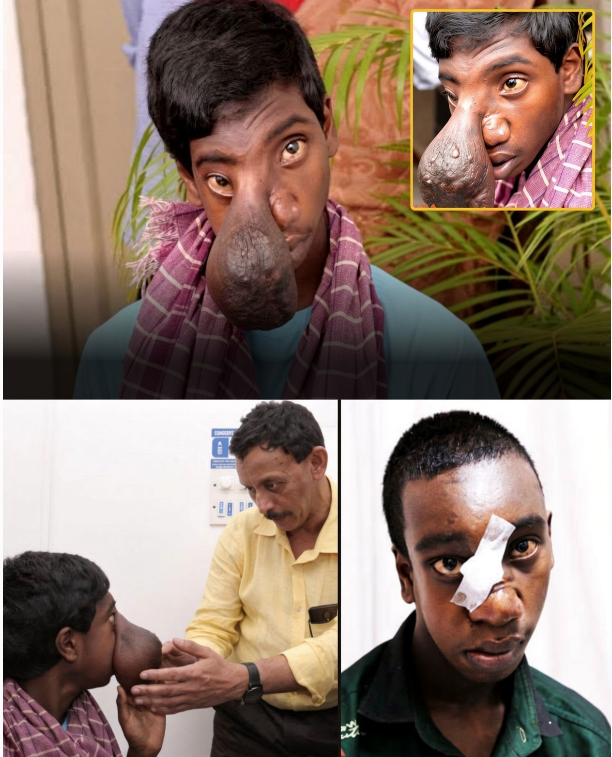
In Kerala, India, 13-year-old Manikandan, the son of plantation workers from a modest background in Parambikulam, Palakkad, was born with a severe encephalocele. This rare congenital malformation occurs when bones of the skull fail to close completely during fetal development, allowing brain tissue and cerebrospinal fluid to protrude through a gap. In his case, a fist-sized mass of non-functional brain matter hung from his nose like a pendulum.
The condition obstructed his vision, deformed his nose and face (pushing the bone of his right eye outward), and led to years of social isolation. He avoided school and other children out of fear of ridicule. His parents, Selvan and Ramata, watched their son endure these challenges with limited local options for complex care.
Kerala government agencies stepped in to fund his treatment at the Amrita Institute of Medical Sciences (AIMS) in Kochi. A multidisciplinary team of more than 12 surgeons and anesthetists from the pediatric craniofacial department, led by specialists including Dr. Subramania Iyer (Head of Plastic & Reconstructive Surgery), performed a delicate operation lasting about 11 hours.
During the surgery, the team opened the skull, carefully isolated the normal brain tissue from the non-functioning mass hanging from the face, and removed the external deformity. The resulting skull defect was reconstructed. The eye sockets were repositioned to correct the displacement of the right eye, and the nose was remodeled. These steps addressed both functional and aesthetic challenges in a single complex procedure.
Manikandan recovered fully and was ready for discharge. For the first time, he could look forward to attending school and joining social activities like other children his age, free from the physical burden and stigma of the hanging mass. His case highlights the transformative impact of coordinated government support, specialized multidisciplinary surgery, and institutional commitment to treating rare craniofacial conditions regardless of a family’s financial means.
Sources
- Official reports from Amrita Institute of Medical Sciences / Amrita Vishwa Vidyapeetham and coverage in Hindustan Times, Deccan Chronicle, and related outlets (2017) detailing Manikandan’s encephalocele, government-funded care, the 11-hour multidisciplinary surgery at AIMS Kochi, reconstruction of the skull base, orbital repositioning, nasal remodeling, and his full recovery enabling school attendance