BREAKING: Lindsay Clancy Trial: Judge Restricts Public Access to Sensitive Evidence Involving Her Three Children
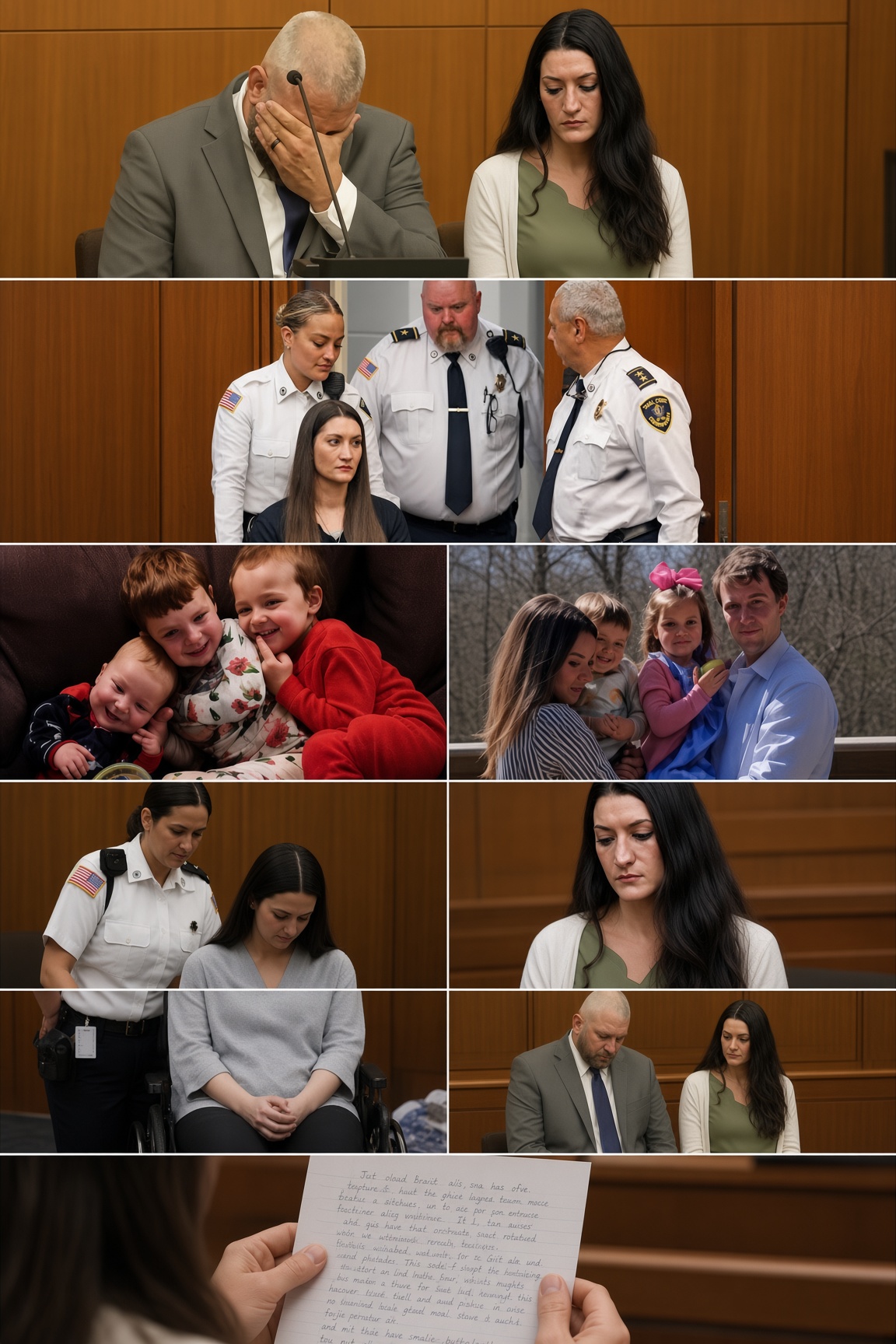
Lindsay Clancy Trial: Judge Restricts Public Access to Sensitive Evidence Involving Her Three Children
Plymouth, Massachusetts — A closely watched Massachusetts courtroom case involving Lindsay Clancy entered a highly emotional phase after a judge ruled that some of the most sensitive evidence connected to her three children would not be made available for public recording, livestreaming or reproduction.
The decision came just days before opening statements in Clancy’s trial, where prosecutors accuse the Duxbury mother of killing her three young children in January 2023. The ruling followed a request from Patrick Clancy, the children’s father and Lindsay Clancy’s former husband, who argued that publicly distributing graphic evidence would cause lasting emotional harm to his family and compromise the dignity of the children.
Judge William Sullivan, who is overseeing the proceedings in Plymouth Superior Court, largely granted that request. Under the order, media organizations and members of the public may report on the evidence, but they cannot record, photograph, livestream or reproduce the sensitive materials in question. The restrictions specifically concern Patrick Clancy’s emergency 911 call and photographs connected to the children’s autopsies.
The decision does not prevent the prosecution or defense from using the evidence in court. Jurors, attorneys and witnesses can still have access to the materials when they are relevant to the proceedings. Members of the public inside the courtroom may also be permitted to view evidence when it is formally presented, but they cannot distribute recordings or copies of the restricted material.
A Father’s Request for Privacy
Patrick Clancy’s request focused on the extraordinary emotional impact that public distribution of the evidence could have on his family.
According to court filings reported by multiple news organizations, his attorney argued that unrestricted dissemination of graphic photographs and the 911 call could create an enduring emotional burden for Patrick and relatives of the three children. The filing also emphasized the dignity and memory of the young victims.
The request was notable because it was not an attempt to prevent the evidence from being used in the trial itself. Instead, it sought to prevent highly sensitive material from becoming widely circulated through television broadcasts, social media, livestreams or other public channels.
Prosecutors indicated that they had already planned to seek restrictions concerning the autopsy photographs. Defense attorney Kevin Reddington also described Patrick Clancy’s request as appropriate, while arguing more broadly that the trial should focus on evidence necessary to resolve the central legal question rather than unnecessarily graphic material.
Why the Evidence Matters
The restrictions come in a case where the basic circumstances surrounding the deaths are largely undisputed. Clancy has acknowledged that she strangled her three children, according to court reporting. The central issue for the jury is instead expected to be her mental state and whether she should be held criminally responsible.
Clancy has pleaded not guilty by reason of insanity. Her defense has argued that she was suffering from severe postpartum mental illness, including postpartum psychosis, and that psychiatric problems and medication issues affected her ability to understand or control her actions.
Prosecutors, meanwhile, have argued that Clancy was criminally responsible and have sought to present evidence concerning her actions, behavior and state of mind before the January 2023 incident.
That means the trial is expected to focus heavily on psychiatric treatment, medical records, statements made by Clancy, digital evidence and testimony from people who interacted with her during the period leading up to the tragedy.
The Three Children at the Center of the Case
The victims were 5-year-old Cora, 3-year-old Dawson and 8-month-old Callan Clancy.
Their ages have been repeatedly emphasized during preliminary proceedings because the prosecution and defense are presenting very different interpretations of what happened inside the family’s Duxbury home.
The prosecution has maintained that the evidence will demonstrate criminal responsibility. The defense has sought to show that Clancy was experiencing a profound psychiatric crisis.
The judge’s ruling concerning photographs and the emergency call reflects the unusual balance courts must maintain in cases involving highly sensitive evidence: allowing a defendant a fair trial and permitting the public to understand judicial proceedings while also protecting victims and surviving relatives from unnecessary exposure.
WBUR reported that Judge Sullivan ordered the autopsy photographs and audio of the 911 call to be impounded for court viewing rather than made publicly available.
Opening Statements Begin a Major Legal Battle
The judge issued the restriction shortly before opening statements were scheduled to begin on July 27, 2026.
An 18-member jury panel was selected before the trial began. Jury selection itself received significant attention because potential jurors were questioned about their ability to remain impartial while considering evidence concerning mental illness and Clancy’s insanity defense.
When opening statements began, prosecutors and defense attorneys presented competing explanations for the events of January 2023.
The prosecution’s case has emphasized evidence intended to establish criminal responsibility, while the defense has centered its argument on Clancy’s psychiatric condition and the treatment she received before the incident.
Patrick Clancy was expected to become one of the first major witnesses. His testimony carries particular significance because he was the children’s father and was directly connected to the events that unfolded when he returned home.
NBC Boston reported that opening statements were followed by Patrick Clancy taking the witness stand, where he gave emotional testimony about his children.
A Trial Focused on Mental Health
Although the case involves extremely disturbing allegations, the legal question before the jury is more specific than simply determining whether Clancy caused the deaths.
The defense is attempting to establish that mental illness prevented her from being criminally responsible for her actions. Prosecutors are challenging that interpretation and presenting evidence intended to show that she understood what she was doing and should therefore be held responsible under Massachusetts law.
Mental-health professionals and people who knew Clancy before the incident are expected to play important roles in the trial.
Recent testimony has included discussion of her psychiatric treatment, medications, symptoms and interactions with medical professionals. The defense has questioned whether Clancy received appropriate care and whether her worsening condition was adequately recognized before the tragedy. Prosecutors have challenged aspects of the defense’s interpretation of her behavior and treatment.
The trial has also brought renewed attention to the difficult questions surrounding postpartum mental illness, psychiatric treatment and the warning signs that may appear when a new parent is experiencing a severe mental-health crisis.
Why the Judge’s Decision Matters
The restriction on sensitive evidence does not mean the public is being excluded from the trial.
Instead, it creates a distinction between access to court proceedings and public distribution of extremely sensitive evidence.
Reporters can continue covering the testimony and describing what happens in court. The restriction primarily prevents graphic photographs and the emotional 911 recording from being reproduced or distributed outside the courtroom.
For Patrick Clancy and his family, that distinction may be especially important. The trial itself is already forcing them to revisit one of the most painful periods of their lives in a public courtroom.
For the court, meanwhile, the challenge is to protect the integrity of the proceedings while ensuring that both sides can present the evidence they believe is necessary.
As the trial continues, the jury will ultimately have to evaluate competing accounts of Lindsay Clancy’s mental state, her medical treatment and her level of criminal responsibility.
The judge’s decision ensures that some of the most sensitive evidence can remain part of that legal process without becoming publicly circulated material.
The Lindsay Clancy case remains one of the most closely followed criminal trials in Massachusetts, not only because of the ages of the children involved, but also because of the difficult questions it raises about mental illness, medical care, parental safety and criminal responsibility.
Sources: NBC Boston, WBUR, Boston.com, CBS Boston and Boston Globe reporting on the court proceedings and Judge William Sullivan’s ruling.