Three-Year-Old Boy Overcomes “Mickey Mouse” Appearance After Successful Surgery for Giant Congenital Melanocytic Nevus
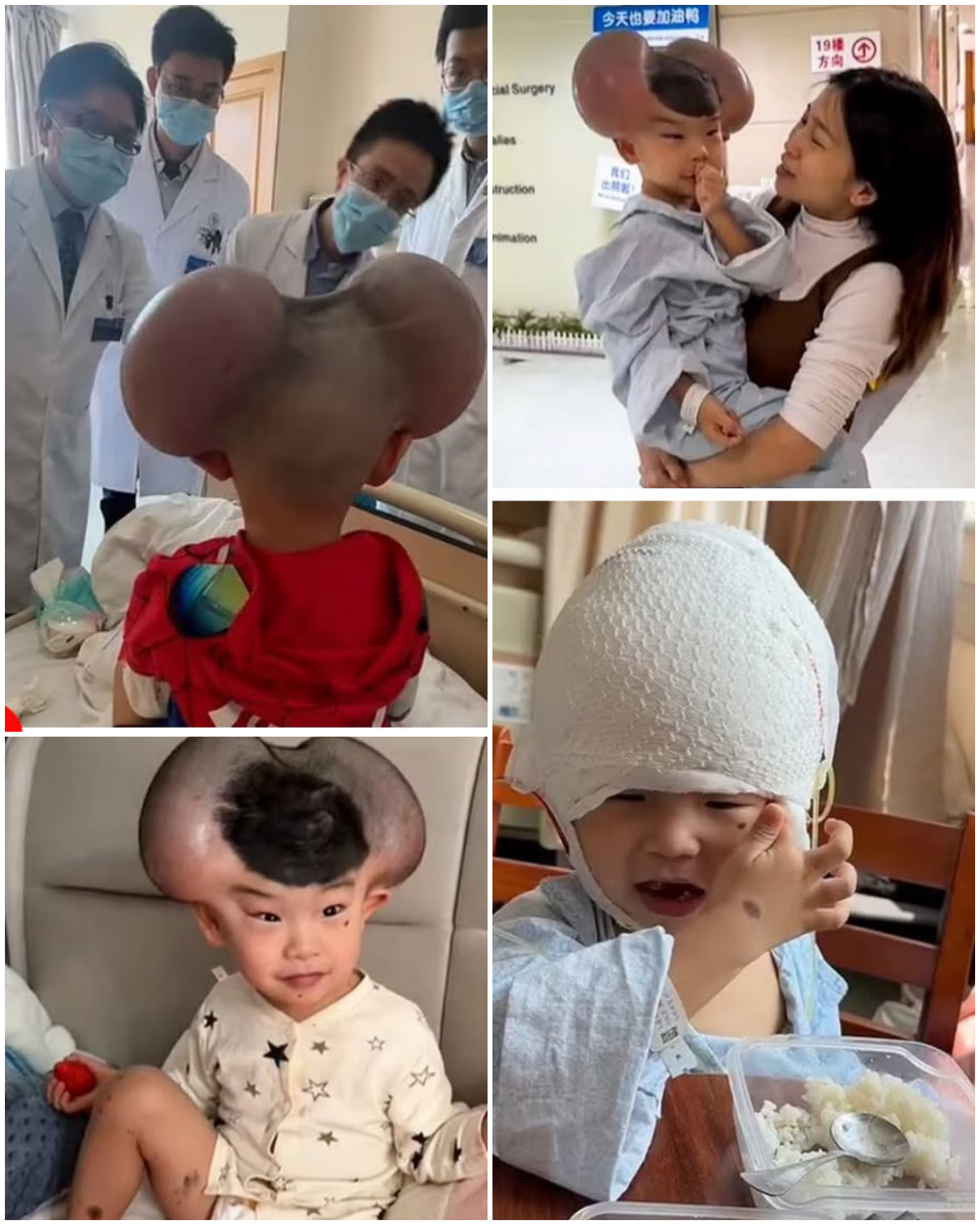
A three-year-old boy from Fujian province in China, nicknamed Qibao (琪宝), has successfully undergone major reconstructive surgery to remove large congenital melanocytic nevi from his scalp after a challenging multi-month treatment involving tissue expanders. The rare condition caused prominent dark birthmarks that carried a risk of malignant transformation into melanoma, in addition to significant social and psychological burdens for the young child and his family.
Giant congenital melanocytic nevi (GCMN) are rare pigmented lesions present at birth, formed by abnormal clusters of melanocytes. They affect roughly 1 in 20,000 newborns and can grow with the child. While often benign, larger lesions—especially those on the scalp or covering substantial body surface area—carry an elevated lifetime risk of melanoma (estimated at 5–10% or higher in some cases) and can lead to psychosocial challenges due to their conspicuous appearance. Early surgical intervention is frequently recommended to reduce cancer risk and improve quality of life.
Qibao was diagnosed shortly after birth. His mother, Ms. Chen, recalled that prenatal checks had shown no abnormalities, leaving the family shocked by the large black birthmarks and multiple smaller nevi. Concerned about both the aesthetic impact and the potential for malignancy, the family traveled from Fujian to a hospital in Shanghai for specialized plastic and reconstructive care. Treatment spanned approximately five months and involved two primary surgeries.
In the first stage, surgeons implanted silicone tissue expanders beneath healthy scalp skin on both sides of Qibao’s head. These devices were gradually filled with saline solution over weeks, stretching the surrounding skin to generate extra tissue that could later cover the defects left after nevus removal. As the expanders inflated, they created large, balloon-like protrusions that gave Qibao an appearance widely compared to Mickey Mouse. The process was physically uncomfortable: the overlying skin became progressively thinner, prompting constant worry that it might rupture. Psychologically, the visible deformity drew stares, comments, and ridicule from strangers. Qibao grew withdrawn, often sitting silently in his stroller with the canopy pulled down and speaking little.
Ms. Chen described the emotional toll candidly: “We weren’t strong at the beginning, but we wiped away our tears and moved forward.” The family’s perseverance, combined with medical care, carried them through the difficult expansion period.
The second surgery, lasting about six and a half hours, removed the tissue expanders along with the large black birthmark and excess tissue. The expanded healthy skin was then used to reconstruct the scalp. Ms. Chen called the outcome “very successful,” though additional reconstructive procedures may still be needed in the future to refine the result and address remaining smaller nevi (reports mention over 200 elsewhere on his body).
Postoperatively, Qibao’s demeanor transformed. He became more talkative, expressive, and confident—enjoying being photographed and even promising his mother a Mother’s Day gift of lipstick once he could earn money. Medical experts note that for scalp lesions, tissue expansion followed by excision and flap reconstruction is a standard and effective approach, allowing use of the patient’s own matching skin and hair-bearing tissue. With healing and hair regrowth, the final appearance can closely approximate normal.
Qibao’s story highlights both the medical value of staged tissue expansion for large congenital nevi and the profound importance of family support and early intervention. While the temporary “Mickey Mouse” look drew unwanted attention, it was a necessary step that ultimately helped restore the child’s comfort, confidence, and future prospects. Cases like his also underscore the need for greater public awareness of rare congenital skin conditions and the resilience of the families navigating them.
Sources
- Dimsum Daily: “Three-year-old boy dubbed ‘Mickey Mouse’ undergoes successful surgery to remove giant birthmark” (May 2025)
- Exmoo / related Chinese-language reports on 琪宝 (Qibao) and congenital giant nevus treatment (May 2025)
- On.cc / HK01 / ETtoday and other contemporaneous coverage of the case
- Medical background drawn from general literature on giant congenital melanocytic nevi (e.g., MedlinePlus Genetics; clinical reviews on tissue expansion for GCMN)