The Extraordinary Journey of Roona Begum: A Fight Against Extreme Hydrocephalus
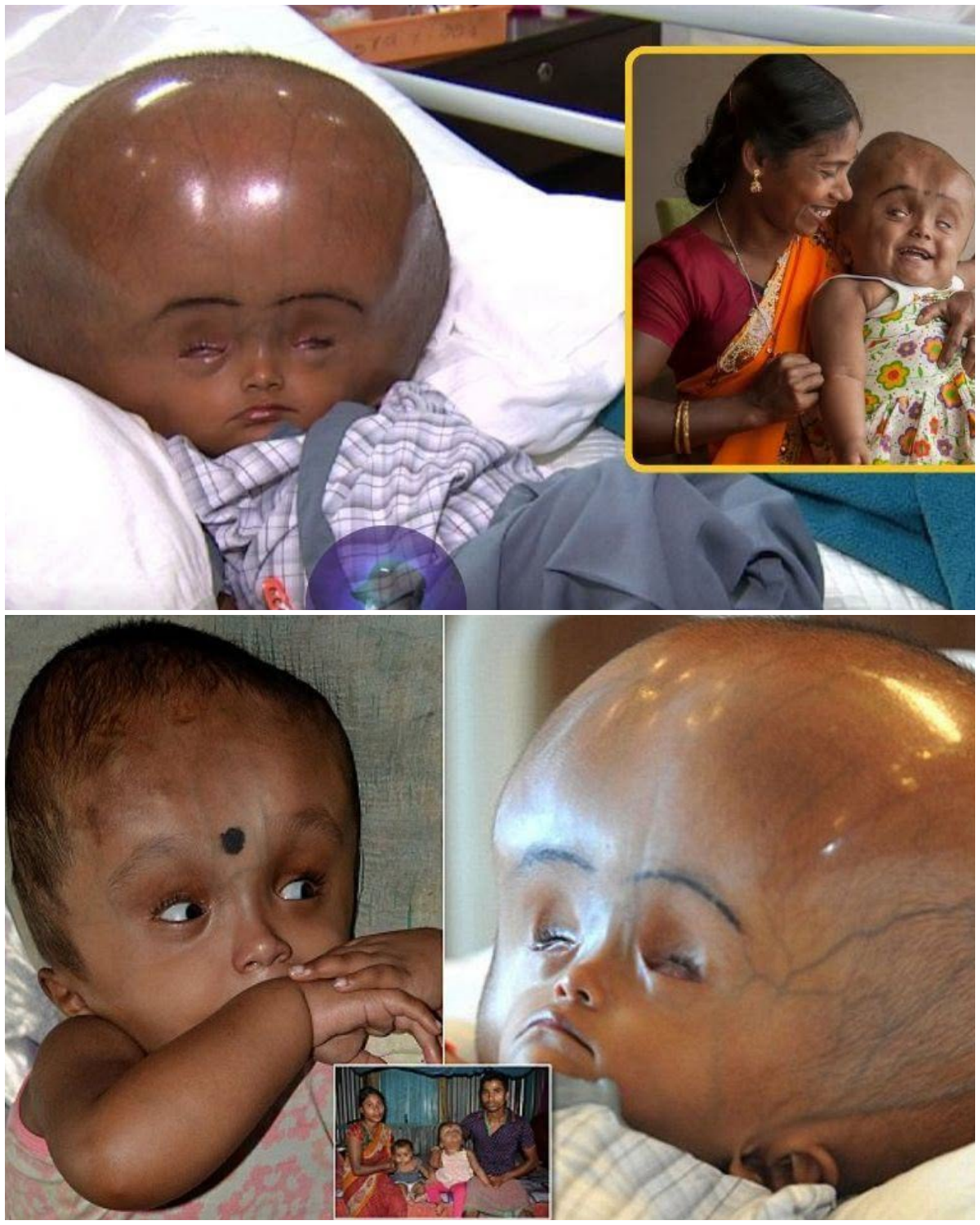
In a remote village in Tripura, northeastern India, Roona Begum was born on November 22, 2011, with a severe form of hydrocephalus. This condition causes excess cerebrospinal fluid to accumulate in the brain’s ventricles, leading to dangerous pressure and progressive enlargement of the skull. By the time she was around 15–18 months old, Roona’s head circumference had reached an extraordinary 94 centimeters—nearly three times the size of a typical infant’s head and among the largest cases documented in medical literature. The weight and size of her head left her unable to sit, crawl, or hold her head up, and her survival prospects were considered very poor without intervention.
Her parents, Abdul Rahman, a daily-wage laborer, and Fatema Khatun, lived in extreme poverty in Jirania Khola village. Local medical options were limited, and the family could not afford specialized care. In April 2013, a photograph taken by AFP photojournalist Arindam Dey captured Roona’s condition and rapidly circulated worldwide. The images sparked an international outpouring of support. Fortis Memorial Research Institute in Gurgaon (near New Delhi) offered free treatment through its foundation. Two Norwegian students, Jonas Borchgrevink and Nathalie Krantz, also launched a crowdfunding campaign that raised tens of thousands of dollars to support her care.
Under the leadership of neurosurgeon Dr. Sandeep Vaishya, Roona underwent a series of complex procedures beginning in April–May 2013. Doctors first used an external ventricular drain to carefully remove excess fluid, gradually reducing pressure and head size. This was followed by the insertion of a ventriculoperitoneal (VP) shunt to create a longer-term drainage pathway into the abdomen. Multiple cranial vault remodeling surgeries were then performed to reshape and reduce the oversized skull bones, which had been widely separated and fragmented over the fluid-filled spaces. Over several months and at least five major procedures in the initial phase, her head circumference was reduced from 94 cm to approximately 58 cm (later reports noted further reduction to around 57 cm). Doctors described the surgeries as highly challenging—one of the most complex hydrocephalus cases they had encountered—yet the outcomes exceeded early expectations.
Roona showed clear signs of improvement. She gained some head mobility, responded to stimuli, began to smile and make sounds, and her overall health and nutrition stabilized. She was discharged after more than 100 days in hospital in August 2013 and returned for additional remodeling procedures in subsequent years. While her head remained larger than average and she faced ongoing developmental challenges, including limited mobility and uncertain long-term neurological outcomes, the surgeries gave her a chance at a more functional life that had previously seemed impossible.
Tragically, Roona’s story did not have a fairy-tale ending. She continued to require medical attention and was scheduled for further surgery when she passed away in June 2017 at the age of five and a half, due to complications related to her condition. Her case later inspired the Netflix documentary short Rooting for Roona, which followed the family beyond the initial media attention and highlighted both the medical achievements and the profound human struggles involved.
Roona Begum’s journey remains a powerful illustration of how extreme medical conditions can intersect with poverty, global solidarity, and advanced neurosurgery. It underscored both the life-saving potential of specialized care and the limits that even successful interventions can face in the most severe cases of congenital hydrocephalus. Her story continues to raise awareness about the importance of early diagnosis and accessible treatment for children born with this condition.
Sources
- CNN: “Indian child Roona Begum recovering after hydrocephalus surgery” (August 2013)
- The Independent / AFP reports on the initial surgeries (May 2013)
- Times of India and Hindustan Times coverage of treatment timeline and recovery (2013–2014)
- India.com and related reports on her death (June 2017)
- The Hindu / Netflix documentary coverage of Rooting for Roona (2020)