WHY CHRISTIAN BRÜCKNER BECAME THE MAIN SUSPECT — AND WHY HE STILL HASN’T BEEN CHARGED
Christian Brückner’s name has become almost inseparable from the Madeleine McCann investigation.
But one of the biggest misunderstandings surrounding the case is the assumption that because German authorities regard him as the principal suspect, his guilt has already been established.
It has not.
Brückner has never been charged in connection with Madeleine’s disappearance.
So why has he become the central figure in an investigation that began nearly 20 years ago?
The answer lies in a combination of his history, his connection to Portugal and evidence investigators have been examining for years.
Who is Christian Brückner?
Brückner is a German national who spent significant periods in Portugal, including in the Algarve.
His criminal history is extensive, including a conviction for the rape of an American woman in Portugal. He was released from prison in 2025 after completing a sentence for that unrelated crime.
His criminal record alone does not prove involvement in Madeleine’s disappearance.
But investigators became interested in him because of his presence and activities in the Algarve around the time Madeleine vanished.
Why did investigators focus on him?
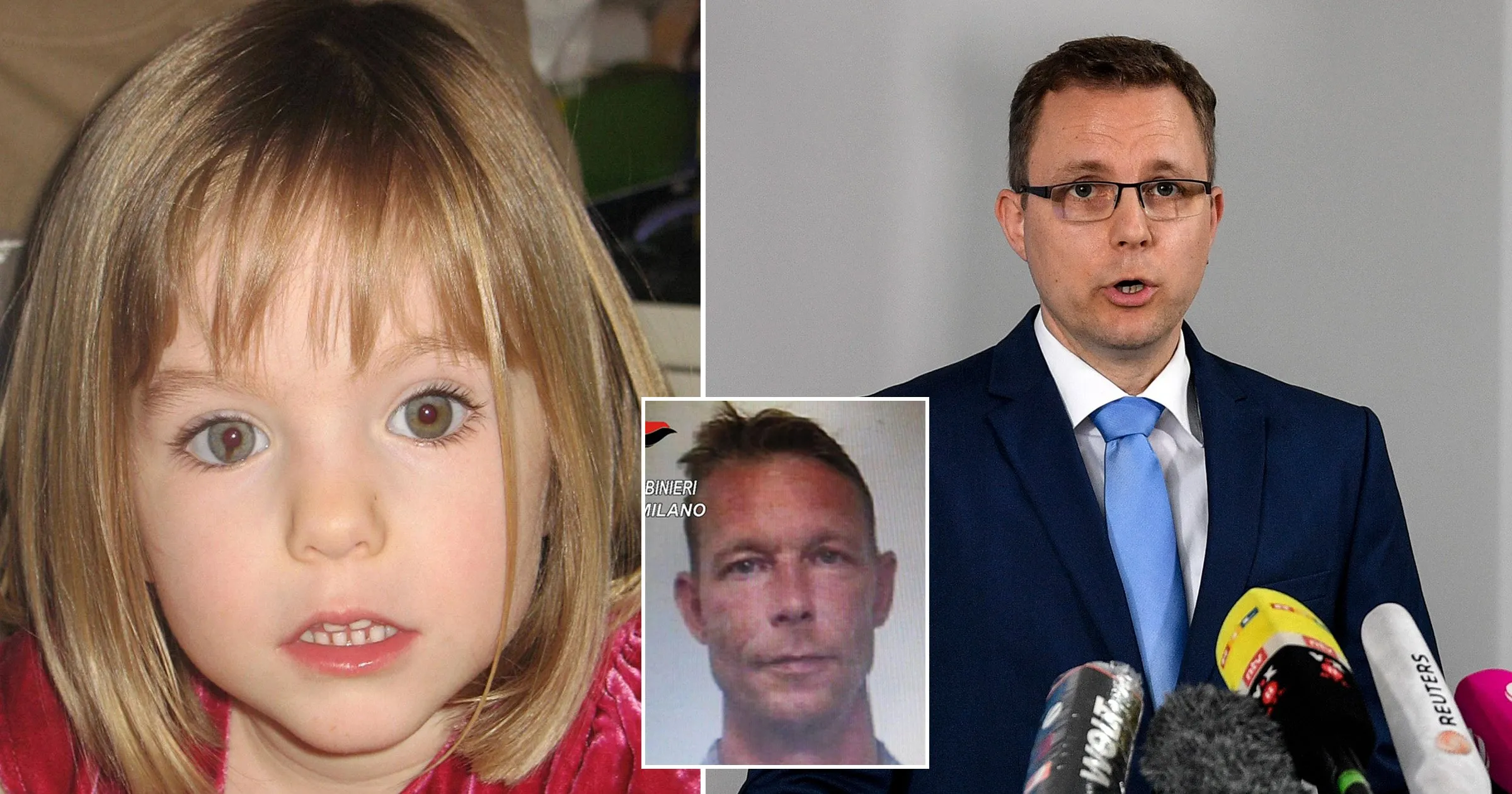
German investigators publicly identified Brückner as the main suspect in 2020.
Their theory is that Madeleine was killed.
Portuguese authorities later formally named him as a suspect.
The investigation has examined his movements, telecommunications and digital material.
One important reason Brückner attracts attention is that he was living in the region when Madeleine disappeared.
For investigators, geographical proximity can become significant when combined with other evidence.
But proximity alone is not proof.
Thousands of people were in the Algarve in 2007. Being in the same region as a missing person does not establish guilt.
The question is whether the total body of evidence can place an individual directly into the circumstances surrounding the disappearance.
What about the evidence?
This is where the public often receives an incomplete picture.
Reports over the years have described various pieces of evidence associated with Brückner. German authorities have indicated that they possess evidence supporting their belief that Madeleine is dead.
However, much of the evidence has not been publicly disclosed in full.
That creates a strange situation.
Investigators may know more than the public does.
Journalists may report details from unnamed sources.
But none of that automatically becomes courtroom evidence.
Recent reports in 2026 claimed German authorities had passed a dossier containing new material to British investigators working on Operation Grange.
The reports have generated headlines suggesting that the case could be moving toward prosecution.
But no official announcement has confirmed that Brückner will be charged.
Why is there still no charge?
Because suspicion is not enough.
A criminal prosecution requires evidence capable of meeting the legal standard.
Investigators need to establish a coherent chain:
What happened?
When did it happen?
Where did it happen?
Who was responsible?
What evidence independently supports that conclusion?
The absence of Madeleine’s body makes that challenge even more difficult.
If investigators believe she was killed, they must prove the crime through alternative evidence.
That could potentially involve forensic material, witness evidence, communications, digital records or other forms of corroboration.
But prosecutors must be confident that the evidence can survive scrutiny in court.
What about Brückner’s current situation?
Since his release from prison, Brückner has continued to attract intense police attention.
In June 2026, he was reportedly involved in an incident with German police in Kiel after officers confronted him about photographing them. A physical confrontation allegedly followed, with one officer reportedly suffering a knee injury. His lawyer disputed the characterization of the incident.
That incident is unrelated to the Madeleine case.
It is important not to confuse the two.
The same applies to Brückner’s other criminal convictions. His criminal record may explain why investigators scrutinize him, but it does not itself establish that he abducted Madeleine.
Could he face a UK trial?
Reports in 2026 suggested Scotland Yard was considering the possibility of bringing Brückner before a British court for charges relating to Madeleine.
However, this is legally complicated.
Brückner is a German citizen, and extradition from Germany to the UK involves rules that became more complicated after Brexit. Reports have suggested that this could create significant obstacles.
So even if British investigators believe they can build a case, getting the suspect into a British courtroom is another matter entirely.
The unanswered question
Brückner remains the strongest suspect in the investigation from the German perspective.
But the case is not legally finished.
There has been no conviction.
There has been no Madeleine-related murder charge.
And Brückner continues to deny involvement.
The real test will therefore not be whether investigators can identify Brückner as suspicious.
It will be whether they can produce enough evidence to prove what happened to Madeleine.
Until that happens, the world’s most famous suspect remains exactly that:
a suspect — not a convicted killer.